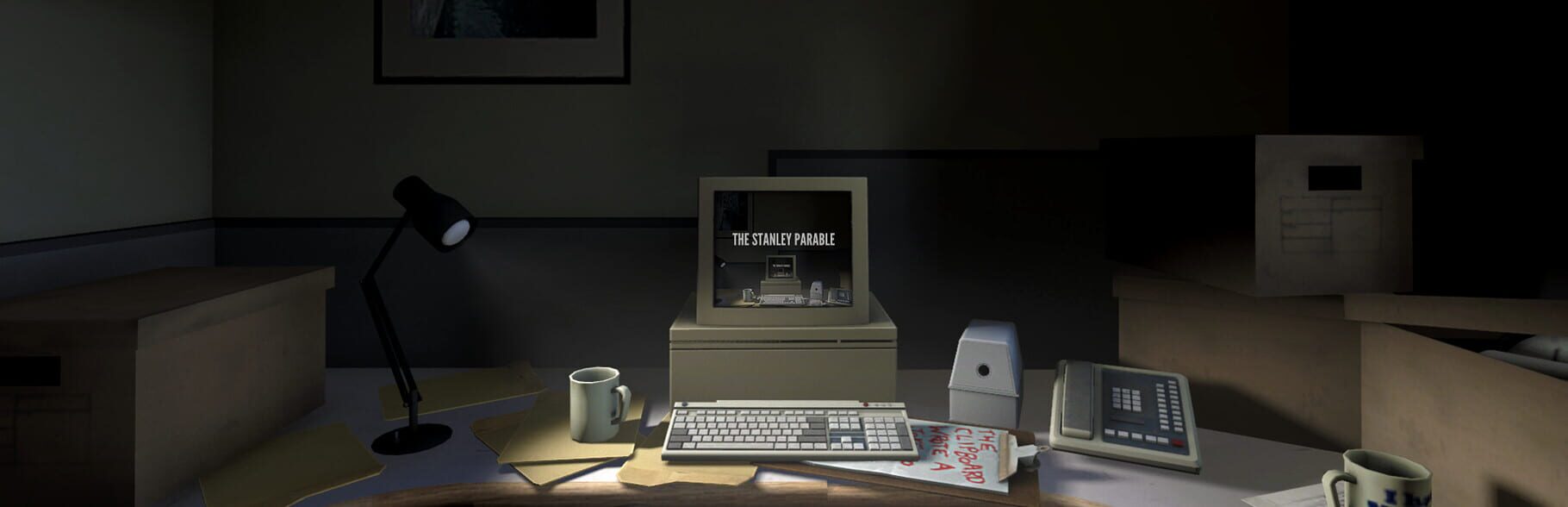
The Stanley Parable is the ultimate 'thinking kid's' game. It’s a walking simulator that replaces guns and loot with philosophy and wit. For a parent, it’s a total win because it’s a closed loop—no multiplayer, no 'skins' to buy, and no infinite grind. It’s a finite, brilliant piece of art that actually leaves you smarter than when you started.
If your kid is used to the loud, bright chaos of Roblox, this will be a major change of pace. It’s quiet, it’s clever, and it’s genuinely funny. It’s the kind of game that sparks a two-hour car conversation about free will and the nature of authority. Highly recommended for families who value media literacy over high scores.
Age Fit
Best for ages 10 and up. While there's nothing 'inappropriate' for younger kids, the humor and the central themes require a level of abstract thinking and familiarity with gaming tropes to really land.
WISE Breakdown
Wholesome
75
It's clean and devoid of typical 'gamer' toxicity, though the tone is more existential and satirical than warm and fuzzy. It models intellectual curiosity rather than social cooperation.
Imaginative
98
One of the most creative games ever made. It constantly subverts expectations, rewards 'breaking' the game, and uses its own medium to tell a story about stories.
Safe
95
Strictly single-player with zero microtransactions or social risks. The only 'danger' is some mild psychological tension and a few endings that involve dark humor or implied off-screen peril.
Enriching
92
It’s a masterclass in media literacy and critical thinking. It forces players to analyze why they follow instructions and how systems of control work.
Parent Info
✓
Why It Might Be Great
Brilliant satire that pokes fun at office culture and the tropes of modern gaming.
Zero combat or stress, making it perfect for kids who want to explore without the pressure of dying or 'losing.'
Encourages disobedience in a way that actually builds critical thinking and curiosity.
The Narrator is one of the funniest, most well-written characters in gaming history.
⚠
What to Watch For
The game deals with existential themes that might feel lonely or slightly creepy for younger kids who aren't used to meta-humor.
A few endings are darkly comedic, including one that implies a mental breakdown and another with a nuclear countdown.
The Narrator can be verbally manipulative or passive-aggressive as part of the joke, which might frustrate kids who take things literally.
Conversation Starters
"Why do you think the Narrator gets so upset when you don't do what he says?"
"Is a choice really a choice if the game developer already built all the possible outcomes?"
"Which ending felt the most 'right' to you, and why?"
"If you were Stanley, would you have pushed the buttons or walked out the door?"