The Book of Once Upon a Time

The Book of Once Upon a Time

show

TV-G, 2015

WISE
84%

WISE Score

5

IMDb

A cozy, low-stim series of Disney shorts that basically acts as a digital bedtime story for the preschool set.

IMDb5
Common Sense Media
Where to Watch
Loading streaming options...
Screenwise Verdict

If you're looking for a show that won't turn your toddler's brain into a vibrating mess of dopamine, this is a solid win. It's essentially a digital version of you reading a book to them—complete with a narrator who actually knows how to use their 'storyteller voice.'

It’s not 'prestige TV' and it won't win any awards for groundbreaking animation, but it serves a very specific, very useful purpose: quiet, enriching entertainment that respects a child's attention span. It’s a great tool for parents who want to lean into the 'listening' side of literacy without the visual noise of something like Cocomelon.

Age Fit

This is squarely for the 2-to-5 crowd. It's slow, gentle, and intentional. If your kid is old enough to handle a plot with real tension or fast action, they'll be bored to tears within five minutes.

WISE Breakdown
Wholesome
95

It is exactly what it sounds like: a gentle storytelling session featuring classic Disney narratives. No snark, no chaos, just cozy vibes and moral-focused tales.

Imaginative
82

While it relies on existing Disney IP, the storytelling format encourages kids to focus on narrative flow and mental imagery rather than just flashy CGI.

Safe
100

Designed for the Disney Junior demographic. There is zero risk of unexpected mature themes, violence, or social features. It's the safest possible harbor on Disney Plus.

Enriching
88

Excellent for developing the language comprehension strand of literacy. Hearing complex vocabulary and narrative structures in a calm setting builds the 'Reading Rope' even without eyes on text.

Parent Info
✓

Why It Might Be Great

  • Builds literacy skills by focusing on language comprehension, vocabulary, and narrative structure through oral storytelling.
  • Low-stimulus alternative to the high-energy, fast-cut chaos of modern toddler YouTube or 'hyper' cartoons.
  • Familiar characters like Snow White and Winnie the Pooh make the storytelling feel accessible and inviting for kids who already know the Disney universe.
  • Perfect for 'winding down' before bed or during quiet time when you need something that doesn't rev their engines.
⚠

What to Watch For

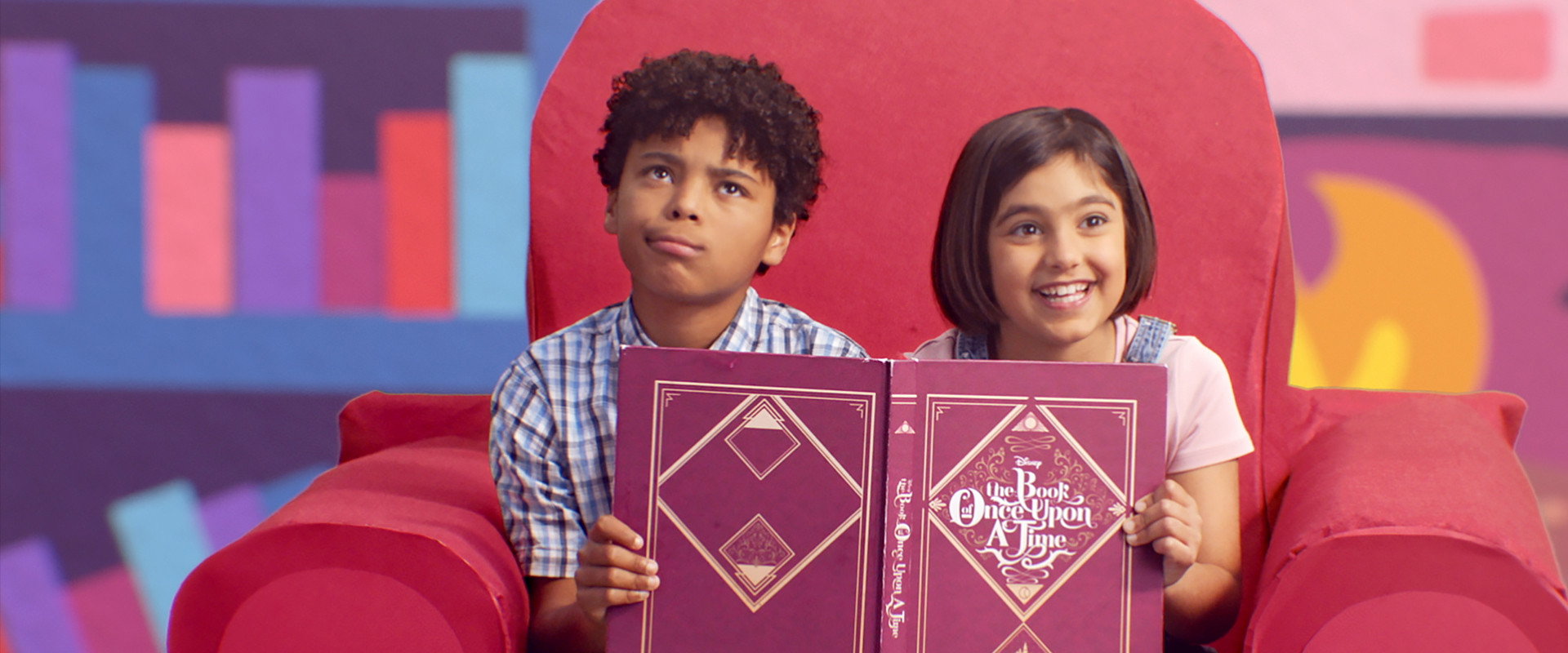
  • The production value is simple—don't expect full-length feature animation; it's mostly a narrator with a physical book and light visual flair.
  • Older kids (6+) will likely find the pacing agonizingly slow and the 'storytime' vibe a bit too 'babyish'.

Conversation Starters

  • "How was the story in the show different from the movie version we saw?"
  • "If you could write a new ending for that character, what would they do instead?"
  • "Which of those characters showed the most kindness today?"
  • "What was your favorite word the narrator used while reading?"

Deep Dive

The 'Reading Rope' in Practice

At Screenwise, we talk a lot about Hollis Scarborough’s Reading Rope, which breaks literacy into two main halves: word recognition and language comprehension. Most parents focus on the 'word recognition' part (phonics, decoding, flashcards), but 'language comprehension' is just as vital. This is where The Book of Once Upon a Time actually punches above its weight.

By having a narrator read these stories aloud, the show helps kids develop their background knowledge, vocabulary, and understanding of language structures. They are learning how stories work—beginning, middle, end—without the cognitive load of trying to decode letters on a page. It’s genuine literacy practice disguised as a Disney short.

Why Low-Stim Matters

In a world of 'brain rot' content that uses bright colors and rapid cuts to keep kids glued to the screen, this show is a deliberate breath of fresh air. It’s slow. It’s quiet. It’s not trying to hack your kid's brain. If you’re trying to transition your household away from high-stimulation media, this is a perfect 'bridge' show. It uses characters they already love but presents them in a way that allows for actual reflection and calm. It’s a 2015 relic that feels more relevant in 2026 as we all try to find the 'off' switch for the digital noise.

What Parents Ask

Ask Anything

Get a personalized guide on any topic