Our reviews and ratings are 100% unbiased. As an Amazon Associate, Screenwise earns from qualifying purchases, so if you buy a book or game through one of our links, we may earn a commission. We don't get any credit if you just Google it instead :)
Screenwise Verdict
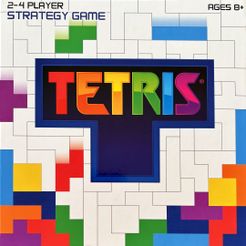
This is a solid win for families looking to ditch the iPads for a bit. It takes the addictive 'just one more game' loop of the original Tetris and makes it social.
It’s not going to win awards for deep narrative or artistic innovation, but as a tool for developing spatial awareness and having a laugh while someone panics over a misplaced square block, it’s top-tier. It’s simple, effective, and actually fun for the parents too.
Age Fit
While the box says 8+, any 6-year-old who can handle a basic puzzle will get the hang of this quickly. It’s also one of the few 'kids' games that adults won't find mind-numbingly boring.
WISE Breakdown
Wholesome
92
It's a clean, competitive puzzle that brings families together around a table rather than a screen. No hidden agendas, just blocks and spatial logic.
Imaginative
62
It's a literal translation of a 40-year-old video game. While the physical pieces are tactile and fun, it doesn't ask players to build a world or tell a story beyond 'where does this L-shape go?'
Safe
100
It's a box of plastic. No internet, no chat, no microtransactions. The only safety concern is stepping on a plastic tetrimino in the middle of the night.
Enriching
88
Fantastic for spatial reasoning, pattern recognition, and planning ahead. It turns geometry into a race, which is a great way to sneak some brain exercise into game night.
Parent Info
✓
Why It Might Be Great
It teaches kids how to visualize 3D space and plan three moves ahead without it feeling like a math lesson.
Rounds are fast—usually under 20 minutes—so it's perfect for a quick pre-bedtime activity.
The physical 'Matrix' towers are satisfying to fill, and there's a real tactile joy in dropping the plastic pieces into place.
Designed by Phil Walker-Harding, who is basically the king of making games that are easy to learn but actually involve some strategy.
⚠
What to Watch For
The towers can be a bit 'fiddly'—if a kid bumps the table, pieces might shift, which can lead to minor meltdowns.
Small plastic pieces are a nightmare for households with crawling babies or dogs who eat everything.
It’s a race, so competitive kids might get frustrated if they can't find a spot for their Z-block fast enough.
Conversation Starters
"Which shape do you hate getting the most when your tower is almost full?"
"How did you decide whether to go for a 'Tetris' (4 lines) or just fill small gaps?"
"If we played this on a computer, do you think it would be easier or harder than doing it with your hands?"