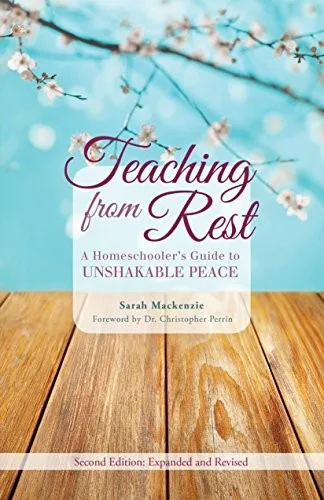
The Cure for Kitchen-Table Panic
Homeschooling often starts with an open-ended vision of curious children reading under oak trees, and by year two degenerates into a panicked attempt to reproduce a 1980s institutional classroom inside a suburban kitchen. Sarah Mackenzie, better known as the host of the Read-Aloud Revival podcast, wrote Teaching from Rest specifically to break that cycle.
The premise is simple. When parents try to cover every single subject with equal ferocity, nobody learns deeply and everyone ends up cranky. Mackenzie argues for what classical educators call scholé: deliberate, unhurried contemplation. In practice, that means choosing a few worthy things each day, protecting time to read aloud together, and treating the student as a person rather than an academic score to defend.
"We worry that our students will be 'behind,' that they won't score well on the SAT, get into college, or be successful. Yet we are called to bring our loaves and fishes, however meager, and trust."
The Secular vs. Faith Divide
The book's primary dividing line is its theological grounding. Published by Classical Academic Press, Mackenzie frames restful teaching as an act of Christian trust. If you are a secular or eclectic homeschooler, you will find yourself filtering out frequent references to scripture and prayer.
Even so, the structural diagnosis is universally accurate. Parents over-buy curriculum because curriculum manufacturers sell security in the form of 300-page workbooks. Mackenzie's counter-proposal—decluttering the schedule, setting reasonable loop routines, and prioritizing read-alouds—works regardless of your spiritual background. It is a quick recalibration tool worth revisiting every year when the mid-winter slump hits.