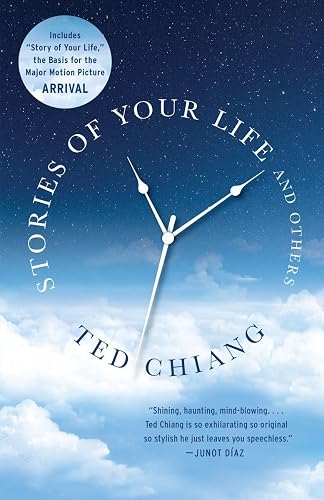
If your teenager is the type who gets bored with standard dystopian tropes or finds "chosen one" narratives a bit insulting, this is the correction they need. Ted Chiang doesn't write about laser battles or evil empires. He writes about the terrifying, beautiful implications of logic and physics.
The "Arrival" factor
Most people know this story because of the movie Arrival. If you or your kid loved the film, the original novella is essential reading. While the movie adds a layer of global political tension to keep the popcorn moving, the book is much more intimate. It focuses on the internal shift that happens when you start thinking in a language that doesn't use a linear timeline. If you’ve already watched the film as a family, it’s worth checking out the parent’s guide to Arrival to see how the book’s specific brand of "hard" sci-fi handles those heavy themes of fate and choice differently than the big screen version.
It’s okay to Google the physics
This is "hard" science fiction in the truest sense. Chiang expects a lot from his readers. He spends significant time on Fermat’s Principle of Least Time and the nuances of linguistics. For some kids, this is the hook—it feels like a secret club for people who actually like their science classes. For others, it might feel like homework.
If they hit a wall during the technical descriptions of how the aliens communicate, tell them to push through. The math isn't just there to look smart; it’s the emotional foundation for the ending. When the narrator explains why she chooses to have her daughter despite knowing exactly how it ends, the physics and the grief finally click together. It transforms a logic puzzle into a gut punch.
Why it sticks
The collection Stories of Your Life and Others has a 4.5 rating on Amazon for a reason. It manages to be both "intelligent" (as critics in the NYT noted) and deeply human. In a media landscape full of easy answers and "brain rot" content, Chiang offers something that respects the reader's ability to handle ambiguity.
This isn't a book you finish and just put away. It’s the kind of story that makes a 16-year-old stare at the ceiling for twenty minutes after the final page. It’s perfect for:
- The kid who is "too old" for YA but not quite ready for dry, academic literature.
- Students interested in linguistics, coding, or theoretical physics.
- Anyone who wants to argue about whether we actually have free will.
Don't worry about reading the whole collection in order. While the title story is the heavy hitter, the other entries in the book are equally strange and rewarding. It’s a masterclass in how to use "the very, very strange" to explain the things we feel every day but can't quite put into words.