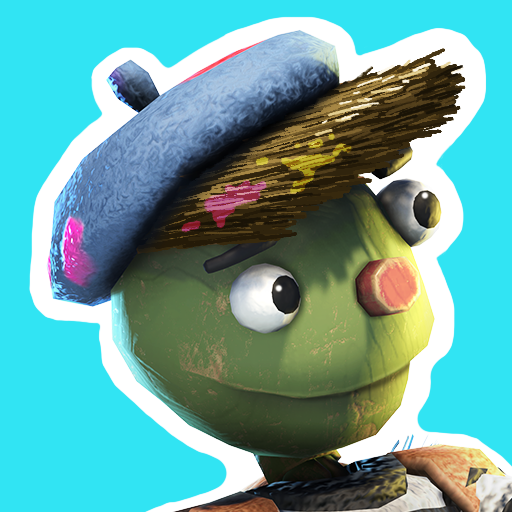
Starving Artists (the mobile port of Passpartout 2) is one of those rare apps that actually justifies its screen time. Instead of the usual dopamine-loop of matching gems or running forever, it asks the player to sit down and make something. It’s a simulation that respects the player's agency and creativity.
It’s particularly great for the 'doodle' kid who has outgrown simple coloring apps but isn't quite ready for a professional suite like Procreate. The stakes are low, the world is charmingly weird, and the lesson—that art is a mix of passion and business—is delivered without being preachy.
Age Fit
Perfect for ages 7 to 99. Younger kids can enjoy the scribbling and puppet characters, while older kids (and adults) will actually get into the strategy of 'pleasing the market' and upgrading their gear.
WISE Breakdown
Wholesome
88
It's a low-stress, charming simulation of a creative life. The tone is encouraging even when critics are 'cheeky,' and the focus remains on the joy of creating and helping a community through art.
Imaginative
96
The core loop is literal creative expression. Unlike many 'creative' games that just let you pick colors for pre-drawn shapes, this gives you a blank canvas and rewards experimentation.
Safe
90
As a single-player simulation, it avoids the social risks of chat and multiplayer. It's a self-contained world where the biggest 'danger' is a digital landlord asking for rent.
Enriching
84
Provides a gentle introduction to the business of art—commissions, supply costs, and the subjective nature of criticism—while building digital drawing skills.
Parent Info
✓
Why It Might Be Great
Genuine creativity is the main event; kids actually draw their own art rather than just clicking buttons to 'craft' items.
The progression system feels earned, as selling paintings allows players to unlock better brushes, canvases, and even their own studio space.
It models resilience by teaching kids that not everyone will like their work, and that's just part of the process.
The open exploration of Phénix adds a layer of adventure that keeps the drawing loop from feeling repetitive.
⚠
What to Watch For
The critic feedback can be blunt. If your kid is particularly sensitive about their drawings, the 'cheeky' comments might sting at first.
In-app purchases for specific tools or canvases can pop up; check your password settings on the Play Store before handing over the tablet.
The financial management aspect (paying rent, buying supplies) can be a bit stressful for very young kids who just want to doodle.
Conversation Starters
"Why do you think that critic liked the messy painting more than the neat one?"
"If you had to draw an ad for a real restaurant in our town, what would you put on it?"
"Is it better to paint what you love or paint what you think people will buy?"
"How does it feel when a character in the game doesn't like your art?"
Deep Dive
The Sequel We Needed
If you remember the original Passpartout from a few years back, this is a massive step up. The first game was basically a 'starving artist in a garage' simulator. This 2024 mobile version brings the full exploration of the town of Phénix into the palm of your hand. It turns the game into something more like Animal Crossing but with a paintbrush instead of a fishing rod.
Drawing Mechanics
The touch screen is the natural home for this game. While it was fine on PC with a mouse, drawing with a finger or a cheap stylus feels right. The game doesn't 'fix' your lines or use AI to make your drawings look better; what you draw is what you get. This makes the eventual sale of a painting feel much more rewarding than a standard game achievement.
The 'Critic' Problem
Parents should know that the AI critics in the game have 'personalities.' Some love minimalism, some love chaos, and some are just hard to please. This is the 'secret sauce' of the game. It forces kids to actually look at the characters and try to understand what they want—a subtle lesson in empathy and audience awareness.
Use it as a Bridge
If your kid is obsessed with this, it’s a perfect bridge to real-world art. Take the commissions they do in the game (like the restaurant ad) and ask them to do a version on real paper for your kitchen. It’s one of the few games that translates perfectly back into physical play.