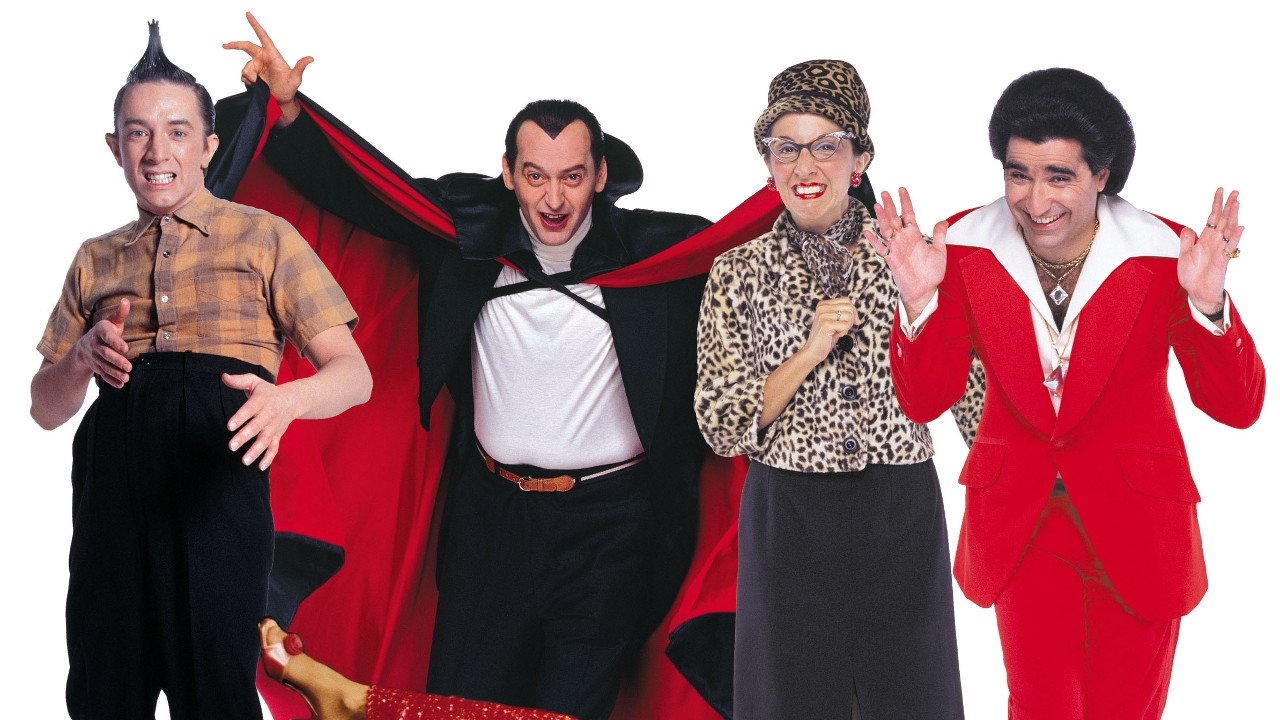
The show that built your favorite actors
If you’ve watched Schitt’s Creek or The Bear or Only Murders in the Building, you’ve seen the DNA of SCTV. This wasn't just a sketch show; it was a bizarre, fully realized universe centered on a fictional television station in the town of Melonville. Unlike SNL, which often relies on the "live" energy and topical political jabs that expire in a week, SCTV was filmed. This allowed the cast to disappear into characters so deeply that you forget you’re watching a low-budget Canadian production from the late 70s.
The real draw for a modern teenager isn't the political satire—most of which will fly over their heads—but the commitment. When Catherine O'Hara or John Candy take on a role, they aren't just doing a "bit." They are building a person from the shoes up. If your kid is into theater or wants to understand why people still obsess over the "Second City" style of improv, this is the primary source material.
The specific friction of the 70s
Let’s talk about the "grain." To a kid raised on 4K YouTube streams, SCTV looks like it was salvaged from a shipwreck. It’s grainy, the lighting is sometimes questionable, and the pacing is—to put it mildly—leisurely. In an era of three-second TikTok cuts, watching a five-minute sketch about a bloated variety show host requires a different kind of brain chemistry.
Then there’s the smoking. It is constant. It’s not just a background detail; it’s a lifestyle. If you’re sensitive about on-screen tobacco use, this show will be a challenge. However, for an older kid, it serves as a bizarre time capsule. It’s a way to talk about how much the "vibe" of public life has shifted.
The Martin Short connection
If your family has been bingeing Only Murders in the Building, this is how you sell the show to your kids. Seeing a young, hyper-energetic version of the cast is a trip. We even have a guide on Martin Short: The Comedy Icon Bridging the Gen Gap that helps explain why he’s still such a massive deal 50 years later.
In SCTV, you see him and Eugene Levy developing the timing that they’d eventually use to anchor entire franchises. It’s like watching the early basement tapes of a legendary rock band. The production value is low, but the talent is blindingly obvious.
How to watch it without the "homework" feel
Don't try to sit a 13-year-old down for a marathon of Season 1. It won't work. Instead, treat it like a curated gallery.
- Look for the "character" arcs.
- Focus on the "show-within-a-show" mechanics.
- Point out the station owner, Guy Caballero, and his "respectable" wheelchair-bound persona—it’s a great entry point for discussing satire and how characters use props to manipulate an audience.
The show is at its best when it’s mocking the very medium of television. It teaches kids to look at the gears of media—the fake sincerity of talk show hosts, the desperation of local news, and the absurdity of 3:00 AM programming. Once they "get" that the station itself is the joke, the dated references matter a lot less.