Our reviews and ratings are 100% unbiased. As an Amazon Associate, Screenwise earns from qualifying purchases, so if you buy a book or game through one of our links, we may earn a commission. We don't get any credit if you just Google it instead :)
Screenwise Verdict
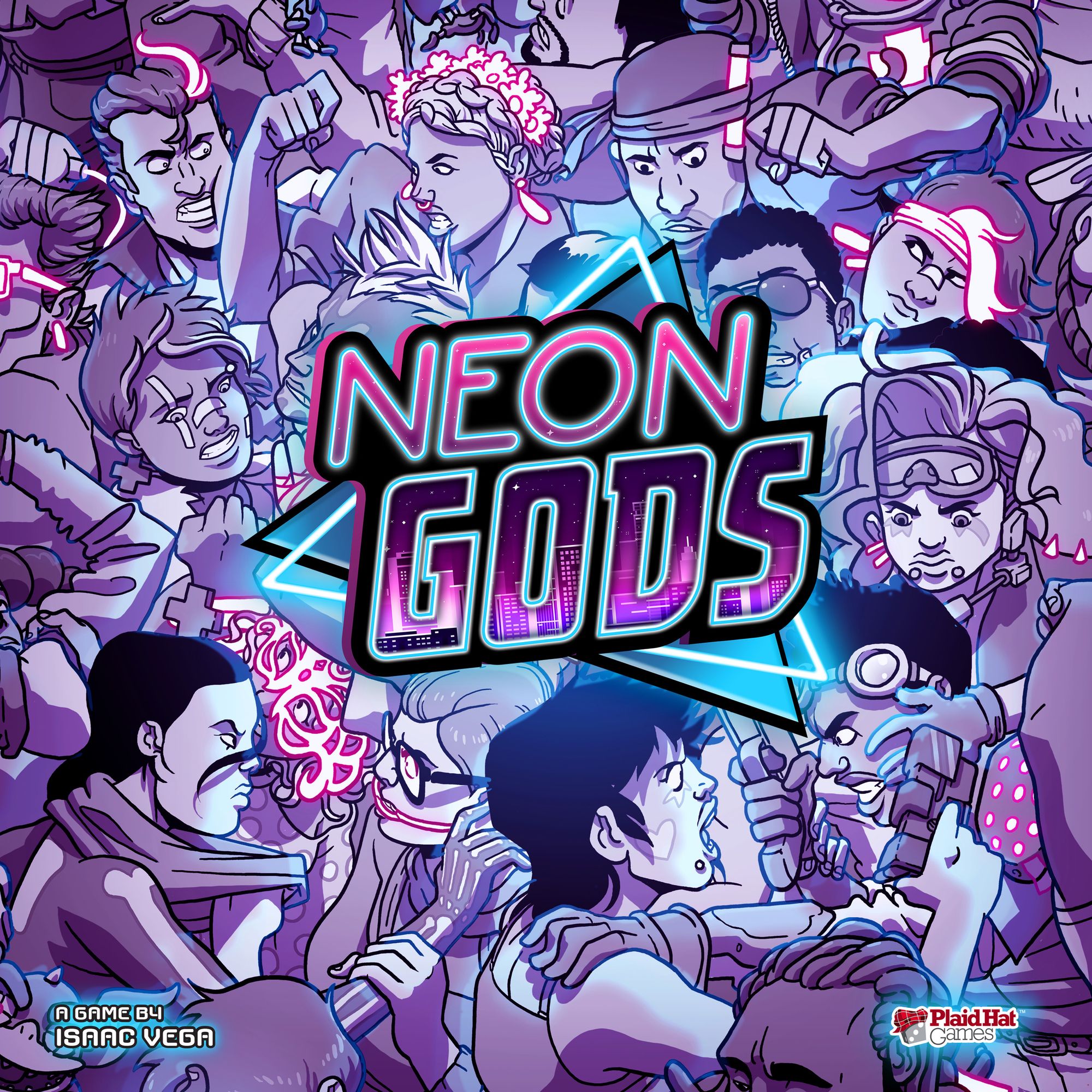
Neon Gods has killer box art and a fun premise—running a neon-drenched street gang inspired by 1970s and 80s sci-fi flicks like The Warriors—but the actual game underneath is thoroughly mid. Designed by Isaac Vega (who co-designed the much better Dead of Winter), it mashes together deck-building, dice rolling, and grid-based territory control across nine rounds.
The problem is the two-hour clock. A 2.4 weight game on BoardGameGeek is medium-light, which is usually a sweet spot for families with teens, but stretching that weight over 120 minutes with a 6.35 community rating means you're in for repetitive turns and runaway-leader issues. If you stumble across a cheap copy at a board game swap and your teen loves cyberpunk aesthetics and direct table conflict, it's a fine Saturday afternoon distraction. Otherwise, there are much sharper turf-war games worth your two hours.
Age Fit
Boxed at 14+ by Plaid Hat Games, a 12-year-old who enjoys tactical board games can handle the 2.4 complexity weight without trouble. The real hurdle is sitting still for a two-hour area-control brawl that doesn't quite earn its runtime.
WISE Breakdown
Wholesome
68
The theme revolves around street gangs, black market resources, and fighting off rival factions and the police, though it is presented through a campy, heightened 1970s/1980s sci-fi cinema lens rather than gritty realism.
Imaginative
78
A vibrant retro-futuristic aesthetic and a solid mix of mechanisms—deck-building, grid movement, and area control—create a strong, stylized tabletop sandbox.
Safe
82
As a physical board game, it carries zero digital safety risks. The 14+ age rating and themes of gang turf wars and black-market trading are stylized, though high player-versus-player conflict can cause table friction.
Enriching
70
Offers solid tactical planning, resource management, and spatial reasoning across nine rounds of play, though the 120-minute runtime and mediocre reception (6.35 on BoardGameGeek) hold it back from top-tier status.
Parent Info
✓
Why It Might Be Great
Accessible tactical depth. With a BoardGameGeek complexity weight of 2.4 out of 5, the rules are approachable for teens who already know games like Catan, while still mixing deck-building, grid movement, and dice combat.
Distinctive 70s/80s sci-fi vibe. Designer Isaac Vega and publisher Plaid Hat Games lean hard into a kaleidoscopic, retro-cinema aesthetic that stands out from the standard beige fantasy tropes on most game shelves.
Three-act pacing. Scoring happens at the end of every third round across nine total rounds, giving players clear milestones to plan their territory pushes and economy around.
⚠
What to Watch For
Two hours of direct conflict. This is a King-of-the-Hill style territory game where opponents actively muscle in on what you built. If your family game nights derail when someone's base gets wrecked, expect some bruised feelings.
Out-of-print obscurity. Released in 2018 with barely over 200 ratings and a 6.35 average on BGG, this is a forgotten mid-tier release. It drags in the back half for what it offers.
Crime-lord theming. Players recruit "ne'er-do-wells," buy black-market goods, shed blood for turf, and dodge cops harassing their businesses. It's comic-book camp, but the vocabulary is built around street gangs.
Conversation Starters
"In games like this, do you prefer building up your own businesses quietly, or going straight after everyone else's turf?"
"What makes a two-hour board game feel like it flew by versus feeling like a slog?"
"Why do you think 1970s and 80s visions of the future always involved so much neon and street gangs?"
Deep Dive
Great aesthetic, sluggish engine
Plaid Hat Games built its reputation on thematic, story-heavy tabletop games, and Neon Gods swings hard on style. You're managing a street gang in a heightened near-future city, setting up "legitimate" front businesses to fund your operations, recruiting misfits into your deck, and buying black-market upgrades. Meanwhile, the cops roam the board as a neutral hazard while you fight up to three other players for control of the city blocks.
On paper, the hybrid of deck-building and area majority works well. Every third round triggers a scoring phase, so the nine-round game breaks cleanly into three acts. You build your engine, position your miniatures on the square grid, and scrap for points before the third-round buzzer.
Better alternatives for the table
Where Neon Gods loses steam is the ratio of depth to time. Two hours is a heavy ask for a game this light on tough decisions. If your teen likes the idea of battling for territory with miniatures and cards, look at these instead:
King of Tokyo: If you want dice-chucking King-of-the-Hill conflict with a loud aesthetic, it delivers the same table talk in 30 minutes instead of 120.
Inis or Kemet: If your kid is ready for a true two-hour area-control fight, both of these offer tighter, meaner, and much better-balanced tactical play.
Ankh: Gods of Egypt: Another miniatures-on-a-map brawl that handles territory scoring and conflict with far more tension.