Our reviews and ratings are 100% unbiased. Screenwise is a Bookshop.org affiliate and an Amazon Associate, so if you buy a book through one of our links, we may earn a commission. Bookshop.org purchases also support independent bookstores.
Screenwise Verdict
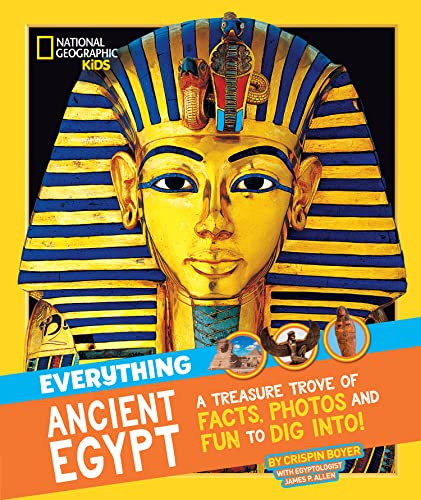
This is the gold standard for 'stealth learning.' National Geographic knows exactly how to layout a page so it feels like a high-end magazine rather than a school textbook. If your kid is into history (or just weirdly obsessed with mummies), this is a no-brainer.
It’s a high-quality physical object that competes well against digital distractions. It doesn't demand a linear read; a kid can open to any page and find something cool in thirty seconds. In a world of infinite scrolling, this is the kind of 'deep dive' that actually feels fun.
Age Fit
Perfect for the 7-12 crowd. Younger kids will dig the pictures while older ones will actually absorb the nuances of the dynasties and trade routes.
WISE Breakdown
Wholesome
92
It is pure educational curiosity. It respects the culture it covers and frames history as a grand adventure without being condescending.
Imaginative
85
While non-fiction, the vivid photography and 'what was it like' anecdotes do a great job of helping kids visualize a world that hasn't existed for millennia.
Safe
95
It is a physical book with zero digital tracking or ads. The only 'danger' is some mild gross-out factor regarding mummification, which is standard for the subject.
Enriching
94
It provides a solid foundation in archaeology, history, and geography. It encourages critical thinking about how we know what we know about the past.
Parent Info
✓
Why It Might Be Great
Visual feast that uses National Geographic's top-tier photography to make 4,000-year-old ruins look stunning rather than dusty.
Bite-sized facts are perfect for kids who prefer browsing and 'snacking' on information rather than reading long, dry chapters.
Expert anecdotes provide a 'behind the scenes' look at what archaeologists actually do, making the science feel like a real career path.
High-energy layout keeps the pages moving with sidebars, maps, and 'weird but true' callouts that prevent boredom.
⚠
What to Watch For
Mummification details can get a little graphic for very squeamish kids—we're talking about hooks up noses and organs in jars.
Death-centric themes are unavoidable in Egyptology; if your child is currently going through a phase of anxiety about death, maybe skim the tomb sections first.
Conversation Starters
"If you had to pick one animal head for your own Egyptian god persona, which one are you choosing?"
"Why do you think the Egyptians spent so much time and money building tombs instead of just fancy houses for the living?"
"If you were an archaeologist, what's the one thing you'd hope to find buried in the sand?"
"How do you think they moved those massive stones without trucks or cranes?"
Deep Dive
The Nat Geo Formula
There’s a specific reason why National Geographic Kids books like Everything Ancient Egypt dominate school libraries: they understand the 'Information Architecture' of a child's brain. They don't give you a 20-page essay on the Old Kingdom. Instead, they give you a stunning two-page spread of the Great Pyramid with five 'Did You Know?' bubbles and a map. It’s built for the way kids actually consume media now—modular, visual, and fast-paced.
Why Egypt Still Wins
Ancient Egypt is the perennial heavyweight champion of kid history topics because it has everything: gold, monsters (gods), mystery, and just enough 'gross' stuff to keep it edgy. This 2018 edition keeps things fresh by including more recent archaeological tech, like how they use satellites and scans to find hidden chambers. It moves the conversation past 'look at this old stuff' to 'look at how we are still discovering this stuff.'
Better Than a Screen?
While there are plenty of great YouTube videos on the Nile, there’s something about the tactile nature of this book that sticks. You can’t 'click away' to a Minecraft video from a physical page. It’s a solid 'car book' or 'before bed' choice that provides high-value enrichment without the dopamine spikes of an algorithm. If you have a kid who says they 'hate reading,' try giving them this. It doesn't look like a book; it looks like an experience.