Our reviews and ratings are 100% unbiased. As an Amazon Associate, Screenwise earns from qualifying purchases, so if you buy a book or game through one of our links, we may earn a commission. We don't get any credit if you just Google it instead :)
Screenwise Verdict
If you are tired of board games that rely entirely on luck, this is the fix. My First Castle Panic is a legitimate strategy game with the training wheels still on. It respects a child's ability to make choices rather than just spinning a wheel and moving a plastic pawn.
It’s short enough (20 minutes) to fit into the pre-bedtime window and engaging enough that you won't be checking your watch while you play. It turns the 'monster under the bed' trope into a manageable, goofy puzzle that rewards communication and teamwork.
Perfect for the 3-to-6 crowd. It's the ideal 'gateway' game for kids who are bored of Candy Land but aren't quite ready for games with complex text or math.
WISE Breakdown
Wholesome
95
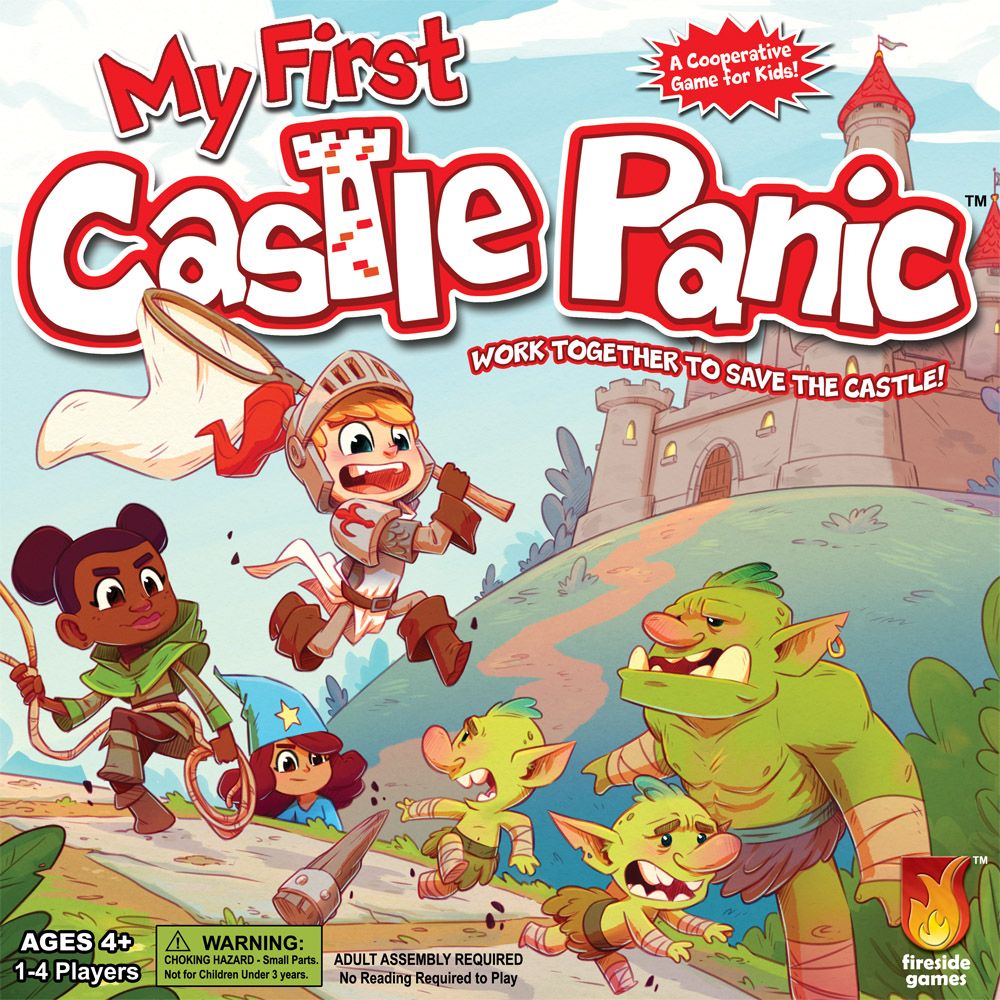
It is entirely cooperative, meaning the family wins or loses as a team. The 'monsters' are more silly than scary, and the goal is capturing them in a dungeon rather than violent combat.
Imaginative
82
The 3D castle and wall components provide a great sense of place. While the mechanics are simple matching, the theme of a 'siege' is well-integrated for the preschool set.
Safe
100
It is a physical board game with no digital components, hidden costs, or mature themes. Social dynamics are positive due to the cooperative nature.
Enriching
90
Excellent for developing 'pre-gamer' skills like color and shape recognition, basic strategic planning, and the social etiquette of turn-taking.
Parent Info
✓
Why It Might Be Great
Cooperative play means no one gets their feelings hurt by a sibling 'attacking' them; you're all on the same team.
The tactile castle and wall pieces make the stakes feel real for a four-year-old without being overwhelming.
It teaches foundational logic by asking kids to plan one or two steps ahead as monsters move down the path.
There is zero reading required, so kids who haven't hit that milestone yet can play with total independence.
⚠
What to Watch For
The 'monsters' move every turn, which can create genuine tension for sensitive kids as the board gets crowded.
Losing is possible—if the monsters destroy the castle, everyone loses. Be ready to model a graceful team defeat.
Conversation Starters
"Which monster looks the funniest to you?"
"If we have two cards that match, which monster should we catch first to save the castle?"
"What do you think the monsters do once they're in the dungeon?"
"How did it feel when we worked together to save the wall?"
Deep Dive
Why this beats the classics
Most 'classic' preschool games like Chutes and Ladders or Candy Land aren't actually games—they're automated systems where the winner is decided the moment the deck is shuffled. My First Castle Panic introduces the concept of agency. A child has to look at their hand, look at the board, and decide which threat is the most immediate.
The cooperative edge
For families with siblings, the cooperative element is a lifesaver. Because everyone wins or loses together, the older child naturally steps into a 'mentor' role, helping the younger one identify shapes or colors. It removes the friction of competition while keeping the engagement high.
Growth potential
While the box says 4+, a sharp 3-year-old can play this with a little help, as it's essentially a high-stakes version of 'put the square block in the square hole.' By the time they hit 7, they'll likely be ready for the 'grown-up' version of Castle Panic, but this remains a staple for the early years because it actually feels like a game and not a chore for the parents involved.