Our reviews and ratings are 100% unbiased. As an Amazon Associate, Screenwise earns from qualifying purchases, so if you buy a book or game through one of our links, we may earn a commission. We don't get any credit if you just Google it instead :)
Screenwise Verdict
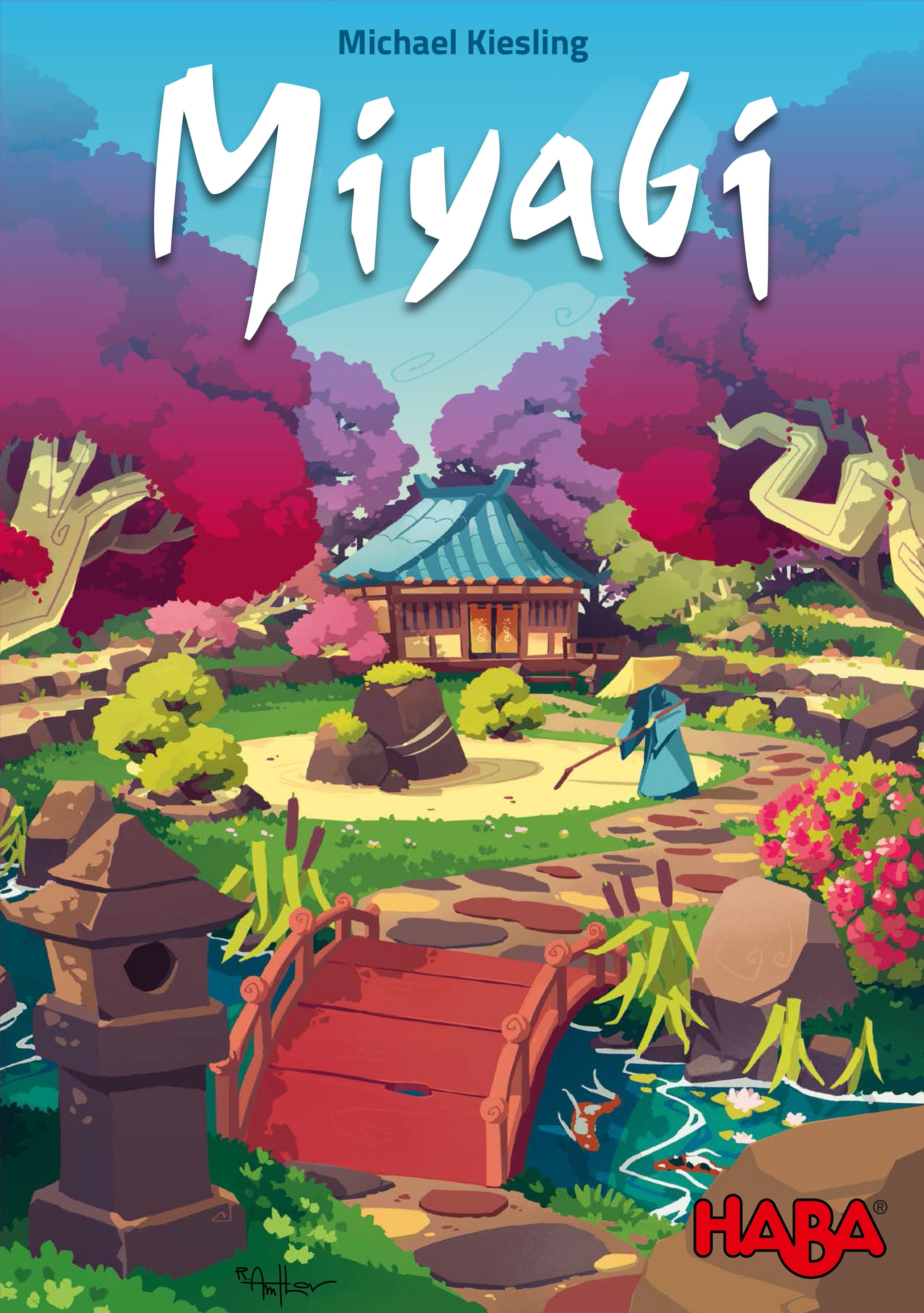
Miyabi is what happens when you take the 'brainy' satisfaction of a puzzle and turn it into a social family activity. It's beautiful to look at, physically sturdy, and offers just enough challenge to keep parents from getting bored while being accessible enough for a 2nd grader.
It's the rare 'yellow box' HABA game that is clearly meant for the whole family, not just the little ones. If your kid likes building things or solving spatial riddles, this is a top-tier addition to the board game shelf.
Age Fit
Perfect for 8 and up. Younger kids who have played games like Kingdomino or Patchwork can handle the tile placement, though the strategic layering might take a few games to click.
WISE Breakdown
Wholesome
95
It's an incredibly calm, aesthetically pleasing game about garden design. There's no 'take-that' aggression, just a focus on building something beautiful and efficient.
Imaginative
80
While it's an abstract puzzle at heart, the physical act of layering tiles to build a '3D' garden encourages kids to think about spatial layout and creative design.
Safe
100
Coming from HABA, a brand synonymous with child safety and quality, there are zero content concerns. Socially, it's a friendly competition without toxic mechanics.
Enriching
92
Excellent for developing spatial reasoning and multi-step planning. The grid restrictions force players to manage resources and timing in a way that builds genuine logic skills.
Parent Info
✓
Why It Might Be Great
Michael Kiesling design means you're getting a game from the same mind behind Azul, so the mechanics are polished and satisfying.
Spatial logic workout that feels like a puzzle rather than a chore, teaching kids to visualize three dimensions on a 2D board.
High replayability thanks to five included expansions that add new scoring rules once you've mastered the base game.
Tactile satisfaction from stacking thick cardboard tiles to literally build your garden upward.
⚠
What to Watch For
Analysis Paralysis can hit when kids (or adults) stare at the board trying to find the 'perfect' spot, which can slow the game down.
Final scoring is a bit of a math hurdle, so a parent will likely need to act as the official scorekeeper for the first few rounds.
Conversation Starters
"Why did you choose to place that pagoda on the second level instead of starting a new pond?"
"If you could have any of these items in a real garden, which one would you pick first?"
"How did the column restrictions change which tiles you wanted to grab from the middle?"
Deep Dive
The 'Azul' of Gardening
If you've played Azul, you know the feeling of a 'crunchy' abstract game—simple rules that lead to very difficult decisions. Miyabi hits that same sweet spot but feels a bit more forgiving and thematic. Designed by Michael Kiesling, it uses a clever grid system where your board has rows for specific objects (like maple trees or stone lanterns) and columns that can only be used once per round.
Why Layering Matters
The real magic here is the layering. You aren't just filling a flat map; you're stacking tiles. Higher layers score more points, but you have to have a solid foundation underneath. This teaches a specific kind of 'future-proofing' logic: if I place this pond here now, am I blocking myself from building a taller pagoda later?
Growing with the Game
Most family games get stale after five plays. Miyabi avoids this by including five mini-expansions in the base box. These introduce 'achievements'—like getting points for the largest meadow or a specific pattern of lanterns. It allows you to dial the complexity up as your kids get better at the game. It’s a quiet, thoughtful experience that rewards patience and visualization over quick reflexes or luck.