Our reviews and ratings are 100% unbiased. As an Amazon Associate, Screenwise earns from qualifying purchases, so if you buy a book or game through one of our links, we may earn a commission. We don't get any credit if you just Google it instead :)
Screenwise Verdict
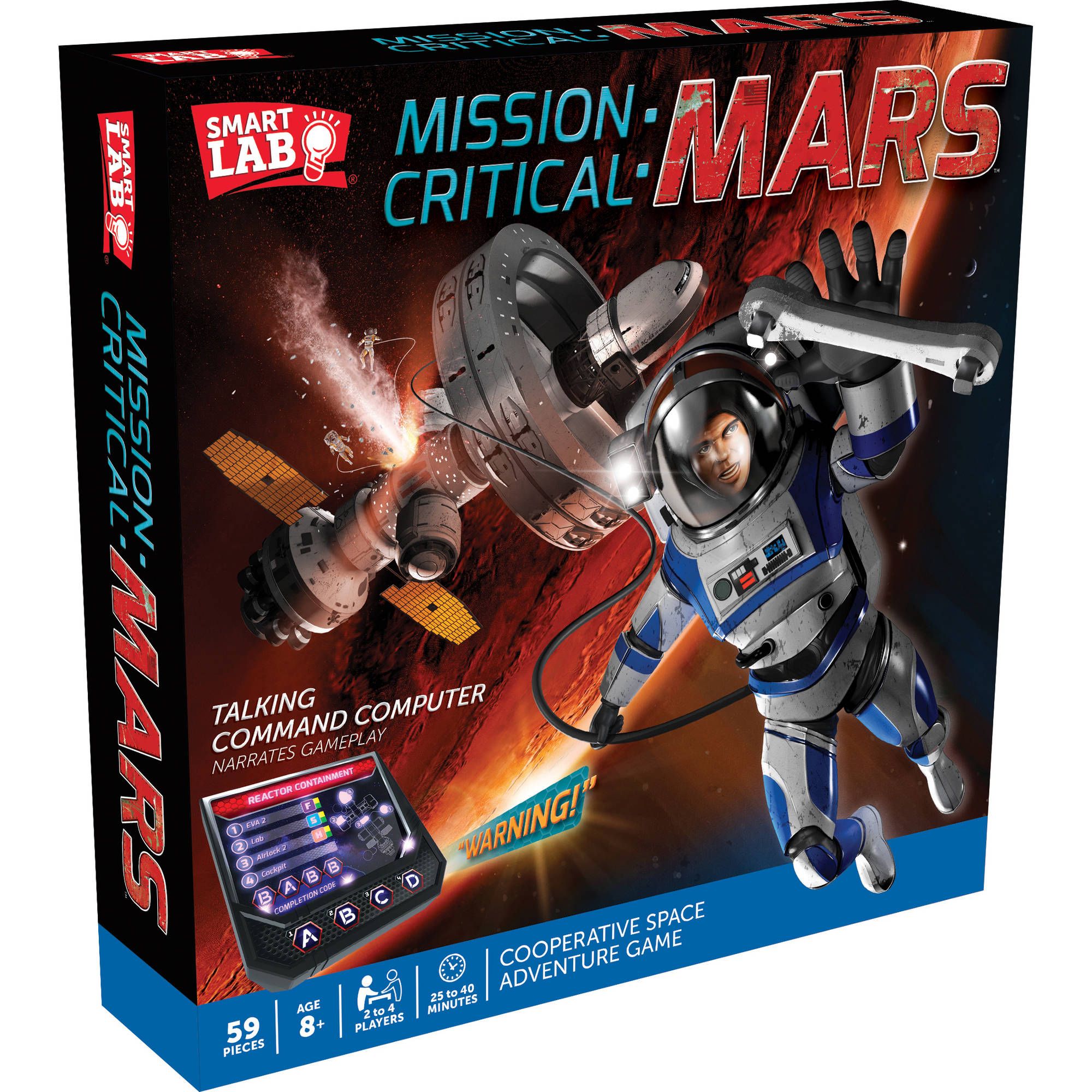
Designed by Forrest-Pruzan Creative for SmartLab Toys, Mission Critical: Mars lands halfway between an educational museum gift shop toy and a starter co-op board game. The electronic Command Computer acts as an automated game master, barking random system failures that your crew must fix before the countdown expires.
It works well for early elementary kids because nobody is getting attacked by another player. You either coordinate your dice and land safely on the Red Planet, or the ship takes four critical hits and everyone loses together. That shared stakes dynamic takes the sting out of losing.
The trade-off is mechanical depth. The strategy boils down to rapid triage and matching dice faces to procedure cards. It will not replace deeper co-op classics on family game night, but it provides a lively, tactile hour for young space buffs.
Age Fit
Ages 7 to 11. Younger kids may freeze up when the alarm module starts ticking, while teenagers and seasoned board gamers will find the dice-matching procedures too repetitive.
WISE Breakdown
Wholesome
85
Full cooperative play where everyone shares the same spacecraft, forcing kids to coordinate and support each other rather than sabotage opponents.
Imaginative
74
The electronic command module and emergency scenarios build solid atmosphere for an Apollo 13-style survival run, though the core dice-resolution mechanics are standard.
Safe
92
No objectionable themes, violence, or predatory components; spacecraft failure is represented by system damage points rather than graphic destruction.
Enriching
75
Teaches real-time triage, communication under time pressure, and basic probability management through dice assignments.
Parent Info
✓
Why It Might Be Great
Zero cutthroat conflict makes it an easy pick for kids who melt down during competitive board games.
Real-time emergency alarms inject genuine excitement and force quick communication without requiring a screen.
Accessible space science context introduces the gritty realities of spaceflight like life-support triage and orbital landing checklists.
⚠
What to Watch For
The electronic voice module gets repetitive fast and sounds like mid-2010s novelty hardware.
Heavy dice reliance means a string of bad rolls can crash the ship even when the team makes sound tactical calls.
Limited replay value once kids memorize the emergency patterns and landing procedure steps.
Conversation Starters
"Which ship system would be the absolute worst to lose halfway to Mars: navigation, life support, or communications?"
"Did we fail that emergency because of bad dice luck or because nobody was tracking the timer?"
"If you had to pick a role on a real space mission, are you fixing broken thrusters or planning the course?"
Deep Dive
Where It Fits on Game Night
Electronic board games from the 2010s often fall into an awkward middle ground: not quite digital enough to compete with a tablet, yet reliant on a plastic speaker that eventually wears thin on adult patience. Mission Critical: Mars manages to justify its hardware gimmick because the ticking electronic computer creates external pressure without requiring a parent to play referee.
Games like Pandemic or Forbidden Island handle cooperative problem-solving through pure card and pawn mechanics, which usually offers far more strategic replayability. However, those games frequently suffer from "quarterbacking," where the most vocal kid or adult at the table simply tells everyone else what to do on their turn. Because Mission Critical: Mars uses timed, simultaneous dice rolling against an alarm, there is rarely enough time for one player to micromanage everyone else. Everyone has to grab their own dice, assess their assigned task, and contribute.
The Shelf-Life Factor
The 5.7 rating on BoardGameGeek reflects what hobbyists know going in: the shelf life here is short. Once a crew figures out how to prioritize life-support repairs over minor hull warnings, the procedural puzzle loses its teeth. Keep it around while your kid is deep in a NASA or astronomy phase, then hand it down to another family once they outgrow the dice-matching loop.