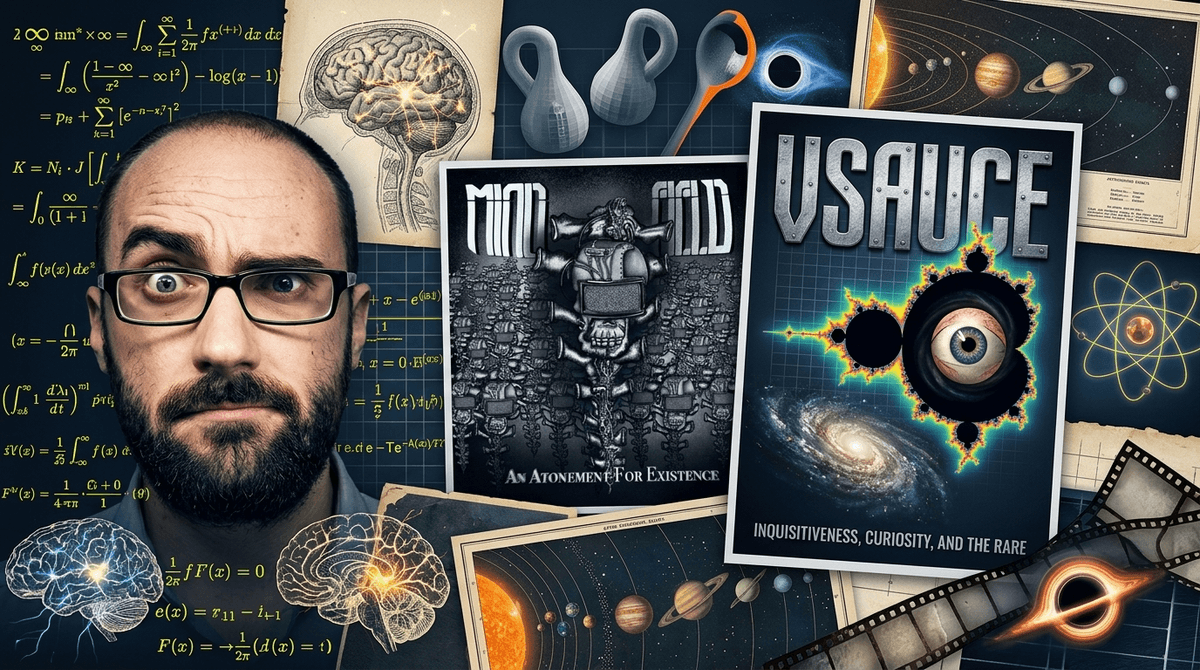
The Vsauce upgrade
If your kid has spent any time on the science side of the internet, they likely already know the host from his legendary YouTube channel. For years, he was the guy in the office asking "Why are things boring?" or "How much does a shadow weigh?" Mind Field is what happens when that same curiosity gets a massive production budget and a team of actual researchers.
This isn't a "sit back and learn" documentary series. It’s visceral. Instead of just explaining a psychological concept like the bystander effect or social conformity, the show builds elaborate, sometimes haunting sets to test these theories on real people (and occasionally the host himself). It moves with the pacing of a thriller, which is why it works for a demographic that usually finds educational TV a bit of a chore.
More than "stunt" science
It would be easy for a show like this to lean into the "prank" genre, but it stays grounded. The experiments are often conducted in partnership with universities and legitimate scientists. While the host is the face of the show, he plays the role of the guinea pig as much as the narrator.
If your teen liked MythBusters for the explosions, they’ll like this for the "brain explosions." It’s the same satisfaction of seeing a theory put to the test, but the stakes are internal. Critics and fans on Reddit often point out that while the show doesn't necessarily break new scientific ground, it is arguably the best gateway drug for psychology ever filmed. It takes the dry, black-and-white photos from a textbook and turns them into high-definition dilemmas.
The friction of the "dark" side
The IMDb score of 8.7 reflects a high level of quality, but that high rating comes from the show's willingness to go to some intense places. This is where the 14+ rating actually matters. This isn't a warning about "bad" content so much as a heads-up about psychological weight.
When the show explores things like isolation, obedience, or the nature of fear, it doesn't pull punches. You’re watching people face genuine distress or moral confusion. For a younger or more sensitive kid, the "Solitary Confinement" experiment or the deep dives into how easily humans can be manipulated might be a bit haunting. It’s the kind of show that is better watched in the afternoon than right before bed.
How to use it
Mind Field is the perfect "bridge" show. If you’re trying to move a kid away from mindless scrolling and toward something with more substance, this is the play. It has the visual language of a high-end YouTube video—fast cuts, direct address, high energy—but the soul of a university seminar.
- Don't binge it. Each episode is a lot to chew on. Watching one and then actually talking about the "what would you do?" factor is where the real value is.
- Check the free episodes. While it was built for YouTube Premium, many episodes have been made available for free over time. It's worth checking the official channel before committing to a subscription.
- Watch the "making of" context. The host often discusses the ethics of these experiments, which is a great entry point for talking about how we treat people in the name of "content" or "science."