Our reviews and ratings are 100% unbiased. As an Amazon Associate, Screenwise earns from qualifying purchases, so if you buy a book or game through one of our links, we may earn a commission. We don't get any credit if you just Google it instead :)
Screenwise Verdict
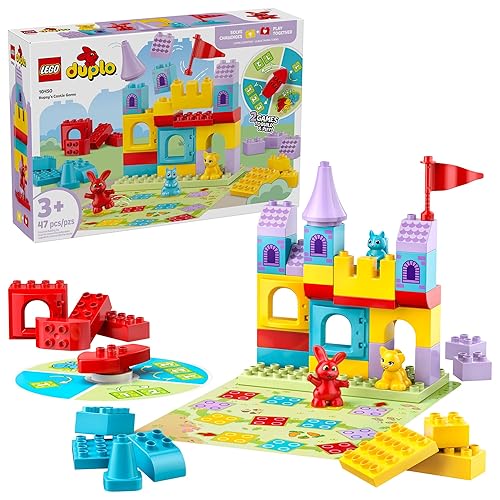
This is a perfectly fine early learning tool that does what it says on the box: teaches counting and basic math through a simple board game structure. The DUPLO pieces are safe, the theme is sweet, and the three play modes give it a bit of longevity.
But let's be real—it's from 2000, and the entertainment value is low. Most toddlers will enjoy the novelty for a few rounds, then prefer to just build castles or trains with the blocks. If you stumble across this at a yard sale for $5, great. If you're shopping for a new DUPLO experience in 2025, the Number Train or Interactive Train Adventure offer more bang for your buck and better align with what modern kids expect from their toys.
It's a solid 'B' for early math learning, but don't expect it to become a family game night staple.
Age Fit
Best for ages 2–5, when counting and stacking are still novel skills. Once kids hit kindergarten and can add/subtract fluently, the game will feel too simple and they'll likely abandon it for more complex play.
WISE Breakdown
Wholesome
92
A gentle, cooperative game that encourages turn-taking and basic math skills without any competitive edge that could frustrate toddlers. The berry-gathering theme is cheerful and age-appropriate, modeling patience and counting in a low-stakes environment.
Imaginative
68
The game provides a structured track-based experience with building elements, but the imagination here is fairly constrained—stack blocks, reach berries, return to start. It's more about following rules than open-ended creation. DUPLO bricks can be repurposed for free play afterward, but the game itself is quite linear.
Safe
98
DUPLO pieces are large, chunky, and designed for toddlers with minimal choking hazard. No violent themes, no mature content, no social features or screens. The game mechanics are simple and don't create bad feelings between players—it's about personal progress, not cutthroat competition.
Enriching
75
Three play modes (counting, addition, subtraction) make this a solid early numeracy tool disguised as a game. It builds fine motor skills through stacking and teaches basic math concepts in a hands-on way. However, entertainment value is limited—it's educational first, fun second.
Parent Info
✓
Why It Might Be Great
Three difficulty levels (counting, addition, subtraction) let you scale the challenge as your toddler grows
DUPLO pieces are indestructible and perfect for tiny hands—no choking hazards, no sharp edges
Sneaks early math concepts into play without feeling like a worksheet
Cooperative-ish vibe means no one melts down over losing
⚠
What to Watch For
Released in 2000, so finding a copy might require eBay hunting or a dusty garage sale
The gameplay is pretty basic—your kid may play it twice and then just want to build castles with the blocks
If you're looking for high replayability or excitement, this isn't it
Conversation Starters
"How many blocks do you think you need to reach the berries this time?"
"Can you count your blocks and tell me if you have enough?"
"What else could we build with these DUPLO pieces after the game?"