Our reviews and ratings are 100% unbiased. As an Amazon Associate, Screenwise earns from qualifying purchases, so if you buy a book or game through one of our links, we may earn a commission. We don't get any credit if you just Google it instead :)
Screenwise Verdict
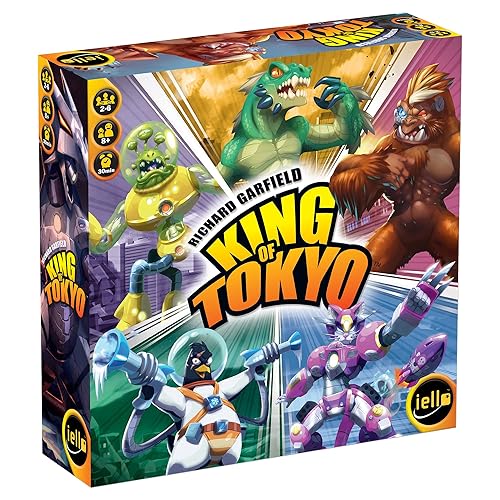
King of New York takes King of Tokyo's 'roll dice, punch monsters' formula and adds just enough crunch to keep it interesting without tipping into complexity overload. The Fame mechanic gives you more paths to victory, and the NYC borough system adds spatial tactics that weren't in the original.
The player elimination is the main friction point—get knocked out early and you're spectating for 20-30 minutes. But the game moves fast enough that most families won't mind, especially since the 'let's play again' energy is strong according to parent reviews.
It's not going to teach your kids chess-level strategy, but it does reward smart risk management and tactical thinking. The kaiju theme is fun without being too silly, and the power cards create enough variety that games don't feel samey. Solid family game night pick if your crew likes dice and doesn't mind some direct conflict.
Age Fit
Best for ages 8-16, though the 10+ recommendation is solid. Younger kids who can handle losing and waiting will do fine; older teens might find it too light unless they're into casual dice-chuckers. Adults enjoy it as a beer-and-pretzels game, but it's not deep enough to hold serious gamers' attention long-term.
WISE Breakdown
Wholesome
78
Dice-rolling monster combat with cartoon violence that's playful rather than graphic. Players attack each other, but the kaiju-movie theme keeps it light and silly. Player elimination can sting, but games are quick enough (40 min) that knocked-out players don't suffer long. The competitive nature is balanced by the absurdity of giant monsters stomping through NYC.
Imaginative
82
Richard Garfield's design (creator of Magic: The Gathering) brings creative monster powers, strategic dice choices, and the new Fame mechanic that adds depth to King of Tokyo's foundation. The kaiju-movie theme is inherently imaginative—mutant monsters, rampaging robots, and abominable aliens battling for NYC dominance. Power cards create unique combos and emergent gameplay moments that feel fresh each session.
Safe
92
Board games don't get much safer than this. No mature content, no gambling mechanics, no toxic social dynamics beyond standard competitive play. The monster-on-monster combat is cartoonish and thematic. Player elimination exists but is mitigated by short game length. Family-friendly artwork and no problematic themes. BGG community ownership of 27K signals broad acceptance.
Enriching
74
BGG weight of 1.87 places it in the light-to-medium range—accessible but with enough decision-making to engage strategic thinking. Players weigh risk vs. reward with dice rerolls, manage resources (energy for power cards), and adapt tactics based on board state. Teaches probability, planning, and reading opponents. Not deeply complex, but offers genuine choices and replayability. The 'let's play again' factor mentioned in reviews suggests strong engagement.
Parent Info
✓
Why It Might Be Great
Fast-paced dice combat that's easy to learn but offers real tactical decisions—do you heal, attack, or save energy for power cards?
The Fame mechanic adds a new victory path beyond 'last monster standing,' creating more strategic variety than King of Tokyo
40-minute play time hits the sweet spot—long enough to feel substantial, short enough that eliminated players aren't waiting forever
Designed by Richard Garfield (Magic: The Gathering), so the underlying systems are rock-solid with good replayability
High 'let's play again' factor according to multiple family reviews—kids genuinely want to jump back in
⚠
What to Watch For
Player elimination is real—if your monster dies, you're out until the next game starts (though 40-min runtime softens this)
Slightly more complex than King of Tokyo with additional rules around Fame and NYC boroughs—expect a longer teach time
Competitive combat means feelings can get hurt when siblings gang up on each other, though the silly monster theme helps defuse tension
Dice luck plays a significant role—strategic kids may get frustrated when rolls don't go their way
Conversation Starters
"If you were a giant monster, would you rather be famous or just destroy everything? Why?"
"When you got knocked out early, how did that feel? What could we do differently next game to make it more fun for everyone?"
"What was your favorite power card combo? Did you have a strategy or just go with what felt cool?"
"Should we team up against whoever's winning, or is that unfair? What makes a game competitive but still fun?"