Our reviews and ratings are 100% unbiased. As an Amazon Associate, Screenwise earns from qualifying purchases, so if you buy a book or game through one of our links, we may earn a commission. We don't get any credit if you just Google it instead :)
Screenwise Verdict
Jeopardy! is a classic for a reason, but the board game version often lacks the 'zip' of the television show. In practice, it can feel a bit dry compared to modern trivia hits like Wits & Wagers. The biggest hurdle is the host role—someone has to be Alex Trebek, and that person doesn't get to play, which is a hard sell for a kid who wants to compete.
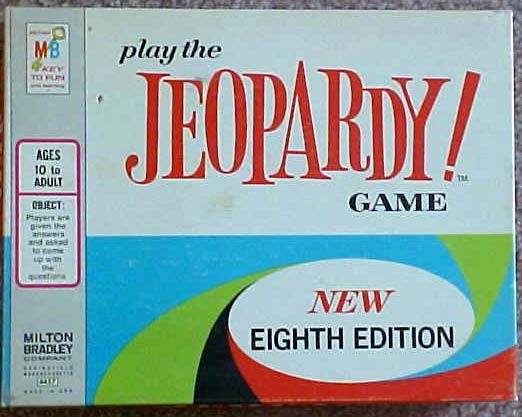
If you're going to do this, get a modern edition. A 1964 copy is a neat curiosity, but the clues will be borderline impossible for a Gen Z or Gen Alpha kid. It’s a solid way to spend a rainy afternoon, but don't expect it to be the 'main event' of a high-energy game night.
Age Fit
Best for ages 10 and up. While the 'Family Edition' lowers the bar, the standard game requires a level of general knowledge that most kids under 10 simply haven't absorbed yet. Adults will still find it challenging.
WISE Breakdown
Wholesome
92
It's the ultimate intellectual pursuit for the living room. It rewards curiosity, respects the players' intelligence, and stays entirely away from the 'mean-spirited' vibes of modern party games.
Imaginative
35
It's a trivia game. You aren't building worlds or solving creative puzzles; you're just reaching into the back of your brain for facts you hopefully learned in school or on Wikipedia.
Safe
98
Extremely safe. The only real danger here is a bruised ego or a heated argument over whether 'The Great War' counts as 'World War I.' No gambling, no toxicity, just pure nerding out.
Enriching
88
It's basically a gamified encyclopedia. It encourages kids to be generalists and rewards them for paying attention to the world. The 'form of a question' mechanic also forces a bit of mental gymnastics.
Parent Info
✓
Why It Might Be Great
Knowledge is power and this game makes being a 'know-it-all' actually pay off in fake cash.
Healthy competition that doesn't rely on luck—if you know the stuff, you win the round.
Family bonding through shared frustration over a category nobody knows anything about.
The emcee role gives a kid who loves the spotlight a chance to run the show and judge their parents.
⚠
What to Watch For
Clue decay is real. If you buy a vintage set, the 'Current Events' clues are basically history lessons now.
The emcee bottleneck means one person is always left out of the actual playing to read the cards.
Buzzer frustration can lead to meltdowns if one player has significantly faster reflexes or a better grasp of the material.
Conversation Starters
"If you could pick any five categories for a board where you'd definitely win, what would they be?"
"Why do you think the game makes us answer in the form of a question? Does it change how you think?"
"What's one fact you learned today that you actually think is cool, not just useful for the game?"
"Who was the toughest 'emcee' we've had so far?"
Deep Dive
The 'Host' Problem
In the TV show, the host is a professional. In your living room, the host is usually the person who didn't shout 'Dibs' fast enough. This is the fundamental flaw of the Jeopardy! board game: it requires a dedicated moderator. For a family of four, having one person sit out and just read clues can feel like a chore.
Clue Decay and the 'Family' Pivot
If you're looking at the original 1964 version, you're essentially playing a history game. Clues about 'modern' pop culture from sixty years ago will fly right over your kids' heads. If you want this to actually land, look for the Jeopardy! Family Edition. It balances the clues so that kids can actually answer 'What is a TikTok?' while parents struggle to remember who played the lead in a 90s rom-com.
Why it still works
Despite the clunky mechanics (the clickers are never as satisfying as the real thing), it teaches a specific kind of intellectual discipline. You have to listen to the whole clue, process the category, and then—crucially—reformat your brain to ask a question. It’s a great 'bridge' game for kids who are starting to find 'kid games' too simple but aren't quite ready for the cutthroat nature of Settlers of Catan or Risk.