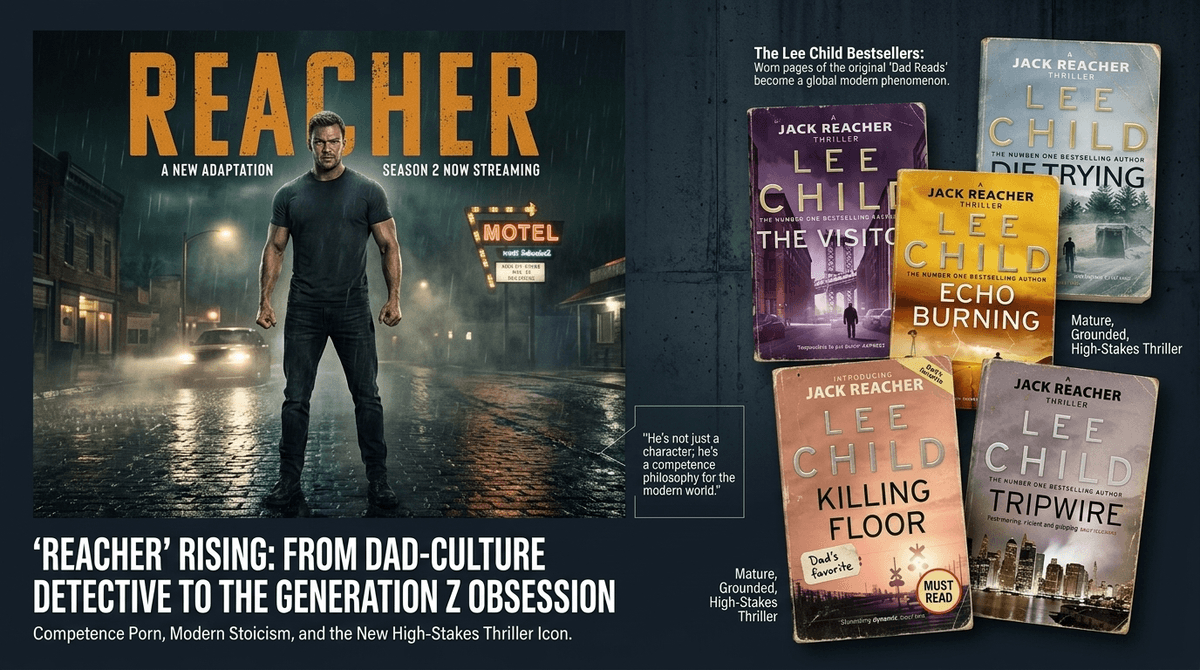
The Jack Reacher series is a phenomenon because it taps into a very specific male fantasy: the ability to walk away from everything and still be the most capable person in any zip code. For a teenager, especially one feeling the pressures of social hierarchies and school structure, Reacher’s total independence is intoxicating.
Lee Child writes in what he calls 'the past participle'—short, punchy sentences that mirror Reacher's own personality. There is no fluff. This makes the books incredibly easy to digest. You can pick up almost any book in the series (with a few exceptions like the prequel Night School) and know exactly what's going on within three pages.
The 'Tactical' Appeal
What sets these apart from generic thrillers is the internal monologue. Reacher doesn't just hit people; he explains the math of the fight. He calculates the time it takes for a person's pupils to dilate or the structural weakness of a door frame. This 'tactical' layer turns the violence into a sort of engineering problem, which often appeals to kids who are into STEM or gaming. It’s less about bloodlust and more about being the smartest guy in the room.
A Note on the Violence
It's worth noting that while the violence is frequent, it's rarely 'cruel.' Reacher is a character who hates bullies. He is a protector of the weak, and his violence is almost always reactive. However, Child doesn't shy away from the physics of a 250-pound man hitting someone. If your kid is sensitive to descriptions of physical injury, this isn't the series for them. If they've seen a John Wick movie, they've seen worse, but the written word can sometimes feel more visceral.