Our reviews and ratings are 100% unbiased. Screenwise is a Bookshop.org affiliate and an Amazon Associate, so if you buy a book through one of our links, we may earn a commission. Bookshop.org purchases also support independent bookstores.
Screenwise Verdict
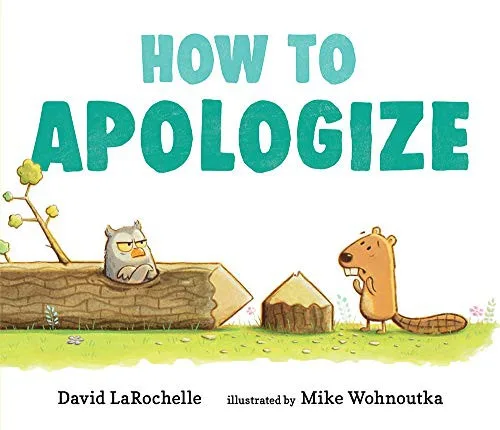
This book is a mandatory addition to any kid's shelf. It’s rare to find a 'teaching' book that doesn't feel like a chore to read, but David LaRochelle nails it by using humor to dismantle the ego.
It handles the nuances of remorse in a way that’s actually useful for real life. If your kid is in the 'I didn't mean to!' or 'He started it!' phase, buy this immediately. It’s short, punchy, and provides a social blueprint that many 40-year-olds are still missing.
Age Fit
Best for ages 3 to 8. It’s perfect for preschoolers learning to share and early elementary kids navigating more complex playground drama.
WISE Breakdown
Wholesome
95
It's a masterclass in emotional intelligence for the sandbox set. It models humility and kindness without being saccharine or annoying.
Imaginative
78
Uses clever animal scenarios—like a porcupine bumping into a balloon—to turn a dry social lesson into something visual and funny.
Safe
100
Zero red flags. It’s a 32-page picture book designed to help kids be better humans. No hidden 'edgy' content here.
Enriching
98
Most adults still don't know how to apologize without saying 'I'm sorry you felt that way.' This book kills the 'if' and 'but' apology before it starts.
Parent Info
✓
Why It Might Be Great
It explicitly calls out the 'fake apology' (no making excuses or blaming the other person).
The humor keeps it from feeling like a lecture from the principal's office.
It gives kids a literal script for when they're stuck in that 'I'm too embarrassed to speak' freeze.
The illustrations are genuinely funny—watching a sloth try to be quick about an apology is top-tier.
⚠
What to Watch For
It might make you realize how often you give bad apologies to your kids.
Very sensitive kids might feel a tiny bit of 'second-hand guilt' from the scenarios, but the resolution is always positive.
Conversation Starters
"Why is 'I'm sorry, BUT...' not a real apology?"
"How does your stomach feel right before you have to say sorry?"
"What’s the best way someone has ever apologized to you?"
"Is it okay to apologize even if the other person doesn't say it back?"