How Did This Get Made?

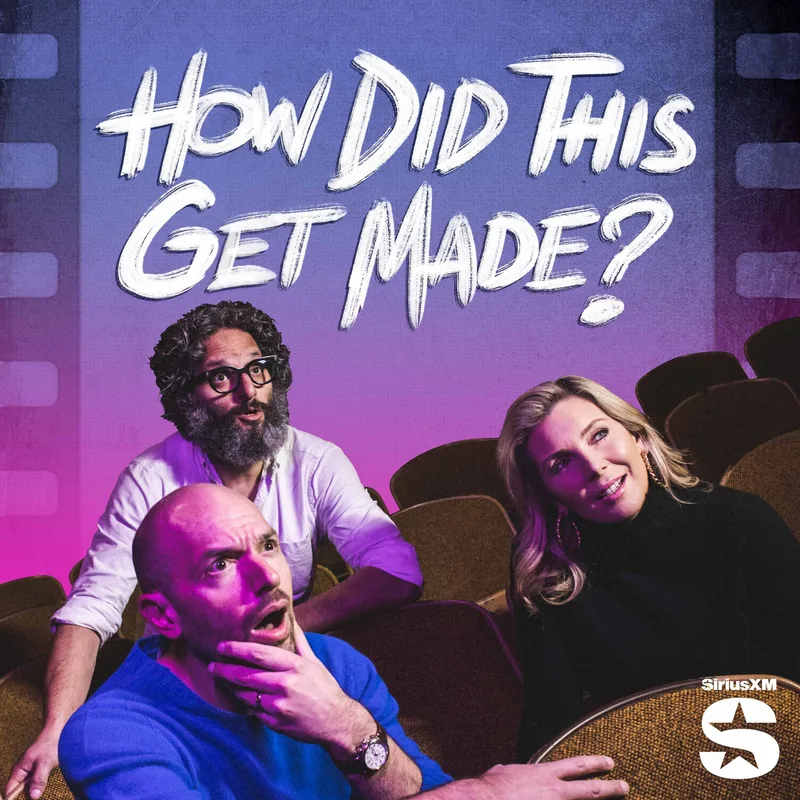
How Did This Get Made?

podcast

Explicit, 2010, Comedy, TV & Film

WISE
76%

WISE Score

Three comedians scream about why terrible movies exist so you can skip the film and just enjoy the roast.

Screenwise Verdict

How Did This Get Made? is the gold standard for the 'bad movie' podcast genre. It’s sharp, incredibly funny, and surprisingly insightful about the mechanics of Hollywood. If you’ve ever sat through a blockbuster flop and wondered how hundreds of professionals let it happen, this is your catharsis.

However, this is not a family-friendly listen. The humor is crude, the language is salty, and the energy is chaotic. It’s a perfect 'headphones-only' show for parents or a great pick for older teens who are starting to get interested in how movies are actually constructed—and why they so often fall apart.

Age Fit

This is for adults and older teens (15+). It’s high-level comedy that relies on a vocabulary of film tropes and a high tolerance for profanity.

WISE Breakdown
Wholesome
45

The hosts are genuine friends with incredible chemistry, but the show is built on snark and making fun of creative failures. It’s not mean-spirited toward people, but it’s definitely not 'kind' in the traditional sense.

Imaginative
88

Deconstructing a broken plot requires a lot of creative 'what if' thinking. The hosts often pitch better versions of the movies or imagine the bizarre circumstances that led to specific production choices.

Safe
25

Heavy explicit language (f-bombs are the baseline) and frequent, graphic sexual humor. This is 'adult' audio that is very easy to accidentally play in the car with kids in the back seat.

Enriching
82

It’s a secret masterclass in narrative structure and media literacy. By identifying why a movie fails, listeners learn what makes a story actually work.

Parent Info

Why It Might Be Great

  • Chemistry is king here; the trio of Paul, June, and Jason have a decade-plus of rapport that makes even the most obscure movie breakdown feel like a night out with friends.
  • It builds media literacy by teaching you to spot tropes, plot holes, and lazy screenwriting in a way that’s actually fun.
  • The live episodes bring a chaotic, high-energy vibe where the audience gets to participate with their own 'Second Opinions'.
  • It’s a great entry point for critical analysis—learning to love something because of how spectacularly it fails.

What to Watch For

  • Jason Mantzoukas is a delight, but his humor is frequently explicit, loud, and focuses on sexual 'what-the-hell' moments from the films.
  • The language is strictly R-rated. Do not put this on the car speakers if you aren't ready to explain a lot of four-letter words to a seven-year-old.
  • Some of the older movies they cover (80s/90s) involve outdated tropes or offensive content that the hosts do a good job of calling out, but the source material is still rough.

Conversation Starters

  • "Why do you think a studio would spend $100 million on a movie that clearly doesn't have a finished script?"
  • "Can a movie be so bad that it actually becomes good? What's the difference?"
  • "If you had to rewrite the ending of that movie to make it make sense, what would you change?"
  • "Does knowing how a movie was made change how you feel about the final product?"

Deep Dive

The Art of the Trainwreck

There is a specific kind of joy in dissecting a disaster, and How Did This Get Made? has turned that into an art form since 2010. While many podcasts try to do the 'bad movie' thing, few have the industry pedigree of Paul Scheer, June Diane Raphael, and Jason Mantzoukas. Because they are actually in the business, their critiques often come from a place of 'I know how hard this is, and yet, they still did this?'

The Dynamic

The show works because of the archetypes. Paul is the structured host trying to keep the train on the tracks. June provides the 'June-iverse' perspective—often questioning the most basic logic of the film in a way that stops the guys in their tracks. And Jason (the 'Zouks') is the agent of chaos, leaning into the absurdity with high-volume disbelief.

Why It Matters for Media Literacy

For a teenager, this podcast is actually a stealth education. We talk a lot about 'intentionality' at Screenwise, and HDTGM is all about looking at media with your eyes wide open. It encourages listeners not to just let a movie wash over them, but to ask: Who is this for? Why did that character do that? Where did the money go? It’s a masterclass in identifying narrative shortcuts and studio interference.

If you have a kid who wants to be a writer or filmmaker, this is a great 'advanced' course in what to avoid, provided they're old enough for the locker-room talk that comes with it.

What Parents Ask

Ask Anything

Get a personalized guide on any topic