Our reviews and ratings are 100% unbiased. As an Amazon Associate, Screenwise earns from qualifying purchases, so if you buy a book or game through one of our links, we may earn a commission. We don't get any credit if you just Google it instead :)
Screenwise Verdict
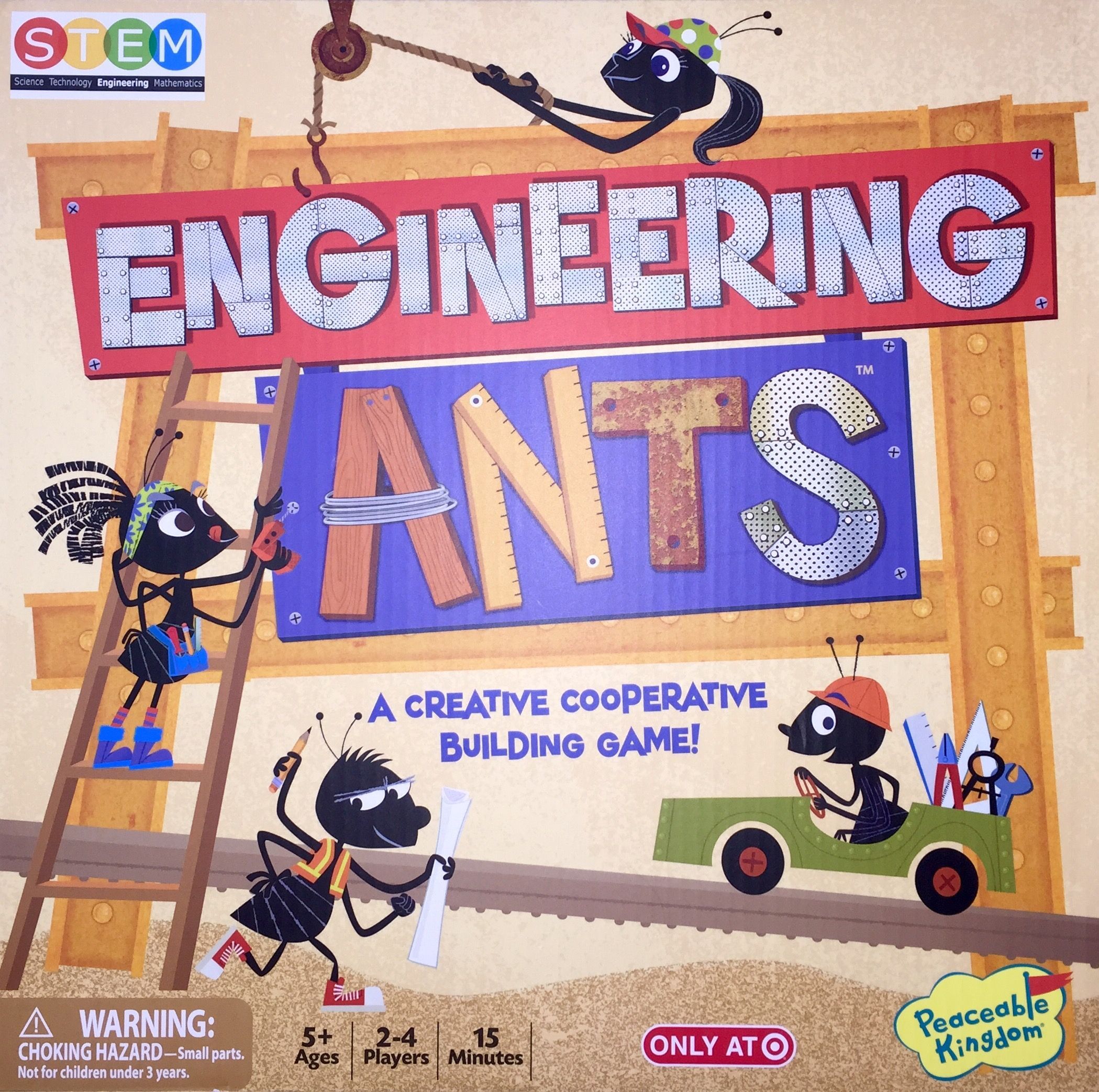
Engineering Ants is a refreshing break from the 'Candy Land' style of mindless board games. It forces kids to actually think with their hands. By combining a standard board game with a building kit, it hits that sweet spot of STEM learning that doesn't feel like a chore.
It’s not a deep strategic masterpiece, and the BGG rating reflects that it won't be a hit at your adult game night. But as a tool to get a first-grader thinking about how to connect pieces to solve a physical problem, it’s a winner. It’s wholesome, tactile, and keeps the 'anteater' tension just high enough to be exciting without causing a meltdown.
Age Fit
Perfect for the 5-8 crowd. Older kids (9+) will likely find the 'roll and move' parts boring and the building challenges too simple to stay engaged for long.
WISE Breakdown
Wholesome
95
It is a purely cooperative game about rescue and teamwork. No one is attacking anyone; the only 'enemy' is a hungry anteater on a timer.
Imaginative
92
Instead of just moving a piece, kids have to physically construct solutions—think bridges, ladders, or gliders—using a kit of tubes and connectors to overcome obstacles.
Safe
100
It's a physical board game with zero digital footprint or mature themes. Standard small-parts caution for toddlers applies.
Enriching
88
Teaches basic structural engineering and spatial reasoning in a way that feels like play rather than a classroom lesson.
Parent Info
✓
Why It Might Be Great
Hands-on engineering that moves beyond just moving a pawn on a flat board.
Cooperative mechanics mean the whole family wins or loses together, which is great for kids who struggle with competitive 'sore loser' energy.
Open-ended problem solving allows kids to come up with multiple ways to bridge a gap or climb a wall.
Low complexity makes it easy for a 5-year-old to understand the goal immediately without a 20-minute rulebook session.
⚠
What to Watch For
The 'roll and move' mechanic can feel a bit dated and luck-dependent compared to more modern board games.
The cardboard components and plastic clips can wear down over time if your kid is particularly aggressive with their 'engineering' builds.
Conversation Starters
"Why did that bridge collapse when we tried to put the ant on it?"
"What's another tool we could have built to get over the obstacle?"
"How did we do at listening to each other's ideas while we were building?"
"If you were an ant, would you rather have wings or a very long ladder?"
Deep Dive
The 'Build-Your-Own-Solution' Mechanic
Most kids' games are binary: you either have the card to move forward or you don't. Engineering Ants changes the math. When you hit an obstacle, you have to look at your pile of tubes, clips, and cardboard shapes and figure it out. This is the 'language comprehension' equivalent of board gaming—it's building the background knowledge of how the physical world works.
Cooperation vs. The Anteater
The cooperative element is the real star here. Because the anteater is moving toward the anthill, the pressure is on the group, not the individual. This encourages kids to talk through their builds. You'll often see one kid holding the tubes while another tries to snap on a clip, which is exactly the kind of social-emotional practice parents are looking for in a tabletop experience.
Durability and Replayability
The game uses a mix of plastic and cardboard. While the plastic tubes are sturdy, the cardboard 'wings' and 'ladders' are the weak points. If this becomes a daily favorite, expect some tape in your future. As for replayability, the board layout is fixed, but the way kids solve the obstacles changes as they get more confident with the building pieces. It’s a solid 'bridge' game—pun intended—before moving into more complex building systems like LEGO Technic or more robust cooperative games like Forbidden Island.