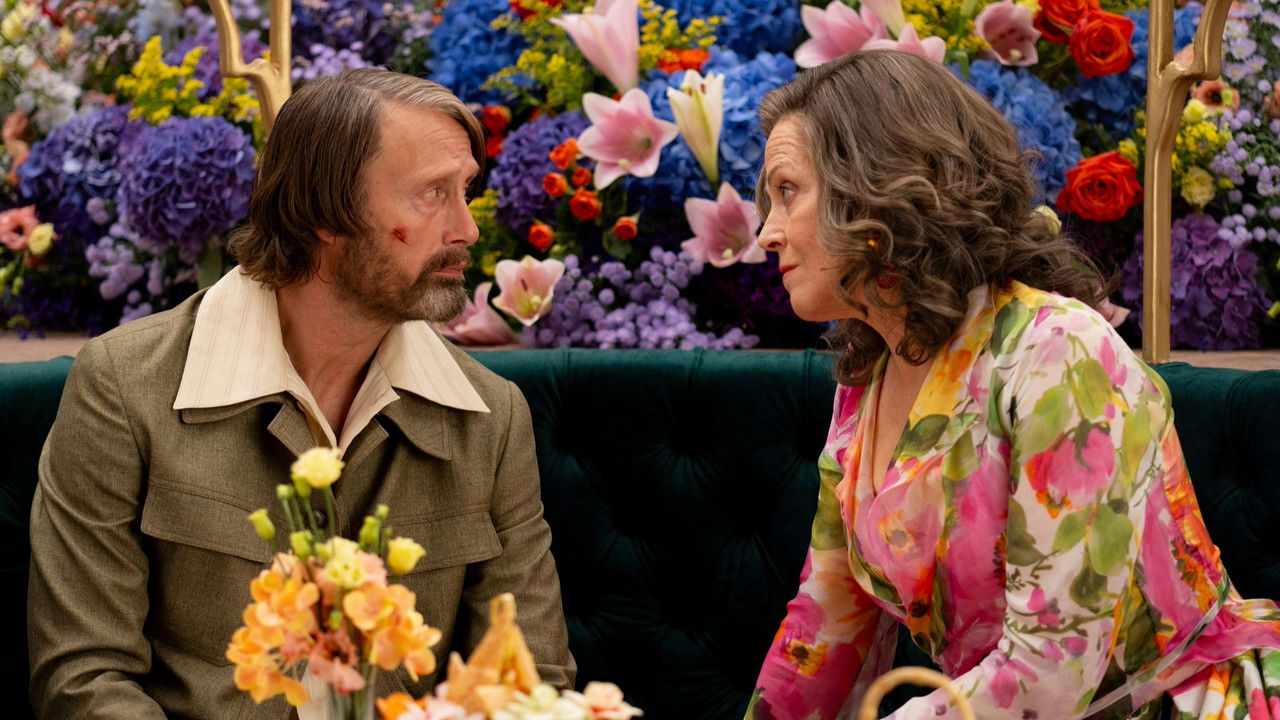
The Fuller aesthetic meets the hitman trope
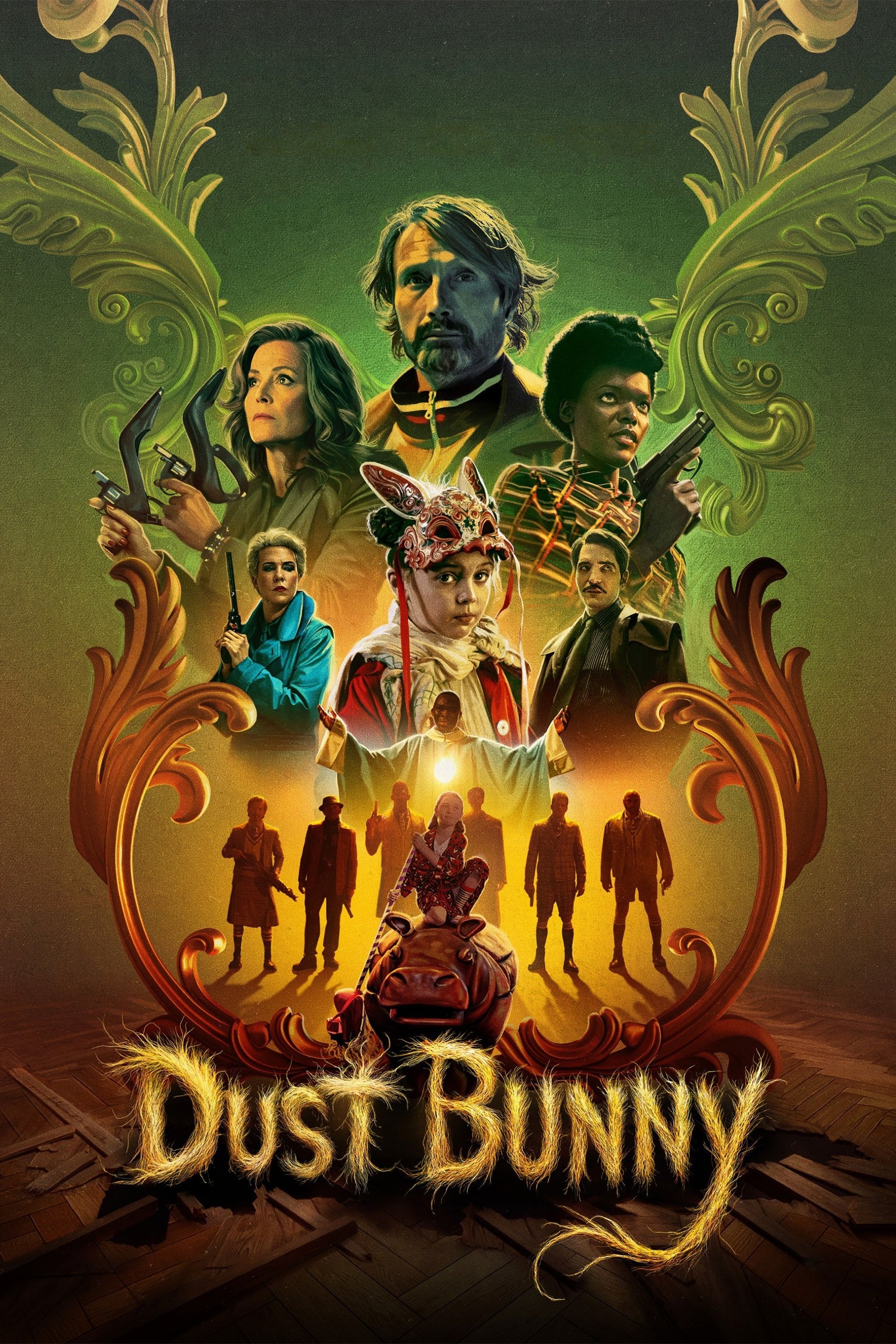
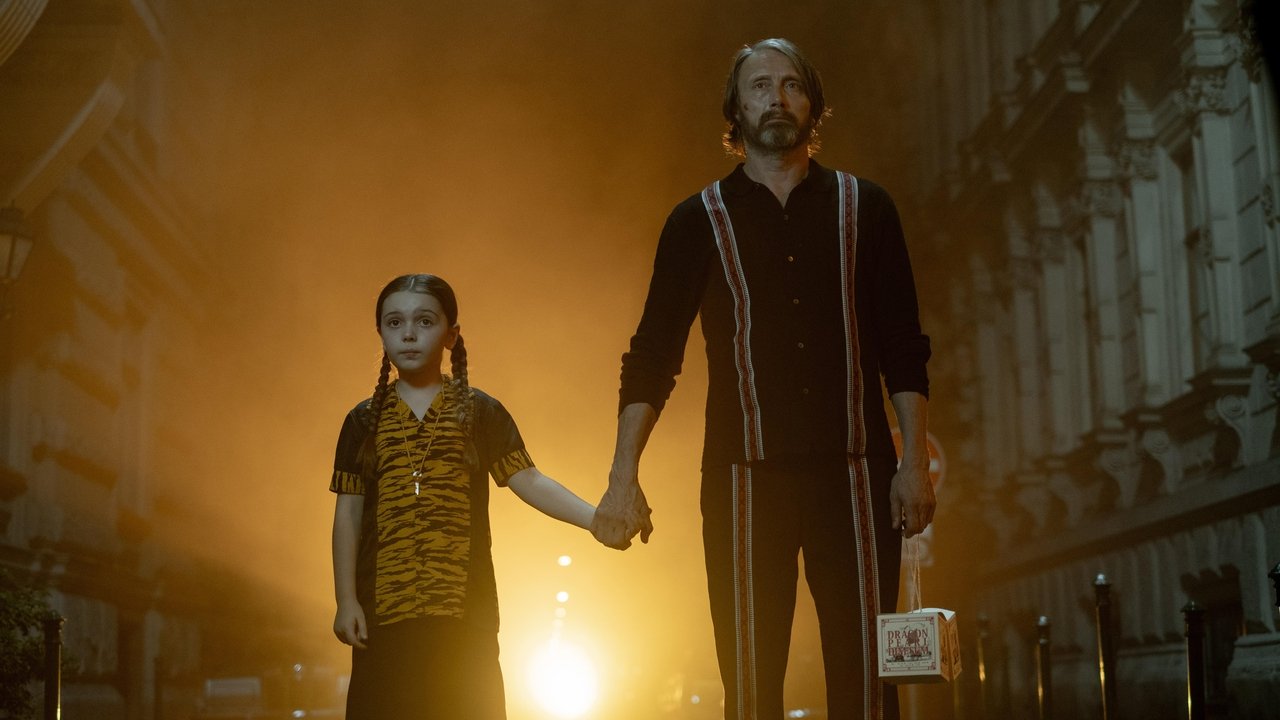
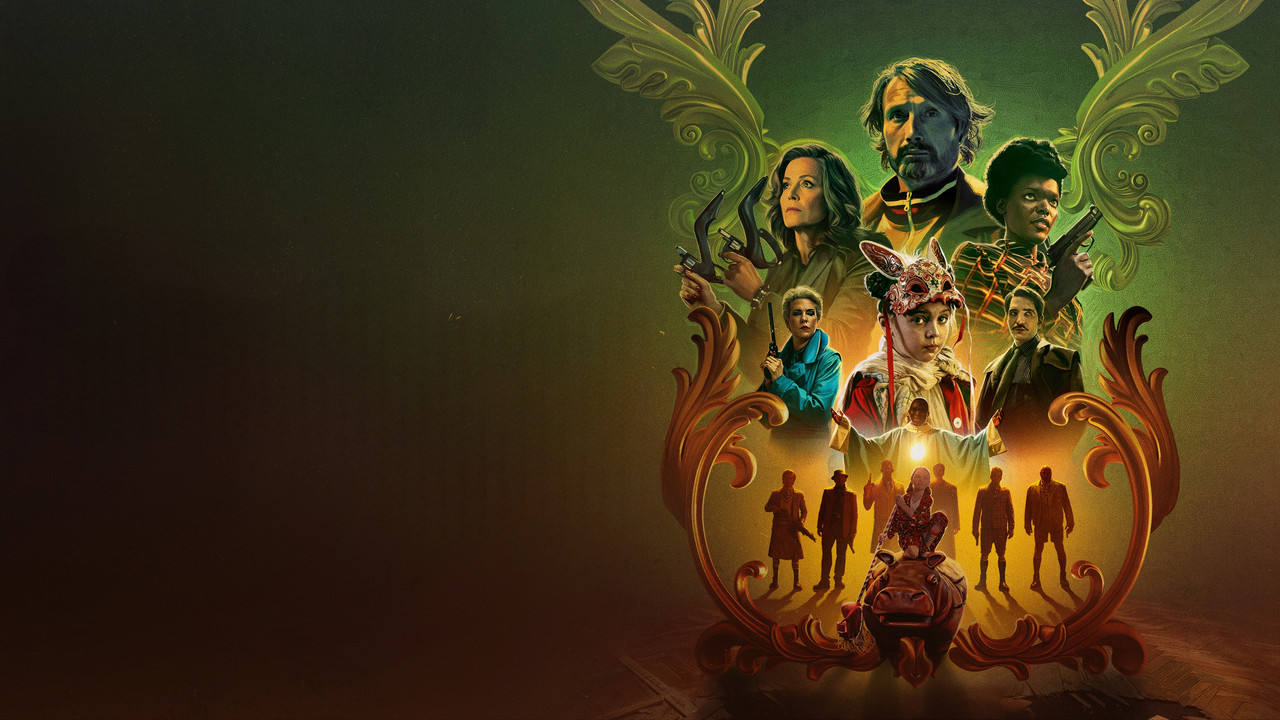
If you’ve seen any of Bryan Fuller’s TV work, you know he doesn't do "subtle" or "drab." Dust Bunny is his feature debut, and it carries that same hyper-saturated, meticulously framed energy. Critics are already comparing the look to a Wes Anderson film, but instead of whimsical luggage and symmetrical libraries, we get macabre whimsy. It’s a visually stunning landscape where every piece of wallpaper and every drop of blood feels intentionally placed.
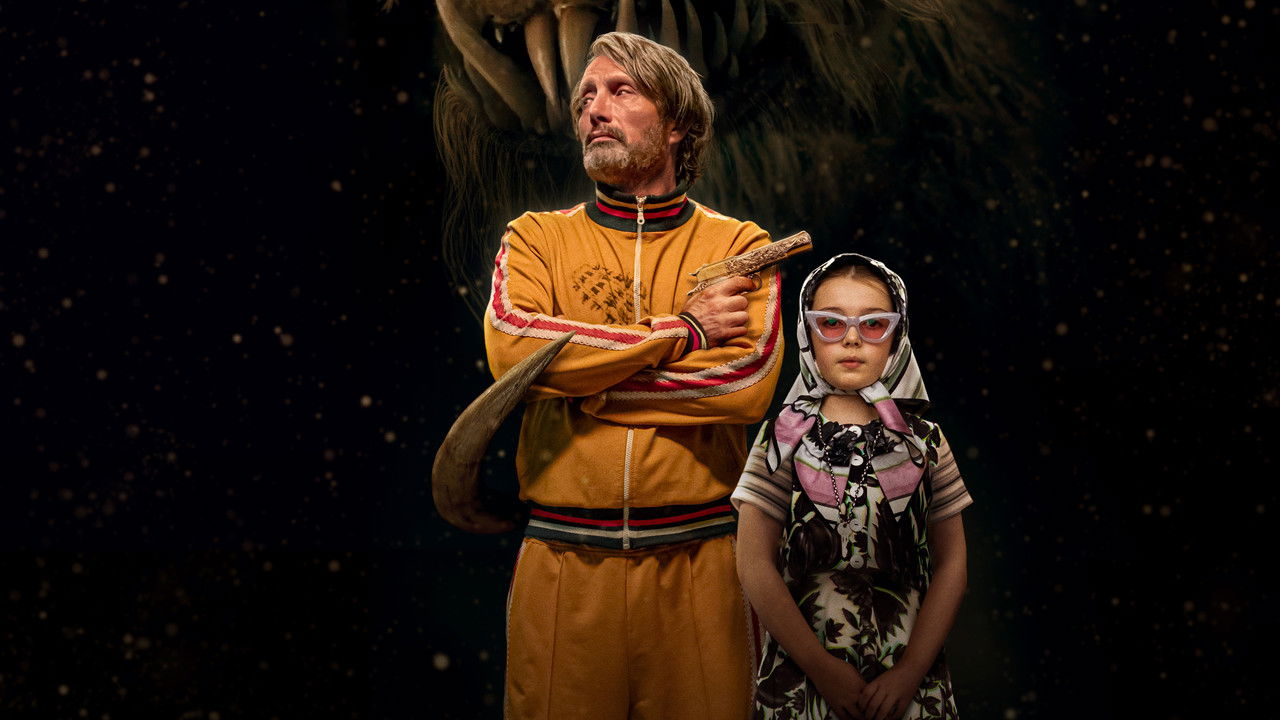
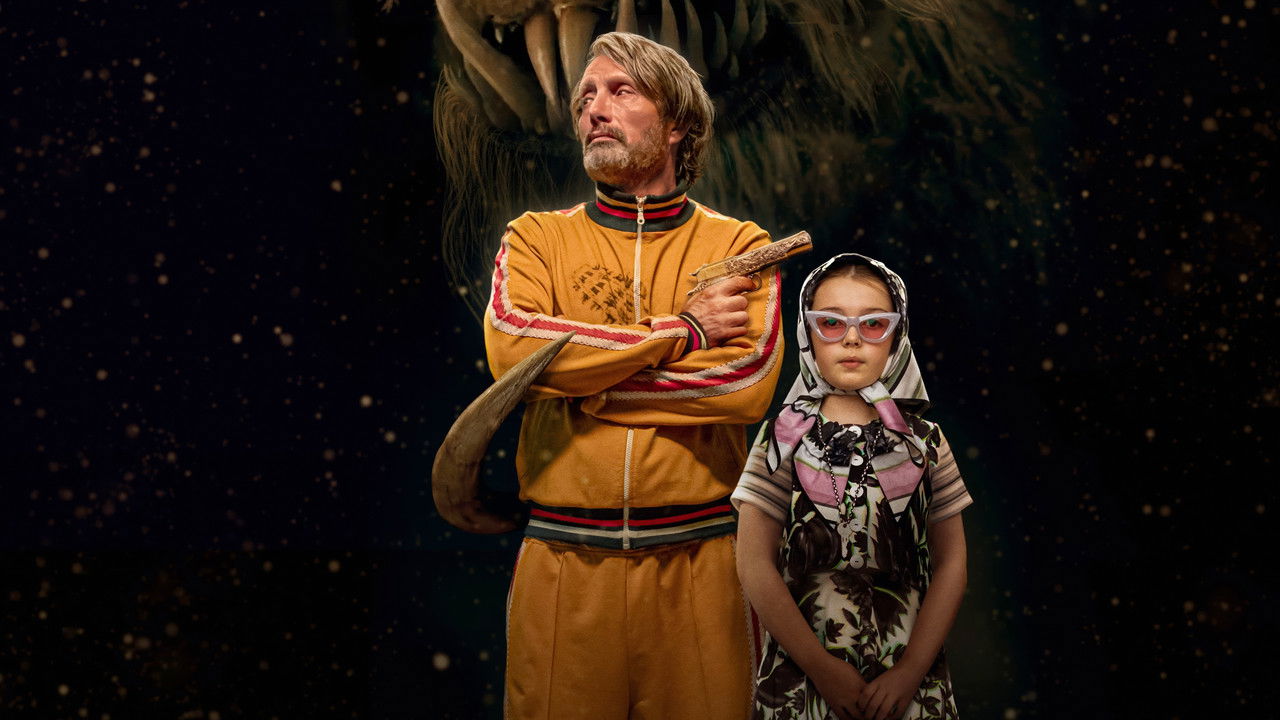
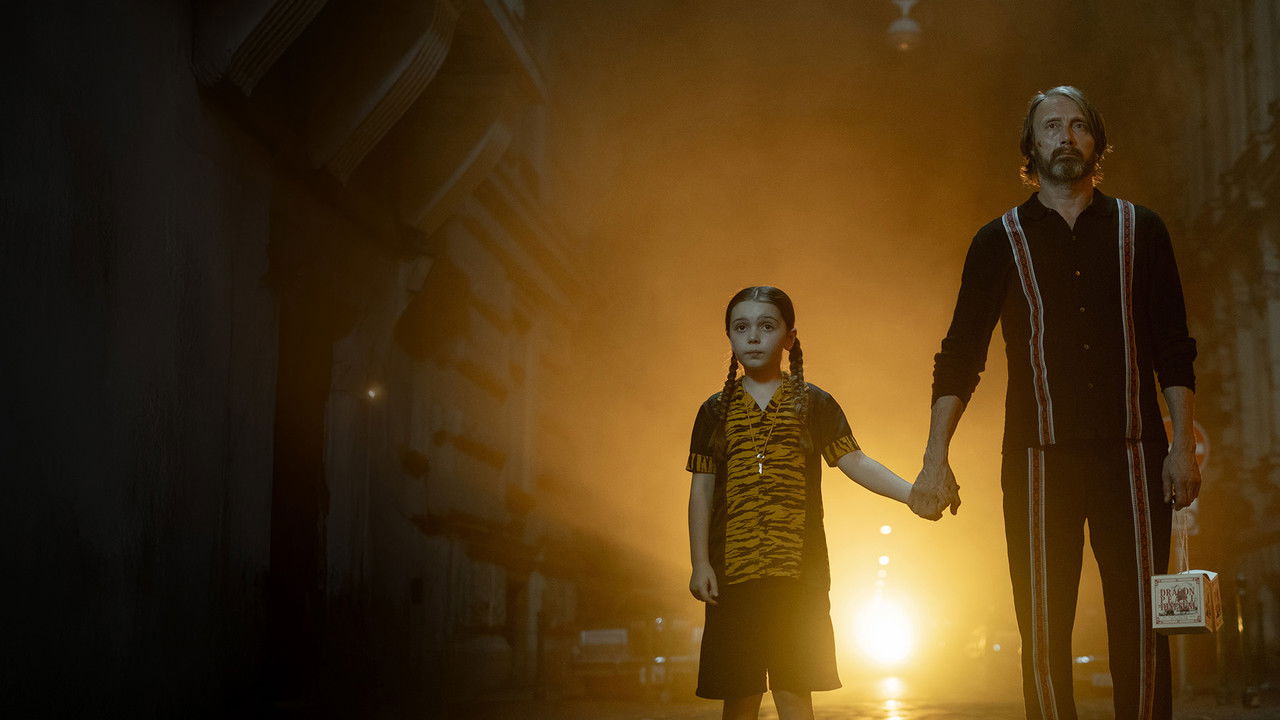
This isn't a movie that tries to be realistic. It’s a dark fairy tale. The chemistry between Mads Mikkelsen and Sophie Sloan is the engine here. Mikkelsen plays the hitman neighbor with a magnetic, weary charm that balances out the absurdity of the premise. He isn't just a killer; he’s an unlikely protector who treats Aurora’s fear of a family-eating monster with a straight face. That earnestness keeps the movie from sliding into pure camp.
Why the R-rating matters for your teen
The biggest friction point for families is the "kid protagonist" trap. Because Aurora is ten, there’s a temptation to think this might be a spooky adventure for the middle-school set. It isn't. The R-rating is earned through intense assassin sequences and creature effects that are as unsettling as they are inventive.
If your kid is a fan of Wednesday or the more stylized corners of the horror genre, they’ll likely love the "whimsical but deadly" vibe. However, the plot centers on a child whose entire family has vanished, presumably eaten by the titular monster. That’s heavy territory. The movie uses this trauma to fuel a high-stakes action-horror metaphor, but the gore is frequent and the tone is unapologetically dark. If you're trying to figure out if this fits into your weekend plans, check out our breakdown of what’s streaming April 17-19 to see how it stacks up against other recent releases.
Practical monsters and psychological layers
One of the best things about Dust Bunny is the refusal to lean entirely on cheap CGI. The practical creature effects for the monster itself are a standout. When we finally see the creature, it manages to be unnerving and bizarrely funny at the same time. It’s a "monster under the bed" story that actually respects the scale of childhood fear.
The film works best when it explores the line between real-world violence (the assassins) and the metaphorical monsters we create to process tragedy. It’s fast-paced, wittily written, and far more stylish than your average genre flick. Just don't let the "bunny" in the title fool you into thinking this is a soft watch. It’s a sharp, bloody, and beautiful piece of filmmaking that rewards viewers who appreciate a little bit of weird with their action.