Our reviews and ratings are 100% unbiased. As an Amazon Associate, Screenwise earns from qualifying purchases, so if you buy a book or game through one of our links, we may earn a commission. We don't get any credit if you just Google it instead :)
Screenwise Verdict
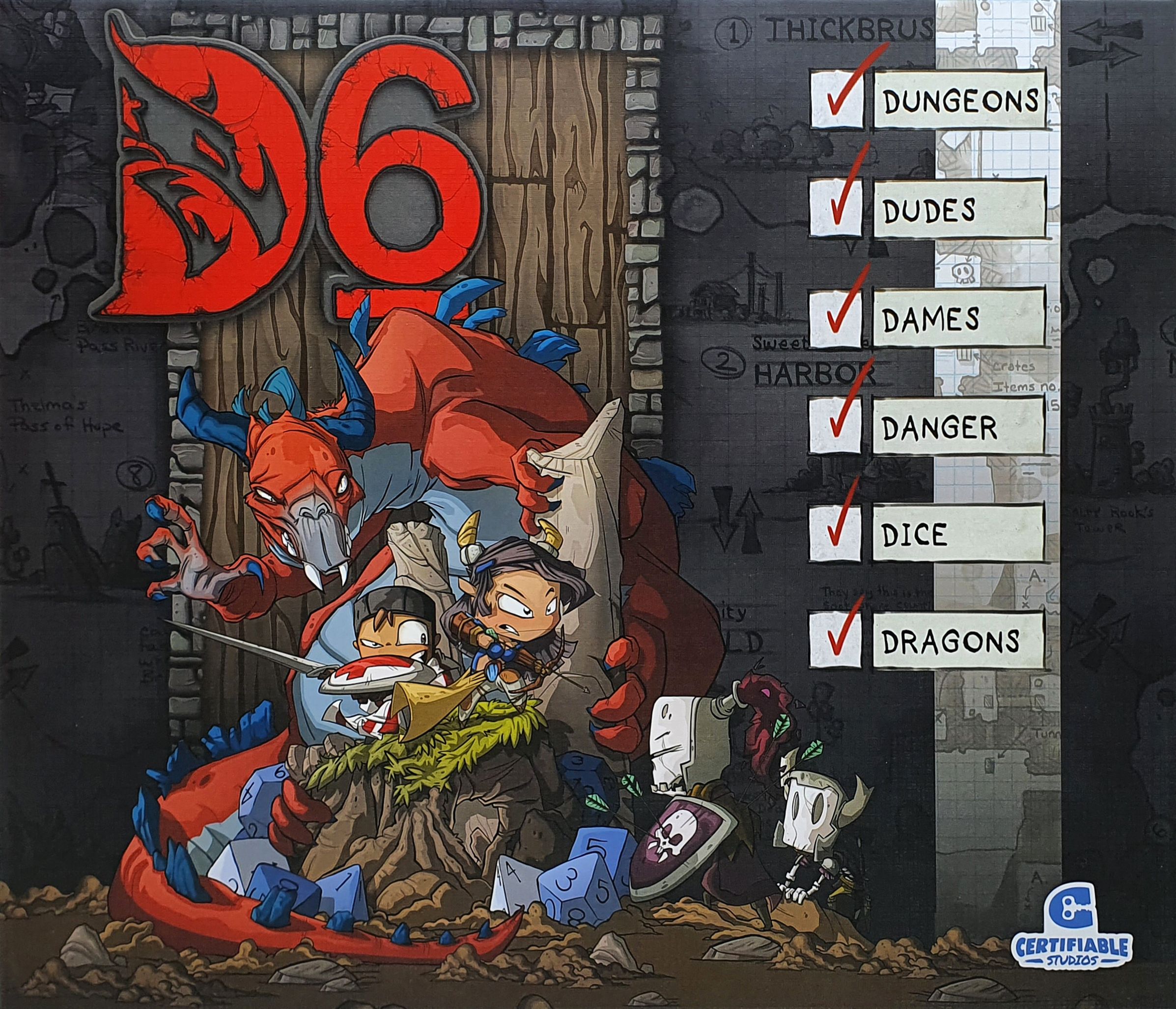
This isn't the 'real' Dungeons & Dragons tabletop RPG, but rather a board game (specifically known as D6) that captures the chaotic, hilarious experience of sitting around a table with friends. It’s a self-aware, dice-chucking adventure that manages to be both a tribute to and a parody of the genre.
If your kid is starting to get into fantasy tropes or likes games that poke fun at themselves, this is a winner. It’s tactical, visually impressive, and offers enough variety in playstyles to keep it from getting stale after three sessions.
Age Fit
Best for ages 10 and up. The mechanics aren't overly complex, but the humor and the meta-narrative require a certain level of maturity to fully appreciate.
WISE Breakdown
Wholesome
72
The tone is a mix of high-fantasy adventure and snarky meta-humor. It models social play but leans into 'glory-seeking' and 'monster-killing' tropes that are standard for the genre.
Imaginative
88
The 'game within a game' concept is brilliant. It encourages players to think about narrative structures and role-playing archetypes while engaging in tactical play.
Safe
94
As a physical board game, it avoids digital pitfalls. The social dynamics are generally healthy, though the competitive 'take that' mechanics require a baseline level of emotional maturity.
Enriching
78
Excellent for developing strategic planning and understanding probability. It serves as a great bridge to more complex tabletop RPGs without the high barrier to entry.
Parent Info
✓
Why It Might Be Great
Meta-humor that lands perfectly if your family has ever spent a Saturday night rolling dice or arguing over character stats.
Flexible modes including solo, co-op, and 2-vs-2 mean you aren't locked into a single way to play.
High production value with detailed miniatures and art that makes the table feel like a real adventure hub.
Gateway mechanics that introduce RPG concepts like bounties and gear without needing a 400-page rulebook.
⚠
What to Watch For
The competitive 'take that' mechanics can lead to some friction if your kids aren't used to players actively sabotaging their 'glory.'
The satirical tone assumes a bit of prior knowledge about fantasy tropes; younger kids might miss the jokes entirely.
Conversation Starters
"Which character in the game reminds you most of how you play games in real life?"
"If we were actually in this fantasy world, would you rather be the hero or the person telling the story?"
"Why is 'glory' the main goal here instead of just surviving?"
"How does the game change when we play co-op versus when we're competing for bounties?"