Our reviews and ratings are 100% unbiased. Screenwise is a Bookshop.org affiliate and an Amazon Associate, so if you buy a book through one of our links, we may earn a commission. Bookshop.org purchases also support independent bookstores.
Screenwise Verdict
If you want a holiday book that treats kids like thoughtful humans rather than passive consumers of festive fluff, Days of Awe lands the plane. Eric Kimmel knows Jewish folklore inside and out, and he frames the three pillars of the High Holy Days—charity, prayer, and repentance—around real human situations rather than abstract theology.
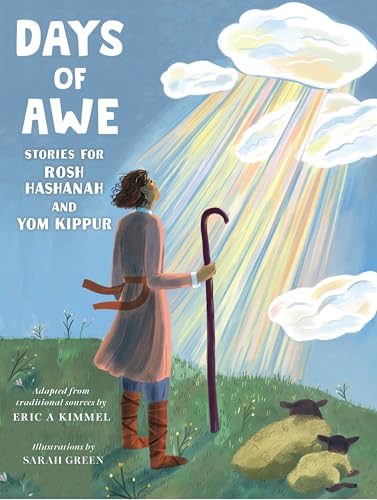
The three stories give kids concrete images to hold onto: a self-refilling samovar rewarded to a generous couple, a shepherd whose heartfelt handmade prayer outshines formal recitation, and a beggar and Rabbi navigating genuine reconciliation. Combined with Sarah Green’s warm, modern artwork, it’s a book that belongs on the shelf every autumn.
Age Fit
Ideal for kids ages 5 to 10 as a High Holy Days read-aloud or independent picture book read. Younger listeners catch the narrative magic, while elementary kids grasp the underlying ethics.
WISE Breakdown
Wholesome
95
Anchored in generosity, sincere spiritual connection, and redemption through gentle, tradition-rich Jewish folklore.
Imaginative
85
Folktale magic—like a miracle samovar that never runs empty—pairs with expressive, modern illustrations from Sarah Green.
Safe
98
Extremely safe picture book formatting with zero objectionable themes, violence, or hidden friction points.
Enriching
92
Demystifies the central pillars of the High Holy Days (charity, repentance, prayer) through memorable narrative moral frames.
Parent Info
✓
Why It Might Be Great
Grounded in core Jewish values without feeling like a dry Sunday school lecture.
Masterful folkloric pacing by veteran storyteller Eric A. Kimmel makes old stories feel immediate.
Striking modern illustrations by Sarah Green give traditional setting details fresh visual energy.
Clear conceptual anchors dedicate one story each to tzedakah (charity), teshuva (repentance), and tefillah (prayer).
⚠
What to Watch For
Abstract spiritual concepts like repentance and divine forgiveness might need a quick translation for kids under six who take everything literally.
Folktale logic means character motivations are symbolic rather than complex psychological profiles.
Conversation Starters
"Why do you think the shepherd's handmade prayer meant as much as the standard ones in the prayer book?"
"If you had a samovar or pitcher that never ran dry, who in our neighborhood would you share with first?"
"What is the difference between saying 'I'm sorry' and actually fixing what went wrong?"
Deep Dive
Why Folk Storytelling Works for Big Holiday Concepts
The High Holy Days—Rosh Hashanah and Yom Kippur—can be tricky territory for picture books. The themes of self-reflection, forgiveness, and spiritual renewal are dense, and many children's books default to either overly simplified explanations or dry instructional text.
Days of Awe avoids both traps by returning to the primary engine of cultural memory: classic folklore. By assigning one narrative to each of the three foundational pillars (tzedakah, tefillah, and teshuva), Kimmel gives kids a narrative handle for ideas that are usually delivered as abstract sermons.
Three Specific Angles on Living Well
Each story centers a practical human choice rather than a passive moral lesson:
Charity (Tzedakah): The story of the self-replenishing samovar makes hospitality tactile. It shifts the idea of giving from 'giving up what's yours' to an act of abundance.
Prayer (Tefillah): The shepherd who composes his own raw, unpolished words to God provides a great entry point for kids who feel alienated by formal services or fixed texts. It reframes devotion as sincerity over syntax.
Repentance (Teshuva): The tale of the beggar and the Rabbi digs into accountability and human dignity, showing that asking for forgiveness requires vulnerability from everyone, regardless of social status.
For families looking to build holiday traditions grounded in story rather than lecture, this collection delivers substance without feeling heavy-handed.