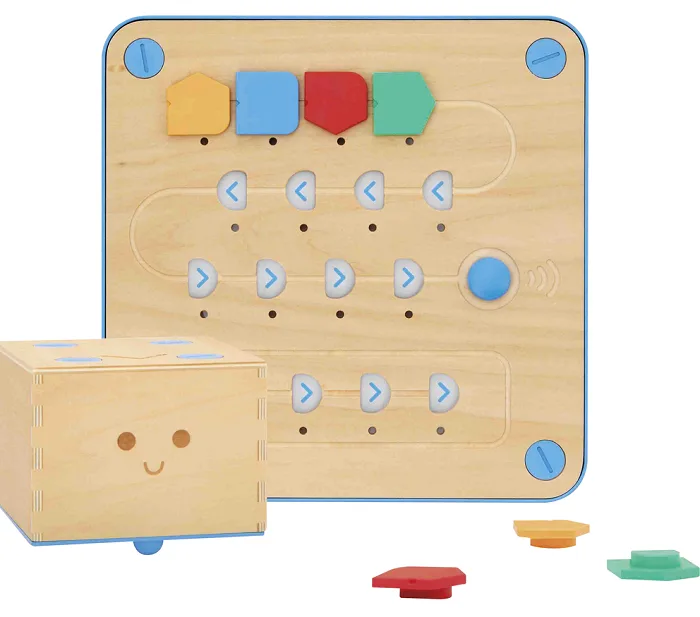
Cubetto is the antidote to 'iPad parenting.' It’s a beautifully designed, tactile experience that proves you don't need a glowing rectangle to teach modern skills like computational thinking.
It’s expensive, yes, but it’s one of the few 'STEM toys' that actually lives up to the hype without requiring a firmware update every ten minutes. If you value high-quality materials and want your kid to understand how logic works before they ever touch a keyboard, this is a top-tier investment.
Age Fit
Perfect for the 3-6 crowd. Once kids hit 7 or 8, they’ll likely want something with more variables, like a Sphero or Scratch, but for preschoolers, this is the gold standard.
WISE Breakdown
Wholesome
98
It’s a wooden robot. It doesn't get much more wholesome than tactile, Montessori-inspired play that encourages cooperation and quiet focus without any digital noise.
Imaginative
92
The map-based play invites kids to narrate Cubetto's journey. While the 'coding' is logical, the play itself is highly narrative and open-ended.
Safe
96
Physical safety is high due to quality wooden construction. Zero screens, zero Wi-Fi, and zero data privacy concerns. Standard small-part warnings for kids under 3 apply.
Enriching
95
Teaches the fundamentals of algorithms (input, output, functions) through physical blocks. It’s a masterclass in making abstract concepts concrete for the preschool set.
Parent Info
✓
Why It Might Be Great
Zero screen time: It’s purely tactile, using physical blocks to 'write' code.
Montessori-approved: The wooden aesthetic and self-correcting nature of the blocks fit perfectly into intentional play environments.
Gender-neutral and inclusive: No reading required, making it accessible for early learners and kids with varying language abilities.
Built to last: Unlike cheap plastic tech toys, this is a sturdy piece of kit designed for heavy classroom or home use.
⚠
What to Watch For
The price tag is steep for a single-function toy, especially when you start looking at the 'Adventure Packs.'
Complexity ceiling: While great for 3-5 year olds, a tech-savvy 7-year-old might exhaust the logic possibilities fairly quickly.
The 'Expansion' trap: You’ll likely find yourself wanting more blocks or maps to keep the challenge fresh, which adds up.
Conversation Starters
"Why did Cubetto end up in the bushes instead of the castle? Let's look at the blocks and find the 'bug'."
"If we want Cubetto to go in a square, what pattern of blocks do we need to repeat?"
"Can you tell a story about where Cubetto is going today before we start the code?"
"What happens if we swap the 'function' block for a 'left turn' block?"