Our reviews and ratings are 100% unbiased. As an Amazon Associate, Screenwise earns from qualifying purchases, so if you buy a book or game through one of our links, we may earn a commission. We don't get any credit if you just Google it instead :)
Screenwise Verdict
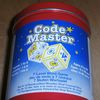
Here's the thing: this isn't the Code Master you're looking for. The web search results are all about ThinkFun's 2014 programming logic game, which is excellent. This 1997 self-published version is a completely different animal—a dice-rolling word game with a number-to-letter code gimmick.
With only 4 BGG ratings in 29 years and 57 people owning it worldwide, this game has been thoroughly ignored by the board game community. That's usually a red flag. The concept—rolling dice to form words using an 'ancient number code'—sounds more interesting in the description than it likely plays in reality.
It's not bad or harmful, just obscure and probably not very engaging. If you somehow have a copy, it might provide 30 minutes of mild educational entertainment. But in a world with thousands of better board games for teaching logic, spelling, and programming concepts, there's no reason to hunt this one down.
Age Fit
The 8+ age rating seems right for understanding the mechanics, but realistically, kids who want programming logic puzzles in 2026 have far better options (like the actual ThinkFun Code Master from 2014). This is more of a curiosity for board game collectors than a genuine recommendation for kids.
WISE Breakdown
Wholesome
75
A cooperative puzzle experience with no conflict between players, focusing on logic and problem-solving. The solo/collaborative nature avoids competitive friction. Age-appropriate educational content without any concerning themes.
Imaginative
55
The 'ancient number code' concept has some mystery appeal, but ultimately this is a constrained puzzle-solving exercise with dice and letter-number conversion. Limited creative expression—you're solving predetermined puzzles rather than building or exploring open-ended possibilities. The 'rainbow of variations' mentioned in the description sounds more exciting than it likely plays.
Safe
95
Board games don't get much safer than this—solo or cooperative play, no mature themes, no social toxicity potential, no gambling mechanics. The only 'risk' is frustration from harder puzzles, which is developmentally appropriate challenge.
Enriching
68
Teaches programming logic concepts (sequencing, planning ahead) and reinforces spelling/vocabulary through the word-formation mechanic. The increasing difficulty levels provide genuine cognitive challenge. However, with only 4 BGG ratings and 57 community owners since 1997, this hasn't proven to be particularly engaging or memorable. Self-published origin suggests limited playtesting and refinement.
Parent Info
✓
Why It Might Be Great
Solo-friendly puzzle solving that doesn't require coordinating schedules with other players
Combines spelling/vocabulary with early programming logic (sequencing, planning)
Scalable difficulty means it could theoretically grow with a kid
No screen time required for learning coding concepts
⚠
What to Watch For
Only 4 people on BGG have rated this in nearly 30 years—that's not a good sign for replay value or engagement
Self-published game from 1997 likely means clunky rules and limited production quality
The 'ancient number code' gimmick might feel more tedious than mysterious in practice
Kids expecting something exciting may find dice-rolling for letter-number conversion pretty dry
Conversation Starters
"What patterns did you notice between the numbers and letters? Does the code make sense to you?"
"If you could design your own secret code, what would it look like?"
"Which was harder—figuring out what word to make or planning the steps to get there?"