Our reviews and ratings are 100% unbiased. Screenwise is a Bookshop.org affiliate and an Amazon Associate, so if you buy a book through one of our links, we may earn a commission. Bookshop.org purchases also support independent bookstores.
Screenwise Verdict
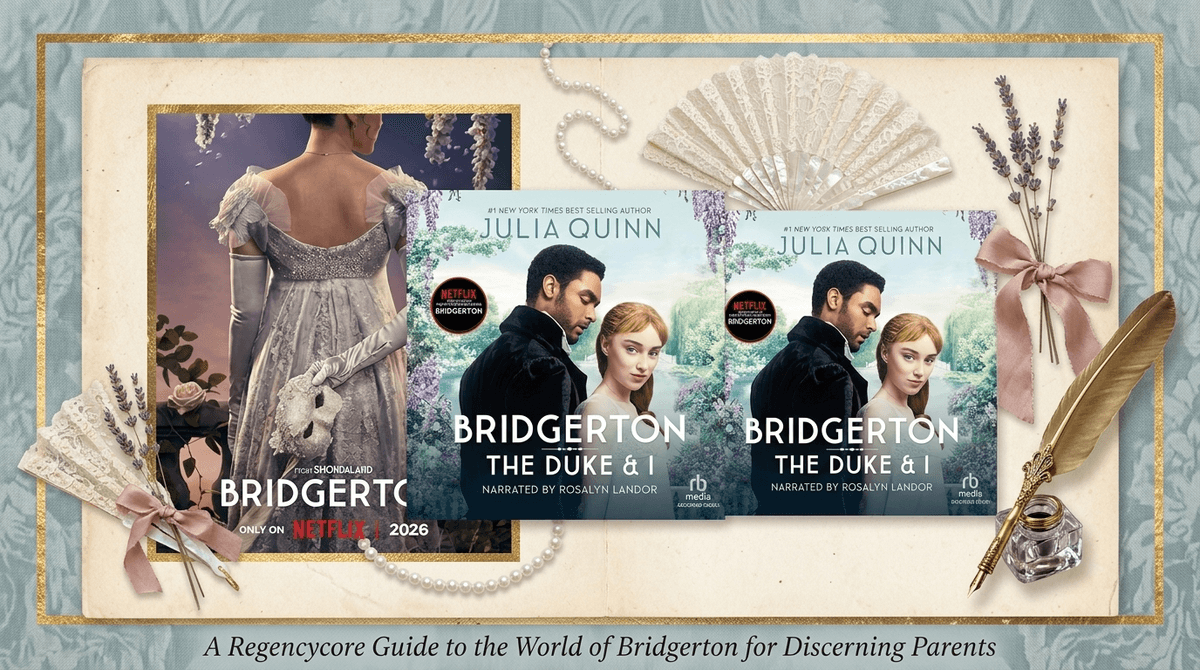
Julia Quinn's 2000 novel launched the mega-popular Bridgerton franchise on Netflix, and it carries all the hallmark tropes of classic Regency romance: witty banter, high-society gossip, and a fake-dating scheme that predictably turns real.
While younger teens often discover the title via BookTok or the TV adaptation, this is strictly adult fiction. The explicit sexual encounters are one thing, but the central conflict includes a deeply troubling scene where Daphne forces a sexual encounter on an intoxicated, unwilling Simon to get pregnant. The book frames it as a plot complication rather than assault, which makes it a hard sell for younger readers who lack the context to critique what they are reading.
Age Fit
Strictly for adults and mature older teens (17+). The explicit sex scenes and troubling consent dynamics make it entirely inappropriate for middle schoolers or younger teens looking for a light historical read.
WISE Breakdown
Wholesome
35
Deceitful schemes, social posturing, and a central marital plot involving non-consensual sexual intimacy undermine the emotional health of the core romance.
Imaginative
60
Witty Regency banter and lively character dynamics create a fun atmospheric world, though it stays strictly within standard romance tropes.
Safe
20
Contains explicit sexual encounters and a major plot point involving non-consensual sexual action that modern readers identify as sexual assault.
Enriching
40
Offers quick-witted dialogue and a portal into 19th-century social customs, but functions primarily as light adult escape fiction.
Parent Info
✓
Why It Might Be Great
Fast-paced Regency banter keeps the fake-courtship plot between Daphne and Simon moving with real comic timing.
Rich family dynamics among the eight Bridgerton siblings give the story a chaotic, warm ensemble feel.
Strong entry point for older readers interested in historical romance structure and genre tropes.
⚠
What to Watch For
Explicit sexual content throughout the second half of the book, written explicitly for an adult audience.
A serious assault scene where Daphne takes advantage of an intoxicated Simon to force a pregnancy, which the narrative glosses over as a romantic turning point rather than a major violation of consent.
Conversation Starters
"How does the book's depiction of consent in marriage reflect when it was written versus how we evaluate relationships today?"
"Why do you think the 'fake relationship' setup is such a persistent story structure across romance novels?"
"In what ways did social expectations in Regency London limit what women like Daphne could choose for their own lives?"
Deep Dive
The Book Behind the Netflix Phenomenon
Long before Shonda Rhimes turned the Bridgerton family into a global streaming brand, The Duke and I was a standalone romance novel written in 2000. It relies heavily on traditional romance mechanics: Daphne Bridgerton needs viable suitors to escape London's high-society marriage market, while Simon Basset, the brooding Duke of Hastings, needs society mothers to stop chasing him. Their deal to pretend an attachment gives both what they want until genuine feelings get in the way.
The Consent Problem
If your older teenager wants to read this because they saw the show, the scene to know about happens late in the book. Daphne takes physical advantage of Simon while he is impaired to force a pregnancy he explicitly stated he did not want. While 1990s and early-2000s romance tropes often glossed over gray-area consent, modern readers rightly identify the encounter as sexual assault.
If an older teen (17+) does read it, that chapter serves as an entry point for conversations about agency, boundaries, and how popular culture's treatment of consent has shifted over the last two decades. For younger readers interested in ballrooms and Regency fashion, point them toward clean historical fiction or classic Austen instead.