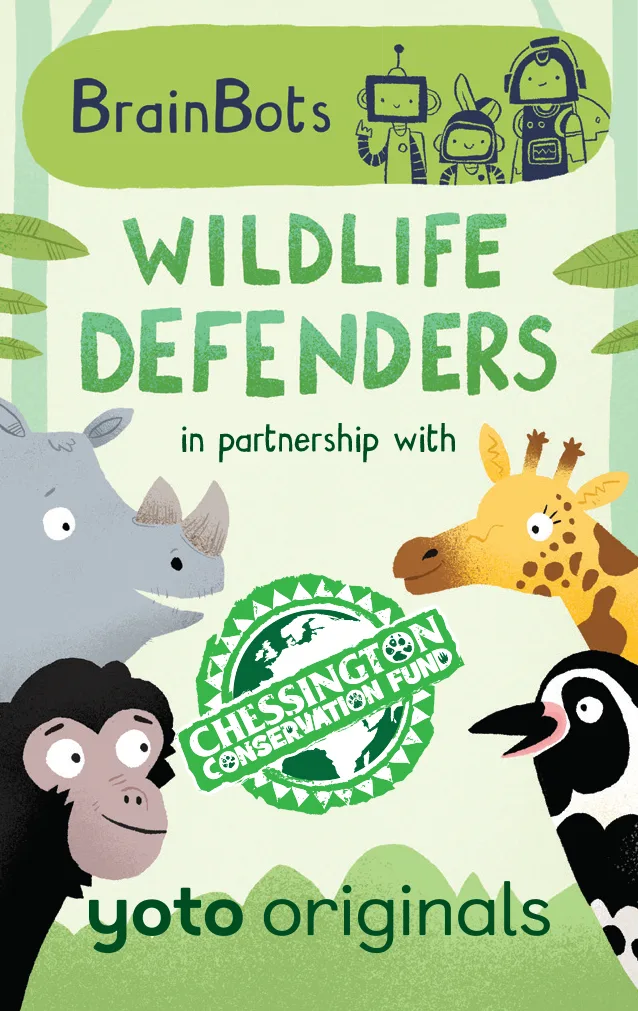
Yoto's BrainBots: Wildlife Defenders is a textbook example of screen-free audio content done well. Over 30 fast-paced minutes, robot hosts Nellie, Buzz, and Gibbs walk listeners through the basics of endangered species and wildlife conservation without drifting into dry lecture territory or relying on frantic sound design.
It hits a sweet spot for four- to eight-year-olds who love animals and want something they can listen to independently. If you already have a Yoto setup, this is an easy pick for quiet time or car trips.
Age Fit
Best for kids ages 4 to 8. The robot narrative frame and straightforward animal facts fit preschoolers and early elementary kids cleanly; older elementary kids will likely find the delivery too simple.
WISE Breakdown
Wholesome
95
Uses gentle, cheerful robot characters to explore real-world animal conservation without fearmongering or chaotic pacing.
Imaginative
82
Combines a fictional narrative frame with factual nature exploration, prompting kids to picture animal habitats and conservation efforts.
Safe
98
Physical screen-free audio card with zero ads, no social dynamic, no tracking, and gentle, age-appropriate content.
Enriching
92
Delivers real science about endangered species like Humboldt penguins and Southern White rhinos while training audio listening comprehension.
Parent Info
✓
Why It Might Be Great
Screen-free control: Kids pop the physical card into a Yoto Player or Yoto Mini and own their listening experience without a touchscreen in sight.
Genuinely educational: Teaches real habitat facts and conservation concepts using Humboldt penguins and Southern White rhinos as anchor examples.
Builds language comprehension: Rich audio storytelling builds vocabulary and narrative mapping—core strands of reading literacy—without forcing eyes-on-text decoding.
⚠
What to Watch For
Requires Yoto hardware: You need a Yoto Player, Yoto Mini, or the Yoto smartphone app to play the audio content.
Brisk runtime: At roughly 30 minutes, it works great for a quiet-time block or short car ride, but older kids may burn through it quickly.
Conversation Starters
"Which animal from the card was your favorite—the Humboldt penguin or the rhino?"
"What is one simple thing people can do in real life to protect wild animal habitats?"
"If you were a BrainBot like Buzz, Nellie, or Gibbs, what animal would you want to investigate next?"
Deep Dive
Non-fiction audio that actually holds attention
Getting young kids to engage with non-fiction audio can be hit-or-miss. Dry narration feels like schoolwork, while over-engineered sound effects turn into background noise. BrainBots: Wildlife Defenders bridges the gap by wrapping real science in a light narrative shell—three robot characters investigating animal facts for their database.
The partnership with UK resort Chessington World of Adventures gives the content concrete anchor animals: Humboldt penguins and Southern White rhinos. Instead of vague claims about 'saving the planet,' the track breaks down specific animal adaptations, what threatens those populations, and what human protection actually looks like.
The literacy angle
Audio cards like this do real work for early literacy. Listening to formatted non-fiction builds vocabulary, background knowledge, and narrative comprehension—the key strands of reading development that complement phonics decoding. For a four- or five-year-old who isn't reading full sentences on paper yet, absorbing structured information through audio keeps their intellectual curiosity moving ahead of their decoding skills.