Translating Screen Play to the Kitchen Table
Most licensed preschool board games are lazy reskins of Candyland or Chutes and Ladders. You slap the hot IP on the box, drop in cardboard standees, and print a numbered track. Bluey: Shadowlands avoids that trap by adapting an episode that was already about the philosophy of playing games.
In the Season 1 episode Shadowlands, Bluey, Snickers, and Coco pretend the shadows cast by trees are islands in a sea of crocodiles. When Coco tries to bend the rules to make winning faster, Bluey pushes back: changing the rules makes the game easy, but it also makes it boring.
How the Board Works
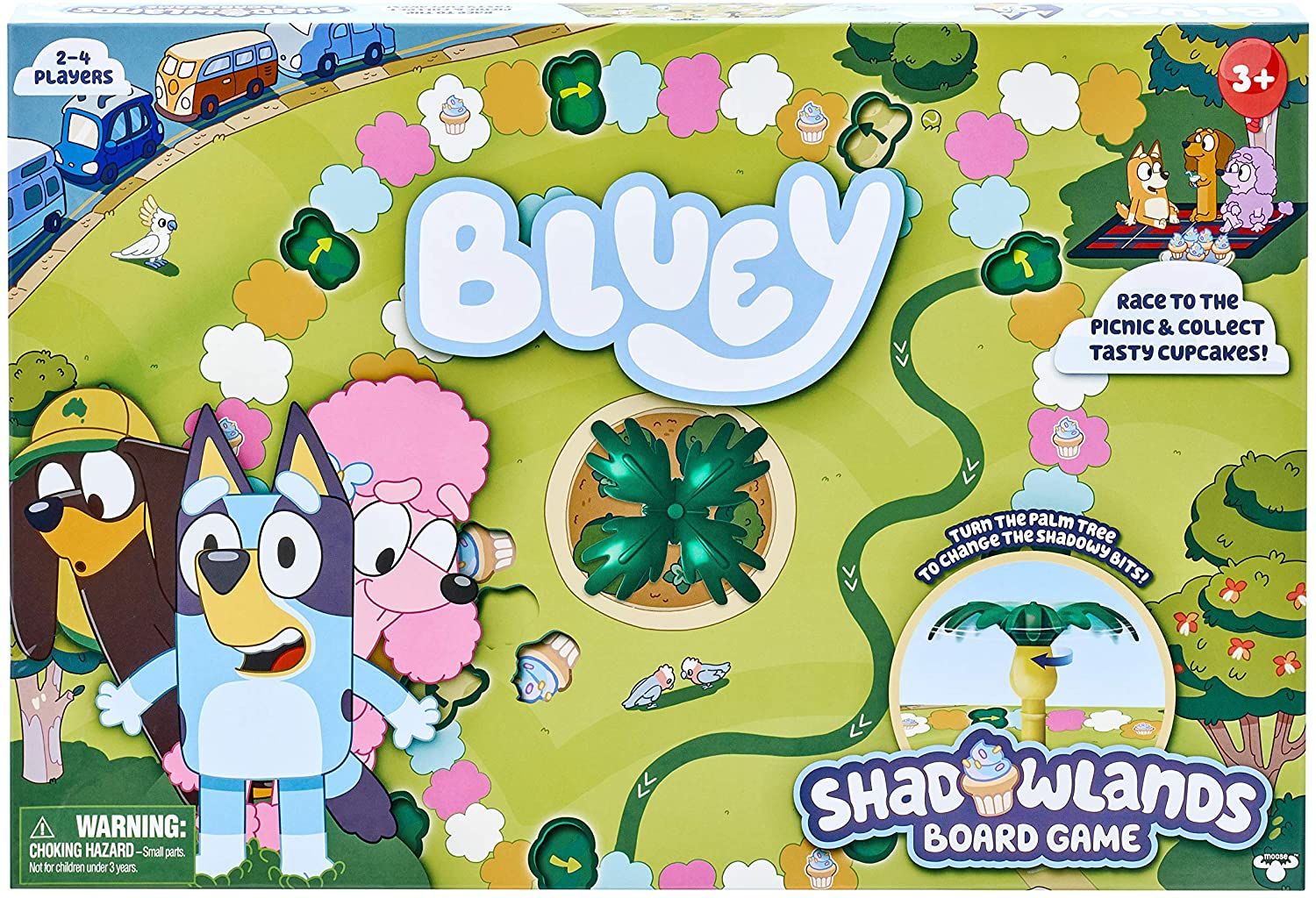
The tabletop game honors that premise with a rotating tree centerpiece. Players pick a character (Bluey, Bingo, Coco, or Snickers) and navigate shadowy paths across the board to gather five Cupcake Cards before making it to the picnic basket.
- Spinning the tree: Certain spaces trigger a twist of the palm tree. The circular overlay beneath it shifts, turning previously shaded tiles into sunny spots and vice versa.
- Navigating hazards: If a player ends up stranded in the sun after a spin, they have to work their way back into the shadows on subsequent turns.
- No reading required: Gameplay is visual and iconic, making it completely accessible for non-reading 3-year-olds.
The Longevity Factor
With a BoardGameGeek weight rating sitting at a rock-bottom 1.0, this is pure introductory tabletop gaming. There are virtually no strategic choices; movement depends largely on spins and card draws.
For a 3- or 4-year-old, that simplicity is comforting. For an adult or older child, the novelty wears off after two plays. Keep it on the shelf for rainy weekday afternoons with preschoolers, but pack something with more decision-making (like Outfoxed! or Dragomino) if you want a game the whole family genuinely enjoys across multiple age bands.