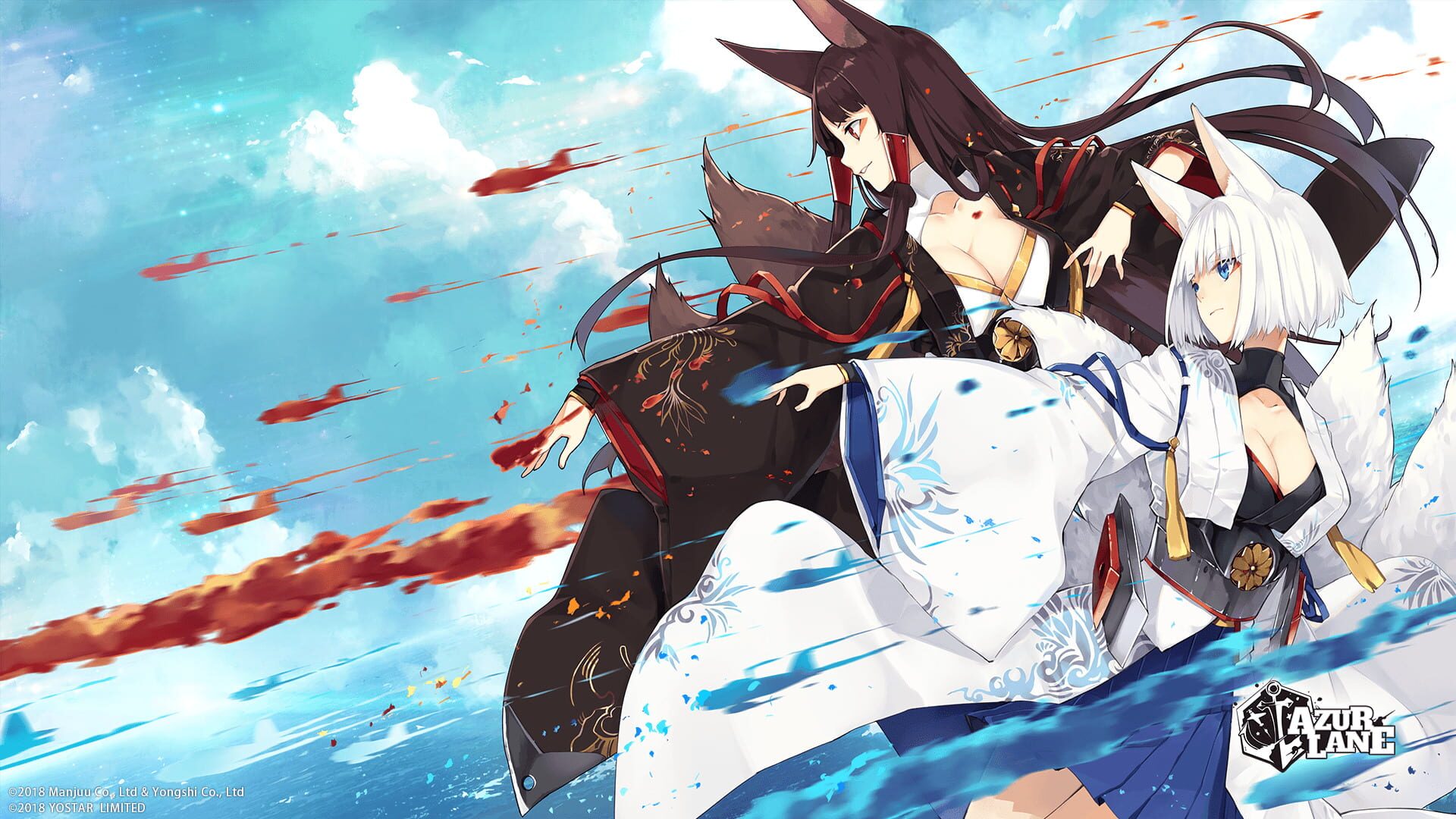
Battleships, Bullet Hell, and Bikinis
When Azur Lane launched in 2017, the "anthropomorphic military hardware" subgenre of anime games was already a proven formula in East Asia. What set Azur Lane apart was shifting the combat away from static turn-based menus toward an active side-scrolling shoot 'em up where players manually dodge barrages of torpedoes and air strikes.
The historical detailing is genuinely thorough. Battleships like HMS Hood, Enterprise, and Bismarck have equipment slots, voice lines, and skill names that directly reference their real-world service records. A player who gets deep into the meta will inevitably learn the difference between torpedo bulges, quad-mount 356mm guns, and heavy armor belts.
The Fan Service Engine
That historical shell exists primarily to support a massive character collection pipeline. The art style ranges from standard anime fantasy to unapologetic pin-up material. Many character skins feature dynamic Live2D animations that react when touched on the screen, accompanied by flirtatious audio lines.
Unlike predatory gacha games that gate core gameplay behind 0.5% drop rates, Azur Lane gives away construction cubes freely and maintains high base pull rates (around 7% for top-tier ships). The developers make their money on the back end: selling premium currency for dock space, promise rings to "oath" characters, and limited-edition cosmetic outfits that cost $10 to $25 apiece.
If you have a teen playing Azur Lane, talk directly about how the business model operates. The game gives you the characters almost for free to build an emotional attachment, then charges real money to dress them up.