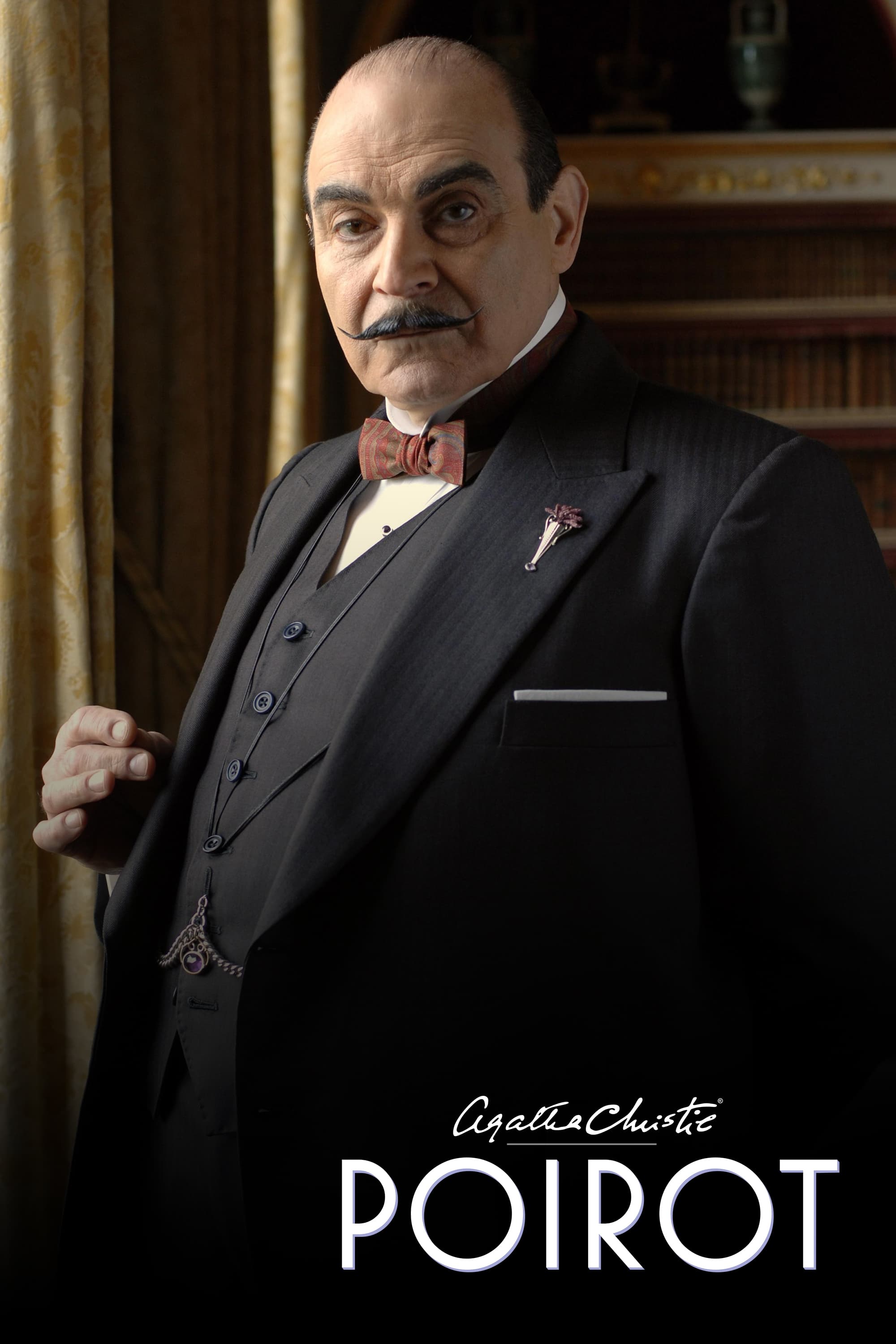
Agatha Christie's Poirot

Agatha Christie's Poirot

show

TV-PG, 1989

WISE
88%

WISE Score

8.6

IMDb

A masterclass in 'cozy' crime where the smartest guy in the room wins with manners and logic rather than muscle.

IMDb8.6
Common Sense Media
Where to Watch
Loading streaming options...
Screenwise Verdict

If you want to introduce your kid to the mystery genre, start here. It’s the gold standard. It’s sophisticated without being cynical, and it treats the audience like they’re smart enough to keep up.

While it’s technically 'old' (starting in 1989), it doesn't feel dated in a bad way because it’s a period piece. It was meant to look like 1936, so it hasn't aged the way a show set in 1989 would. It’s slow, yes, but it’s the kind of slow that rewards a long attention span.
Age Fit

Best for ages 10 and up. Younger kids might follow the plot but will likely struggle with the dry British wit and the period-specific social nuances. For adults, it's a 99—it's essentially the ultimate comfort food TV.

WISE Breakdown
Wholesome
85

The show champions justice, order, and the power of the intellect. Poirot is a model of manners and integrity, even if he is a bit of an egomaniac. The pacing is deliberate and civilized, avoiding the chaotic energy of modern procedurals.

Imaginative
82

The production design is a masterclass in Art Deco style. It invites viewers into a meticulously reconstructed past and encourages the kind of 'armchair detective' logic that fuels creative problem-solving.

Safe
78

It is a show about murder, so there are bodies and occasional scenes of stylized violence. However, it avoids gore and gratuitous 'shocks.' It's the definition of a 'cozy' mystery—the danger is intellectual, not visceral.

Enriching
92

Excellent for vocabulary building and historical context (pre-WWII Europe). It rewards focus and deductive reasoning, showing that the 'little grey cells' are more powerful than physical force.

Parent Info

Why It Might Be Great

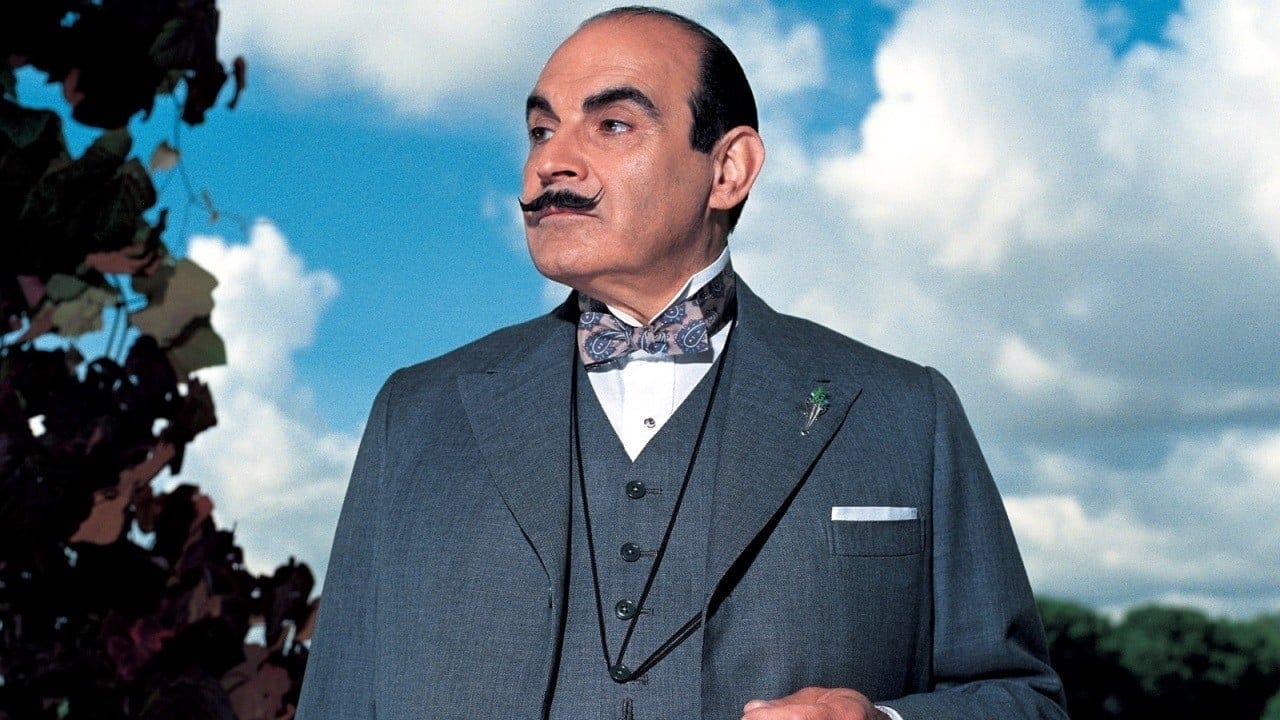
  • Suchet is the GOAT. David Suchet’s performance is the definitive version of Poirot—fussy, brilliant, and deeply human.
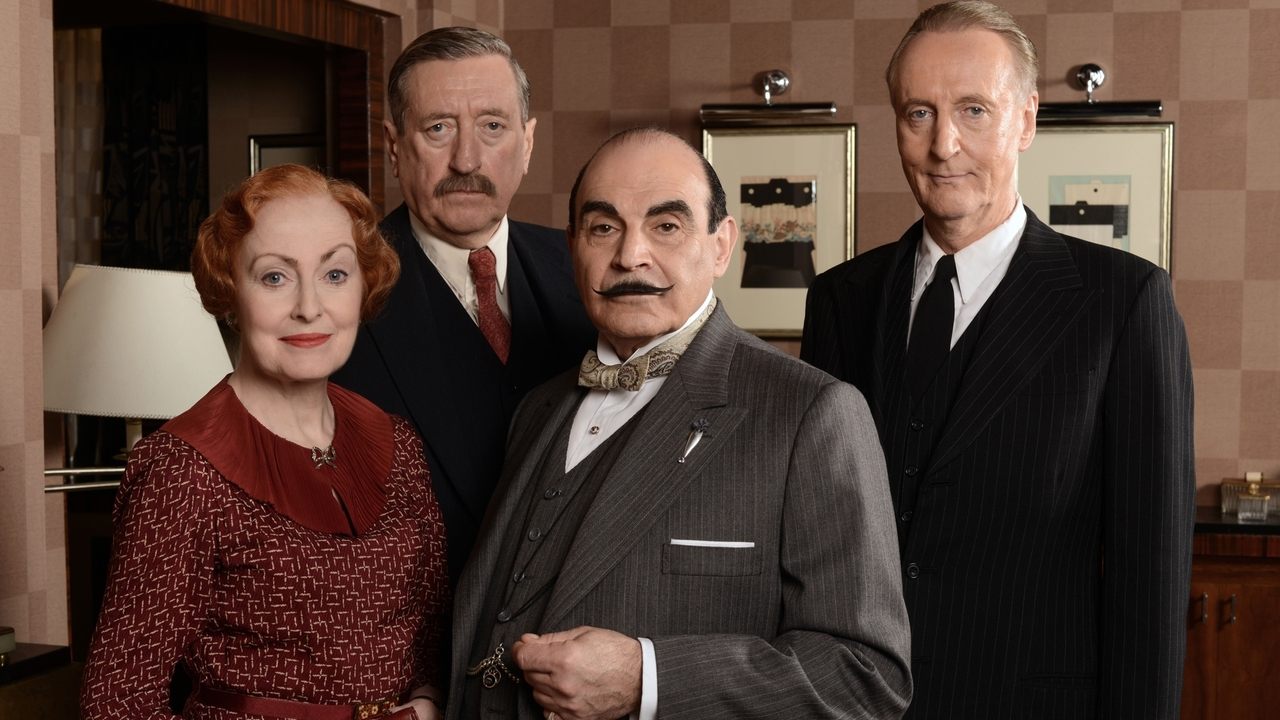
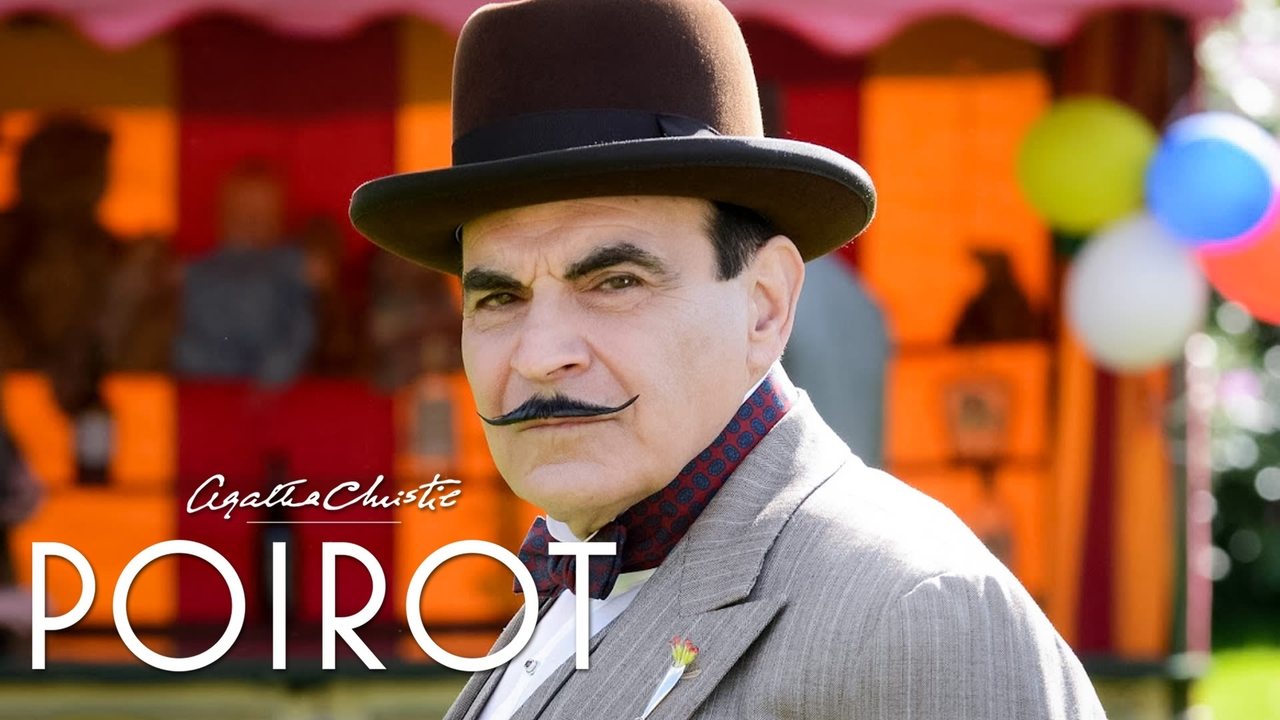
  • Visual feast. The 1930s Art Deco sets, costumes, and locations are stunning and provide a great history lesson by osmosis.
  • Brain exercise. Unlike 'action' mysteries, these are true puzzles that actually give the viewer enough clues to solve the case alongside the detective.
  • Civilized tone. It’s a great palate cleanser from the gritty, dark, and often nihilistic tone of modern crime dramas.

What to Watch For

  • The 'Murder' part. Every episode centers on a killing. While rarely gory, the discovery of bodies and the motives (greed, jealousy, revenge) are mature themes.
  • Dated social attitudes. Being a period piece set in the 30s (and filmed starting in the 80s), you'll occasionally see dated depictions of class or 'foreigners,' though the show usually makes Poirot the hero for being the 'outsider' who is smarter than the local snobs.
  • Slow burn. If your kid is used to MrBeast pacing, they might find the first 20 minutes of character setup agonizingly slow.

Conversation Starters

  • "Why do people always underestimate Poirot just because he's 'fussy' or has a funny accent?"
  • "Did you spot the clue that gave it away? At what point did the killer make their mistake?"
  • "Poirot often says he doesn't need to move to solve a crime, just use his 'little grey cells.' Is thinking a type of action?"
  • "In these stories, the police are often wrong. Why does having a 'system' or a badge sometimes make people miss the truth?"

Deep Dive

The 'Cozy' Mystery Gateway

There’s a reason Poirot has remained the benchmark for Agatha Christie adaptations for over thirty years. While modern versions (like the Kenneth Branagh films) lean into CGI and high-octane action, the 1989 series understands that the real thrill of a mystery is the intellectual duel between the detective and the killer.

For a parent, this is a 'safe' bridge into more mature content. Your kid is moving past cartoons and into live-action drama, but maybe they aren't ready for the grim-dark violence of CSI or Sherlock. Poirot offers a middle ground. It deals with death, but it does so with a sense of moral weight and a focus on the restoration of order.

  • The Suchet Factor: David Suchet famously read every single Poirot book and kept a list of the character's habits (how many lumps of sugar in his tea, his refusal to wear mismatched socks). This level of detail makes the character feel real and reliable to kids who value consistency.
  • Historical Immersion: This isn't just a mystery; it's a window into the interwar period. The fashion, the steam trains, the social hierarchies—it’s a rich world that feels distinct from our own, which helps 'buffer' the intensity of the crimes.
  • The Format: Most episodes are self-contained. You don't need to worry about a massive cliffhanger or a 10-episode arc. It's the perfect 'one episode on a Friday night' show.

What Parents Ask

Stills
Agatha Christie's Poirot — still 1
Agatha Christie's Poirot — still 2
Agatha Christie's Poirot — still 3
Agatha Christie's Poirot — still 4
Agatha Christie's Poirot — still 5
Agatha Christie's Poirot — still 6
Agatha Christie's Poirot — still 7
Agatha Christie's Poirot — still 8

Ask Anything

Get a personalized guide on any topic