

TL;DR
LEGO YouTube has moved far beyond simple "how-to" videos. It’s now a massive ecosystem of engineering challenges, archival history, and—most importantly for your wallet—high-speed consumerism.
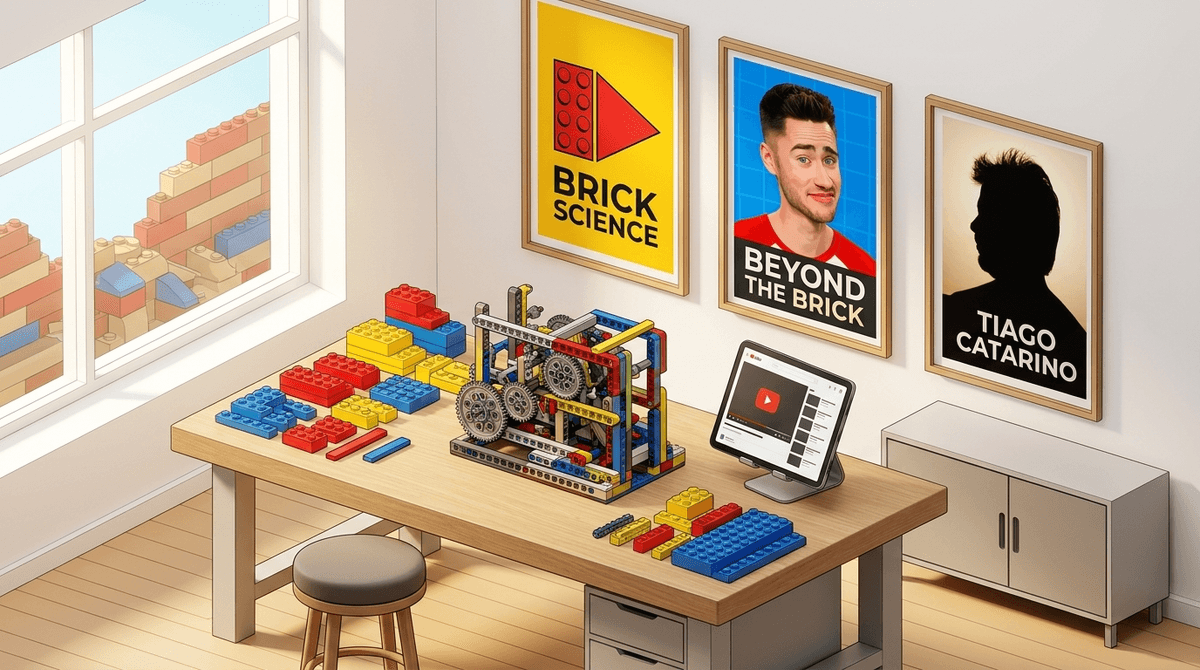
- Top Educational Picks: Brick Science for engineering and Tiago Catarino for building techniques.
- The "Cool" Factor: Beyond the Brick for mind-blowing builds from around the world.
- The Watch-Outs: "Haul" culture and "LEGO Investing" can turn a creative hobby into a shopping addiction.
- The Bridge: Use LEGO Fortnite or the LEGO Life app to move from passive watching to active playing.
If your living room floor is a minefield of plastic bricks, you already know that LEGO is more than a toy—it’s a lifestyle. But for today's kids, that lifestyle isn't just about following the instruction manual for a Star Wars X-Wing. It’s about spending hours watching other people unbox, sort, and "invest" in thousands of dollars worth of plastic.
LEGO YouTube is one of the most wholesome corners of the internet, but it’s also one of the most commercial. Navigating it requires understanding the difference between a creator who wants to teach your kid how to build a working transmission and a creator who just wants to show off their $40,000 basement "haul."
Not all brick content is created equal. Most channels fall into one of these buckets:
- The Engineers: These creators use LEGO to explore physics and mechanical engineering. They build working clocks, vacuum cleaners, or bridge-layers.
- The Historians/Collectors: They focus on the "White Whales"—rare, discontinued sets from the 80s and 90s. It’s high-quality nostalgia that often appeals to "AFOLs" (Adult Fans of LEGO) but mesmerizes kids.
- The MOC Builders: "MOC" stands for My Own Creation. These creators ignore the manuals and build massive custom cities, dioramas, or Great Ball Contraptions.
- The Haulers/Investors: This is the "unboxing" side of LEGO. These creators buy sets in bulk, talk about "resale value," and showcase massive "hauls" from the LEGO store.
It’s easy to dismiss this as "brain rot," but for a kid who loves building, LEGO YouTube is essentially a masterclass in spatial reasoning and design.
There’s a significant ASMR component to these videos—the specific click-clack sound of bricks being sorted is incredibly soothing to the childhood brain. Beyond that, it’s about wish fulfillment. Most kids will never own the $850 Millennium Falcon, but they can watch someone else build it in a 10-minute time-lapse. It’s the digital version of circling everything in the Sears Christmas catalog.
Best for: Ages 8+ This is the gold standard for "educational but actually fun." Riley (the creator) builds things that shouldn't work—like a LEGO car that can drive underwater or a working pizza oven made of bricks. It encourages kids to think about LEGO as a tool for invention rather than just a model-making kit. Check out our guide on STEM-focused YouTube channels
Best for: All ages Think of this as the Travel Channel for LEGO. They visit conventions and interview builders who have spent years creating 20-foot-long Titanic models or entire working amusement parks. It’s pure inspiration and shows kids that "Master Builder" is a real (albeit rare) title.
Best for: Ages 7+ Tiago is a former LEGO set designer. His videos are short, punchy, and focus on "building hacks"—how to make a tiny sofa, a realistic tree, or a clever window design using just a few pieces. This is the best channel for kids who actually want to improve their building skills.
Best for: Ages 10+ DuckBricks is the ultimate archivist. If your kid is obsessed with the lore of Bionicle or wants to see every castle set ever made, this is the spot. It’s calm, informative, and very deep-dive oriented.
Best for: Ages 8+ Focuses heavily on the Minecraft LEGO sets and custom landscapes. It’s a great bridge for kids who are transitioning from the digital world of Minecraft back to physical play.
Here is where we need to have a "real talk" moment. There is a growing trend of "LEGO Investing" channels. These creators treat plastic bricks like the S&P 500. They talk about "buying the dip" on retiring sets and show off storage units filled with hundreds of unopened boxes.
For a 10-year-old, this can be confusing. It shifts the focus from creativity to commodity. If you see your kid watching videos about "The Top 10 Sets to Buy Before They Retire," it’s a good time to step in. LEGO is a toy. When it becomes a financial instrument, the joy of building usually disappears.
- Ages 5-7: Stick to "Speed Builds" (no talking, just building) or shows like LEGO Masters. Avoid the personality-driven vloggers who can be a bit loud and over-stimulating.
- Ages 8-12: This is the prime age for MOC builders and stop-motion animation (often called "Brickfilms"). Encourage them to try making their own with the Stop Motion Studio app.
- Ages 13+: They might start getting into the "Grey Market" of LEGO—sites like BrickLink (which is owned by LEGO but acts like eBay for parts). This is a great way to learn about budgeting and specialized searching, but it requires adult supervision for the transactions.
Generally, the LEGO community is one of the "cleanest" on YouTube. However, there are two things to watch for:
- The Comments Section: Like any hobby, the "brick-sphere" has elitists. Some comment sections can get heated over "illegal building techniques" (yes, that's a real term) or "fake LEGO" (brands like Mega Construx or Lepin). It’s harmless but can be annoying.
- Third-Party Sellers: Some creators promote "custom" minifigures or light kits. While usually legit, these are expensive and often sold through Shopify sites with varying levels of security.
The biggest risk of LEGO YouTube isn't safety—it's discontent.
When a kid watches Bricksie tour his massive LEGO room with thousands of sets, their own bucket of mixed bricks can start to look "lame."
The fix? Focus on the "rebuild." Channels like Tiago Catarino are great because they teach kids how to use the bricks they already have to make something new.
Check out our guide on how to manage "I want" after watching YouTube
If your kid is deep in a LEGO YouTube hole, ask them these three questions to move them from "passive consumer" to "active creator":
- "That build was amazing—what's one technique they used that you could try with your bricks?"
- "Do you think that person actually plays with those sets, or do they just display them? Which do you think is more fun?"
- "If you were going to make a 'Brickfilm,' what story would you tell with your minifigures?"
LEGO YouTube is a fantastic resource if you filter for creativity over consumption. It can turn a casual builder into a budding engineer or artist. Just keep an eye on the "investor" side of the platform—unless you want your garage to become a climate-controlled warehouse for unopened Star Wars sets.
- Audit their subscriptions: Look for Brick Science and Beyond the Brick.
- Set a "Rebuild" Challenge: Ask them to watch a MOC video and try to build a "mini" version of it using only what’s in their current bin.
- Explore LEGO Fortnite: If they want to build big but you don't want to spend $500, the building mechanics in this game are surprisingly robust and free.
Learn more about the difference between LEGO Life and YouTube