

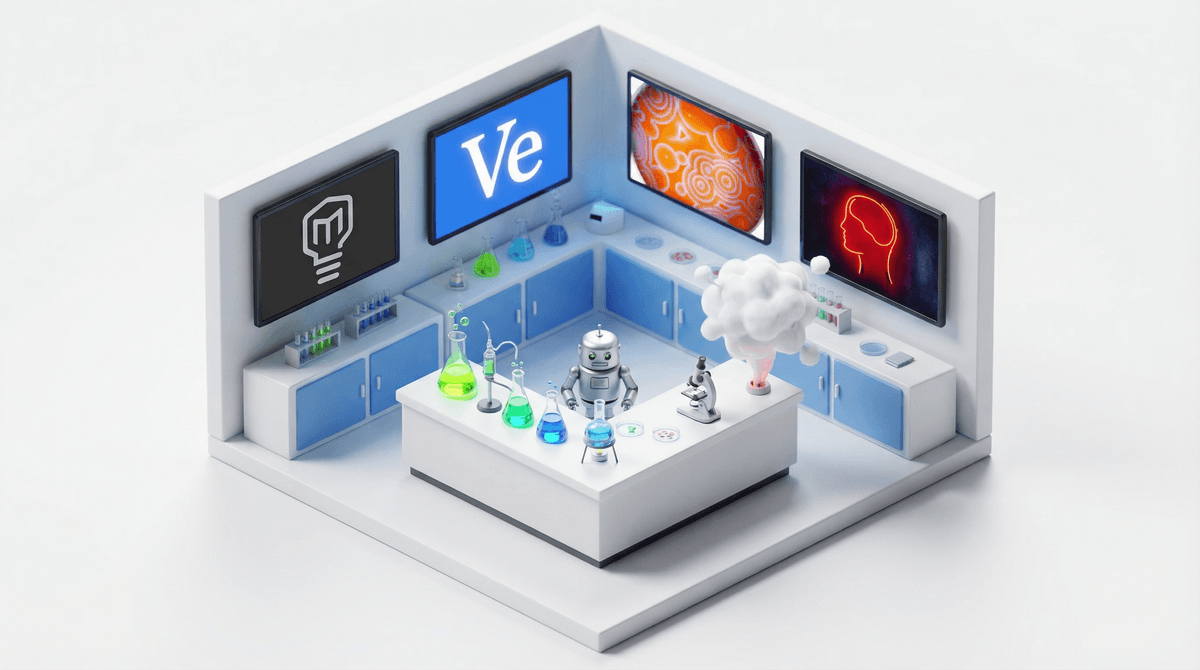
YouTube science experiment channels are where curiosity meets spectacle—think elaborate Rube Goldberg machines, backyard rocket launches, elephant toothpaste explosions, and the occasional "will it blend?" moment, but make it educational. These channels range from former NASA engineers building elaborate squirrel obstacle courses (Mark Rober) to chemistry teachers making things fizz and pop (NileRed) to enthusiastic creators who just really want to show you what happens when you microwave various objects (please don't try this at home).
The landscape is vast. You've got legitimate scientists breaking down complex concepts, talented educators making STEM accessible, and then... well, you've got people setting things on fire for views. And here's the thing: kids often can't tell the difference between good science and good entertainment that happens to involve beakers.
According to our community data, about 42% of families let their kids use YouTube solo, while 38% supervise, and 20% don't allow it at all. Only 20% are using YouTube Kids, which means most kids are navigating the full YouTube ecosystem—where the algorithm doesn't always distinguish between educational content and, well, chaos.
Let's be honest: explosions are cool. Watching someone drop a watermelon from a crane onto a trampoline is inherently satisfying. But beyond the spectacle, these channels tap into something genuinely wonderful—kids' natural curiosity about how the world works.
The best science channels make learning feel like play. They answer questions kids actually have: What's inside a baseball? Can you make a cloud in a jar? Why does Diet Coke explode with Mentos? They're watching someone test hypotheses in real-time, often failing spectacularly before succeeding, which is actually a great model for the scientific method.
Plus, the production quality on many of these channels rivals actual TV shows. Kids are getting slow-motion cameras, drone footage, and editing that makes science feel like an action movie. Mark Rober doesn't just show you an experiment—he takes you on a narrative journey with stakes, setbacks, and satisfying conclusions.
The genuinely educational: Channels like Mark Rober, Veritasium, SmarterEveryDay, and The Action Lab are run by actual scientists and engineers. They explain their methodology, discuss why things work the way they do, and model good scientific thinking. Your kid might actually learn something about physics, chemistry, or engineering.
The entertainment-first crowd: Channels like MrBeast occasionally do science-adjacent content (giant experiments! extreme challenges!), but education isn't really the goal. That's fine—entertainment has its place—but it's worth helping kids understand the difference between "this is cool to watch" and "this is teaching me something."
The genuinely concerning: There are channels that demonstrate dangerous experiments without proper safety warnings, misrepresent scientific concepts, or worse, encourage kids to try risky experiments at home. Some creators prioritize shock value over accuracy, which can spread misconceptions that are surprisingly hard to undo.
Ages 5-8: Stick with YouTube Kids where you can find channels like SciShow Kids and Peekaboo Kidz. These are designed for shorter attention spans with age-appropriate concepts. Watch together and talk about what you're seeing.
Ages 9-12: This is prime Mark Rober territory. Kids can start understanding more complex concepts, but they still need guidance about what's safe to replicate. SciShow and Crash Course Kids are also excellent. Consider supervised viewing or using YouTube's restricted mode.
Ages 13+: Teens can handle more advanced content like NileRed (chemistry that looks like magic) or Vsauce (mind-bending physics and philosophy). They're also more likely to encounter clickbait science or pseudoscience, so this is a great age to talk about media literacy and evaluating sources .
.
The algorithm doesn't care about accuracy. YouTube's recommendation system optimizes for watch time, not educational value. A kid watching Mark Rober might get recommended increasingly sensationalized content that looks scientific but isn't.
"Don't try this at home" is not a magic spell. If your kid is watching experiments, assume they're mentally cataloging what they might be able to replicate. Have explicit conversations about safety, and maybe do some safe experiments together so they have an outlet for that curiosity.
Science YouTube can be a gateway to deeper learning. Many kids who start with these channels develop genuine interests in STEM fields. Consider supplementing with hands-on activities, science kits, or even coding platforms like Scratch that let them create their own experiments.
Watch time adds up fast. Science videos are often 10-20 minutes long, and YouTube's autoplay feature means "one video" easily becomes an hour. Set clear expectations about screen time limits.
YouTube science channels can be genuinely wonderful—they make learning accessible, exciting, and free. But like everything on YouTube, they require some parental curation and conversation. The difference between a kid mindlessly consuming content and actually learning is often just your involvement.
Next Steps:
- Watch a few videos together and talk about what makes good science content
- Set up a YouTube supervised account if your kid is ready for more independence
- Create a playlist of parent-approved channels
- Consider whether YouTube Kids or regular YouTube makes more sense for your family
- Have the safety conversation before someone tries to make elephant toothpaste in your kitchen
Science YouTube at its best is curiosity fuel. At its worst, it's just another rabbit hole. Your job isn't to ban it—it's to help your kid navigate it thoughtfully.