

TL;DR
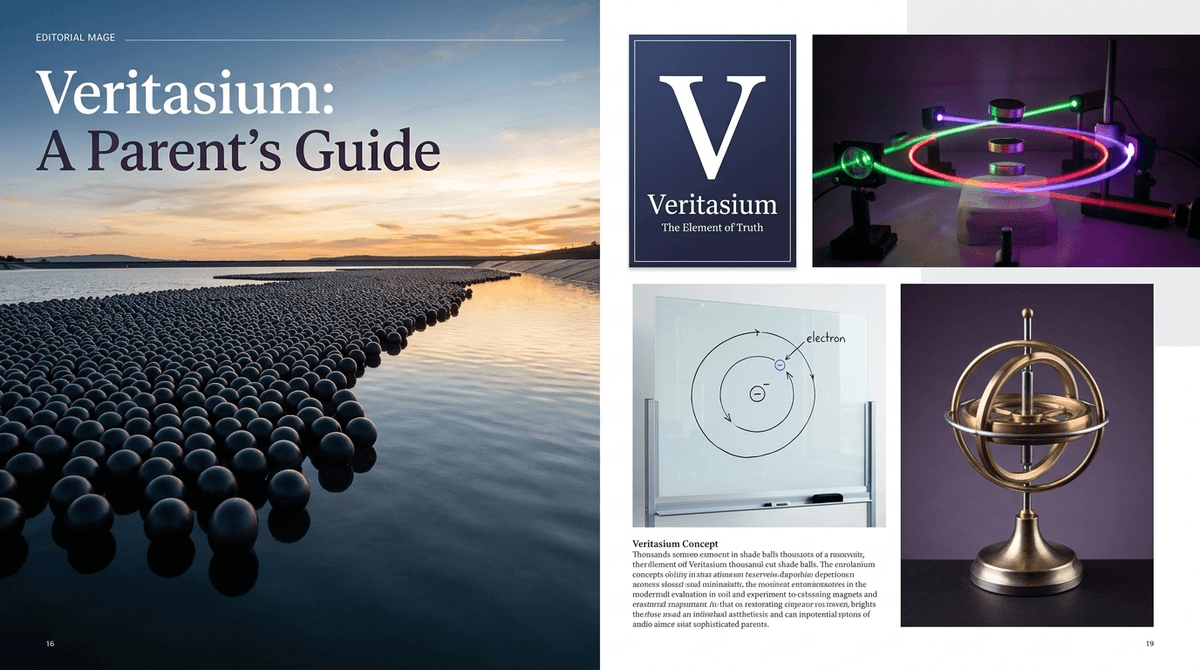
If your kid has suddenly started explaining the Magnus effect or why shade balls are in the LA reservoir, you can thank Derek Muller. Veritasium is the gold standard of "Educational YouTube." It’s high-production, deeply researched, and—most importantly—it treats its audience like they're actually smart. It’s the perfect antidote to "brain rot" content.
Quick Links:
- The Channel: Veritasium
- The Vibe: Science, engineering, and debunking common misconceptions.
- Best For: Ages 10 to 110 (but really hits the sweet spot for curious middle and high schoolers).
- If they like this, check out: Mark Rober, SmarterEveryDay, and Kurzgesagt – In a Nutshell.
Created by Derek Muller, a guy with a PhD in Physics Education Research, Veritasium is a YouTube channel that has been around since 2010. But don't let the "old" start date fool you. While other creators from that era have faded into obscurity or pivoted to weird prank videos, Muller has stayed the course, becoming one of the most influential science communicators on the planet.
The name comes from the Latin word for truth (Veritas) and the suffix for an element (-ium). The whole mission is "the element of truth." Videos range from 10 to 30 minutes and cover everything from the physics of a spinning top to the ethical dilemmas of self-driving cars.
This isn't your 9th-grade science teacher's grainy VHS tape. These are cinematic, high-budget documentaries that often involve Muller traveling across the world to talk to the actual scientists who made the discoveries he’s discussing.

In a world of TikTok trends and "Ohio" memes (which, for the uninitiated, is just Gen Alpha's way of saying something is weird or cringey), Veritasium offers something kids actually crave: substance.
Kids are naturally curious, but they’re also excellent "BS detectors." They know when they’re being talked down to. Muller treats his viewers like peers. He starts most videos with a "misconception"—a question that seems simple but has a counterintuitive answer. He’ll go out on the street and ask people questions like, "How does a tree get its mass?" or "Which falls faster, a heavy ball or a light ball?"
When the audience (and the people on the street) inevitably get it wrong, he doesn't mock them. He takes them on a journey to find the truth. It turns science into a mystery novel.
Plus, the production value is insane. When he talks about the speed of electricity, he’s not just drawing on a whiteboard; he’s building a circuit that’s light-seconds long. It’s "edutainment" in its purest, most effective form.
We talk a lot about "digital wellness" and "screen time," but the quality of the content is just as important as the quantity. If your kid is spending an hour watching Veritasium, they aren't just learning facts; they’re learning how to think.
Muller’s PhD was literally about how to teach science effectively. His research found that just telling people the right answer doesn't work—you have to address their wrong assumptions first. By watching these videos, your kid is learning the scientific method in action. They’re learning to question their first instincts and look for data. In an era of AI-generated misinformation and deepfakes, that’s a superpower.
Check out our guide on teaching kids critical thinking online
If your kid has fallen down the Veritasium rabbit hole, you might want to point them toward these other heavy hitters. They’re all part of a loosely connected community of creators who prioritize accuracy and curiosity over cheap clicks.
The former NASA engineer famous for his "Glitter Bomb" videos. He’s more focused on engineering and "cool builds" than pure physics, but his enthusiasm is infectious. It’s the perfect gateway drug for STEM.
Destin Sandlin is the "dad" of science YouTube. He looks at the world with genuine wonder, whether he’s exploring the inside of a nuclear submarine or explaining how a cat always lands on its feet.
If your kid prefers animation, this is the one. They tackle massive, existential questions (like "What happens if we detonate all the nukes at once?") with beautiful, minimalist animation and a healthy dose of "optimistic nihilism."
Dianna Cowern makes complex physics concepts incredibly accessible. She’s a fantastic role model for girls in STEM, though she has been on a hiatus due to health issues, her backlog of videos is a goldmine.
Great for kids with shorter attention spans. These are hand-drawn "whiteboard" style videos that explain deep concepts (like time travel or gravity) in about two to three minutes.
See our full list of the best educational YouTube channels for teens
Recommended Ages: 10+
While there is nothing "inappropriate" in Veritasium (no swearing, no violence, no suggestive content), the concepts can be heavy. A 7-year-old might enjoy the visuals of a drone flight, but they’ll probably get lost when Muller starts talking about quantum entanglement or the mathematical paradoxes of infinity.
For middle schoolers (ages 11-14), this is the "sweet spot." They’re starting to learn these concepts in school, and seeing them applied in the real world makes the classroom material feel relevant.
For high schoolers, it’s a legitimate study aid. Many AP Physics students use Veritasium to help visualize the abstract math they’re doing in class.
The main "safety" concern with Veritasium isn't the content itself—it’s the platform it lives on. YouTube is designed to keep you watching.
- The Algorithm: One minute your kid is watching a video about black holes, and three clicks later they could be in a weird conspiracy theory rabbit hole. It’s worth checking in on their "Recommended" feed occasionally.
- The Comments: Like all of YouTube, the comment section can be a cesspool. Veritasium generally has a more intellectual audience, but trolls exist everywhere.
- Clickbait: Muller is a master of the "clickbait" thumbnail and title. He has to be to survive on YouTube. Sometimes the titles sound a bit "doom and gloom" (e.g., "The Universe is Dying"), which might cause a little anxiety in more sensitive kids.
One thing to be aware of: Veritasium does occasionally take sponsorships from big tech or energy companies. While Muller is very transparent about this and maintains his editorial independence, it’s a great opportunity to talk to your kids about media literacy.
Ask them: "Why do you think this company wanted to sponsor this specific video? Does it change how you feel about the information?"
Also, Derek Muller doesn't shy away from controversial or complex topics. He has videos on nuclear energy, climate change, and the risks of AI. He approaches them from a data-first perspective, which might challenge some families' personal or political views. But again, this is a feature, not a bug—it’s an invitation to have a real conversation.
If you want to engage with your kid about their Veritasium habit without sounding like you're "checking their homework," try these prompts:
- "I saw a thumbnail for a video about why the speed of light might not be constant. Did you watch that? Is Einstein officially 'cooked' now?"
- "What’s the most mind-blowing thing you’ve learned on that channel lately?"
- "Do you think Derek Muller’s clickbait titles are annoying, or do they actually make you want to click?"
- "If you had his budget, what's one science experiment you'd want to see him do?"
In the hierarchy of screen time, Veritasium is the equivalent of a home-cooked organic meal. It’s nourishing, high-quality, and actually helps your kid grow.
If your teen is choosing to watch a 20-minute deep dive into the "Logistic Map and Chaos" instead of scrolling through mindless TikTok dances, you’re doing something right. Encourage the curiosity, watch a video with them occasionally, and don't be surprised if they start correcting your "common sense" physics at the dinner table.
Next Steps:
- Subscribe together: If you have a family YouTube account, subscribe to Veritasium so his new videos show up in the feed.
- The "Dinner Table" Challenge: Ask your kid to explain one "misconception" they learned this week.
- Explore the "Science YouTube" ecosystem: Use our guides to find more creators that match your kid's specific interests, whether it's coding, biology, or space.