

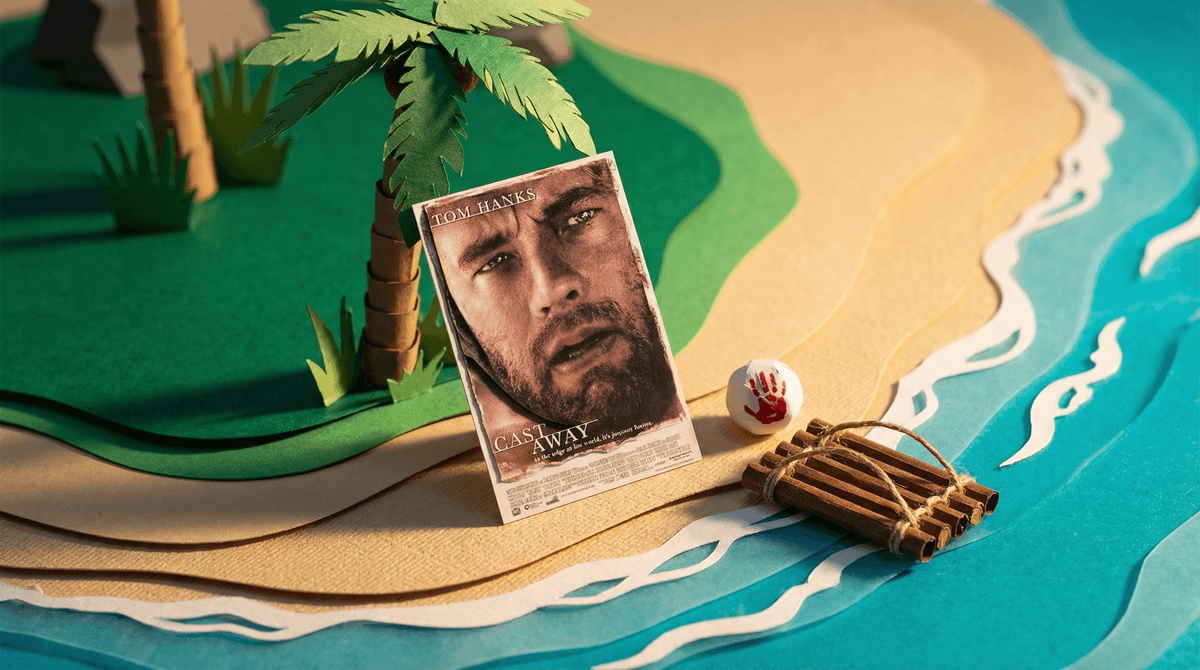
Cast Away: Why Tom Hanks' Island Survival Story Still Resonates with Families
TL;DR: Cast Away (2000) isn't just a survival movie—it's a masterclass in resilience, human connection, and what happens when all our modern conveniences disappear. Tom Hanks delivers arguably his best performance as a FedEx executive stranded on a deserted island for four years. While it's rated PG-13 and has some intense moments, it's become a surprisingly powerful film for families with tweens and teens to watch together. It's slow, meditative, and features almost no dialogue for huge stretches—which makes it either brilliant or boring depending on your kid's attention span.
Tom Hanks has given us Forrest Gump, saved Private Ryan, and made us cry over a kid's toys in Toy Story. But Cast Away required something completely different: he had to carry an entire film mostly alone, with minimal dialogue, for 143 minutes.
The physical transformation alone is staggering. Production literally shut down for a year so Hanks could lose 50 pounds and grow out his hair and beard. But it's not the weight loss that makes this performance exceptional—it's the emotional journey he takes us on without words.
When Chuck Noland (Hanks' character) screams at Wilson the volleyball after losing him to the ocean, you're watching a man grieve the loss of his only companion. When he learns to make fire after countless failed attempts, his primal scream of triumph feels earned. The performance works because Hanks makes you believe that four years of isolation would fundamentally change who you are.
In an era where kids are never truly alone (hello, constant connectivity), Cast Away presents something almost alien: complete isolation. No phone. No internet. No Spotify playlist to match your mood. Just you, nature, and the crushing weight of survival.
This makes it weirdly relevant for conversations about:
Screen dependency: Chuck's watch becomes meaningless. His pager is useless. All the technology that defined his identity as a time-obsessed FedEx executive becomes irrelevant. Want to explore what happens when we unplug?
Problem-solving without Google: Every solution Chuck finds—making fire, cracking coconuts, creating rope, extracting his own tooth—comes from trial, error, and persistence. No YouTube tutorials. No "5 Easy Hacks for Island Survival" TikToks.
Mental health and loneliness: The Wilson relationship isn't played for laughs in the movie (okay, maybe a little). It's a genuine coping mechanism for isolation. This can open conversations about loneliness, even when we're surrounded by people or screens.
What actually matters: When everything is stripped away, what's left? For Chuck, it's the memory of Kelly (Helen Hunt) and the drive to get back to human connection.
Best for ages 11+, though every kid is different.
The intensity factors:
- Chuck's plane crash is genuinely terrifying (though not gory)
- Self-surgery scene where he knocks out his own infected tooth with an ice skate—it's brutal
- Attempted suicide scene (he tries to hang himself but the branch breaks)
- Dead body washes ashore in a life raft
- Blood from various injuries throughout
- Emotional weight of isolation and hopelessness
What makes it work for older kids:
- Almost no language issues (one F-word, some mild language)
- No sexual content
- No violence between people
- The slow pacing actually becomes meditative—it teaches patience
- The problem-solving is genuinely educational
Honestly? This isn't for younger kids or kids who need constant stimulation. There are 30+ minute stretches with almost no dialogue. It's contemplative, slow, and requires emotional maturity to appreciate. If your 11-year-old loved The Martian, they'll probably connect with this. If they thought WALL-E was "too quiet," maybe wait a year or two.
The tooth scene: Everyone remembers it. Everyone cringes. You might want to give your kid a heads-up before it happens (around the 1-hour mark). Some kids will think it's the coolest thing ever. Others will need to look away.
The suicide attempt: It's brief but real. Chuck ties a noose, steps off, and the branch breaks. He takes it as a sign to keep living. This scene has sparked important conversations in families about depression, hopelessness, and finding reasons to continue. Depending on your family's situation, you might want to be prepared for questions.
The ending is bittersweet: This isn't a Hollywood "everything works out perfectly" ending. Chuck survives and returns home, but life has moved on without him. Kelly has remarried and has a child. He's alive but displaced in time. It's emotionally complex—which makes it great for mature discussions but potentially confusing for younger viewers expecting a neat resolution.
The Wilson goodbye: It hits harder than it should. Your kids will probably laugh at first about a man being friends with a volleyball. Then they'll cry when he loses it. That's the power of the performance—Hanks makes you care about a sporting goods item with a painted face.
Cast Away came out in 2000, right at the peak of our "everything must be faster" culture. FedEx's entire brand was speed and efficiency. Chuck Noland lived and breathed that philosophy—until the island forced him to slow down completely.
In 2026, this hits different. We're more connected than ever but somehow lonelier. We can order anything in 24 hours but have lost the ability to sit with boredom. We document everything but rarely experience it fully.
The film's meditative pace—which some critics complained about—now feels like its greatest strength. Director Robert Zemeckis forces you to sit with Chuck's isolation, to feel the passage of time, to understand that survival isn't just about staying alive, it's about finding reasons to keep going.
The lack of a musical score for most of the island sequences means you're just there with Chuck, hearing only waves, wind, and fire. It's almost anti-cinematic by modern standards, which makes it fascinating to watch with kids raised on rapid cuts and constant stimulation.
Set expectations: Tell your kids this is a "slow" movie that requires patience. It's not Jurassic Park or Spider-Man. It's more like a visual meditation on survival.
Make it an event: Because it's long and deliberately paced, treat it like a family movie night with the full setup—popcorn, no phones, commitment to watching all the way through.
Pause and discuss: The beauty of watching at home is you can pause at key moments:
- After the plane crash: "What would you grab first?"
- When he makes fire: "Why is this such a big deal?"
- The Wilson relationship: "Is this healthy or concerning?"
- The ending: "What do you think he'll do now?"
Follow-up viewing: If your kids connect with it, consider pairing it with other "survival with minimal dialogue" films like The Revenant (though that's R-rated and much more violent), Life of Pi, or 127 Hours (also intense but powerful).
Time and patience: Chuck's entire pre-island life was about saving minutes. On the island, time becomes meaningless. How does our obsession with efficiency affect us?
Material vs. meaningful: Everything Chuck valued—his career, his schedule, his possessions—becomes irrelevant. What remains is memory, hope, and determination.
Isolation in a connected world: Chuck was physically isolated. But kids today can be digitally connected yet emotionally isolated. The film opens space to discuss what real connection looks like.
Resilience and adaptation: Chuck doesn't survive because he's the strongest or smartest. He survives because he adapts, persists, and finds small victories. Each tiny success (fire, water, shelter) builds momentum.
The power of hope: The FedEx package with the angel wings becomes Chuck's talisman—a mission to complete, a reason to survive. What gives us purpose when everything else is stripped away?
In my experience talking to families who've watched this together, reactions split pretty clearly:
Kids who love it tend to be:
- Problem-solvers who appreciate the survival mechanics
- Emotionally mature enough to sit with slow pacing
- Interested in "what would I do?" scenarios
- Able to appreciate character development over action
Kids who bounce off it tend to be:
- Action-oriented viewers who need constant plot movement
- Younger viewers not ready for the emotional complexity
- Kids who struggle with sad or bittersweet endings
- Those who need dialogue and character interaction
Neither reaction is wrong. This is a specific type of film that requires a specific type of viewing patience. If your kid loves Minecraft for the survival mechanics and problem-solving, they might love this. If they play Minecraft purely for the building and creativity, maybe not.
Cast Away isn't comfort viewing, but it's powerful viewing. Tom Hanks delivers a performance that's both physically demanding and emotionally raw—carrying scenes with nothing but facial expressions and body language.
For families with mature tweens and teens, it offers something rare: a chance to slow down, sit with discomfort, and discuss what really matters when everything else is stripped away. In a world where kids are never truly unplugged, watching someone survive four years of complete disconnection hits different.
Watch it if: Your kids are 11+, can handle some intense moments, appreciate character-driven stories, and are ready for conversations about resilience, isolation, and what gives life meaning.
Skip it if: Your kids need constant action, aren't ready for the tooth scene or suicide attempt, or prefer clear happy endings.
Where to watch: Available to rent or buy on most major streaming platforms. Check JustWatch for current availability.
Want more films that explore survival, resilience, and human nature? Check out:
- The Martian - Survival with humor and science (PG-13)
- Life of Pi - Survival with spirituality and a tiger (PG)
- Apollo 13 - Survival through teamwork and ingenuity (PG)
- Swiss Family Robinson - Classic family survival adventure (G)
Looking for more family movies that spark meaningful conversations?