

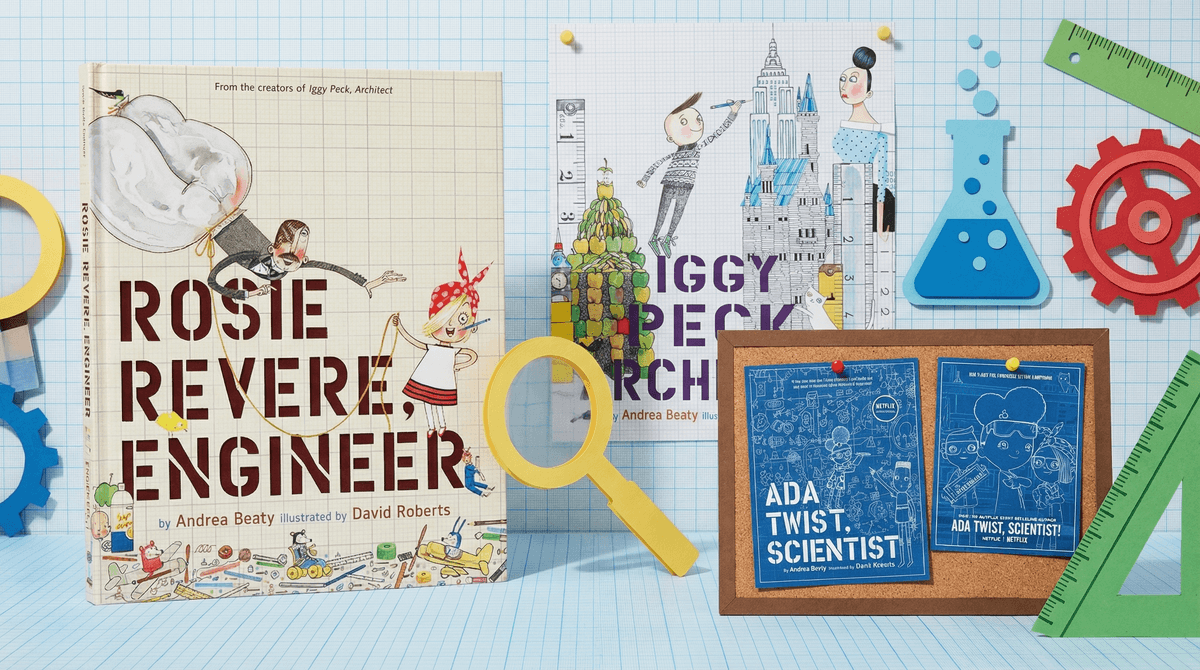
Ada Twist, Scientist is a Netflix animated series based on the bestselling picture books by Andrea Beaty and David Roberts. The show follows Ada, a curious second-grader with an insatiable appetite for asking "why?" about literally everything. She's joined by her best friends Rosie Revere (an engineer) and Iggy Peck (an architect), and together they form what might be the most wholesome STEM squad on streaming TV.
Each episode tackles a scientific mystery or problem—why does Arthur's guinea pig keep escaping? What makes things glow in the dark? How do you stop a runaway pumpkin?—and walks kids through the actual scientific method. Not the dumbed-down version. The real deal: observe, question, hypothesize, experiment, analyze, and conclude.
The show premiered in 2021 and has released multiple seasons, with each episode clocking in around 25 minutes. It's aimed at kids ages 4-8, though honestly, the approach to problem-solving works for any age.
Here's the thing about most kids' shows with "smart" protagonists: they're usually just...right. The main character has a flash of genius, solves the problem, everyone claps. Ada Twist flips that script completely.
Ada is wrong constantly. Her first hypothesis? Usually doesn't work. Her second attempt? Also fails. Sometimes spectacularly. And instead of treating this as a character flaw or comic relief, the show celebrates it as exactly how science works. Failure isn't the opposite of success—it's literally part of the process.
This is huge for kids, especially girls and kids of color who don't see themselves represented in STEM fields. Ada is a Black girl who wears her natural hair, asks annoying questions at inconvenient times, and doesn't apologize for taking up space with her curiosity. She's not a side character or the "smart friend"—she's the lead, and her approach to problem-solving is the framework for every episode.
Most educational kids' content falls into one of two traps: it's either so focused on teaching a specific fact that it feels like a lecture with animation, or it's so worried about keeping kids entertained that the educational content is basically window dressing.
Ada Twist threads this needle better than almost anything else out there. The science is real and specific—they talk about bioluminescence, decomposition, sound waves, the water cycle—but it's always in service of a story that kids actually care about. The show doesn't pause to explain concepts in a condescending way; it trusts kids to follow along and pick things up through context.
Plus, the show models something that's increasingly rare: collaborative problem-solving. Ada doesn't work alone. She brings in Rosie's engineering skills and Iggy's design thinking. They disagree, they compromise, they build on each other's ideas. In a world where we're all worried about kids becoming isolated screen zombies, this is the kind of social modeling that actually matters.
The music is also genuinely catchy in a way that won't make you want to drive your car into a lake, which as a parent, is not nothing.
Ages 4-6: This is the sweet spot. The problems are relatable (lost toys, messy rooms, pet care), the pacing is perfect for shorter attention spans, and the repetition of the scientific method helps it stick. Kids this age will start parroting "let's make a hypothesis!" which is both adorable and slightly annoying when you're just trying to get out the door.
Ages 7-9: Still totally appropriate, though some kids at the older end might find it a bit young. That said, the problem-solving approach is sophisticated enough that it doesn't feel babyish. This is a good age to watch together and talk about the process—"what would you have tried?" or "why do you think that didn't work?"
Ages 10+: Probably aging out unless they have younger siblings or a specific interest in science. The storytelling is definitely aimed at the younger elementary crowd.
The show is genuinely wholesome—no mean characters, no bathroom humor, no sarcasm or snark. If your family is looking for something with more edge or complexity, this isn't it. But if you want a show that models curiosity, persistence, and genuine friendship without any content concerns whatsoever, Ada Twist is basically a unicorn.
The STEM representation is real, not tokenized. The show was developed with input from actual scientists and educators. When Ada talks about the scientific method, it's not a simplified cartoon version—it's the actual framework that professional scientists use. This matters because kids who internalize this approach early are building genuine critical thinking skills, not just memorizing facts.
It might make your kid more annoying. And I mean that as a compliment. After watching Ada Twist, kids start asking "why?" about everything. They want to conduct experiments. They want to test hypotheses. They want to know the reason behind every household rule and natural phenomenon. This is developmentally amazing and also exhausting. Be prepared.
The diversity is normalized, not explained. Ada is Black, Rosie is Latina, and the show includes kids and families of different backgrounds, family structures, and abilities without making it A Very Special Episode. It's just...normal. Which is exactly how it should be.
Screen time that actually leads to off-screen activity: This is one of those rare shows that consistently inspires kids to turn off the TV and go try something. Whether it's building a contraption, mixing ingredients to see what happens, or just asking more questions about how things work, Ada Twist tends to generate momentum rather than passive consumption.
If you're looking for a show that will actually teach your kid something useful—not random facts, but an approach to thinking and problem-solving—Ada Twist, Scientist is one of the best options available. It's not perfect (some episodes are stronger than others, and the parents are almost suspiciously patient), but it's doing something genuinely valuable: showing kids that being curious, asking questions, and trying things that might fail is not just okay—it's literally how we figure out how the world works.
In a media landscape full of content that's either mindless entertainment or thinly veiled advertisements for toy lines, Ada Twist is the real deal. Your kids will enjoy it, you won't hate it, and there's a decent chance they'll come away with something more valuable than just 25 minutes of quiet.
- Start with Season 1, Episode 1 ("The Mystery of the Sticky Spill") to see if it clicks with your kid
- Check out the original picture books by Andrea Beaty—they're just as good and make great bedtime reading
- Set up a simple "experiment station" with basic supplies (baking soda, vinegar, food coloring, cups, spoons) for when your kid inevitably wants to test their own hypotheses
- Looking for more shows that actually teach something? Check out Octonauts for ocean science or Bluey for emotional intelligence and creative play