

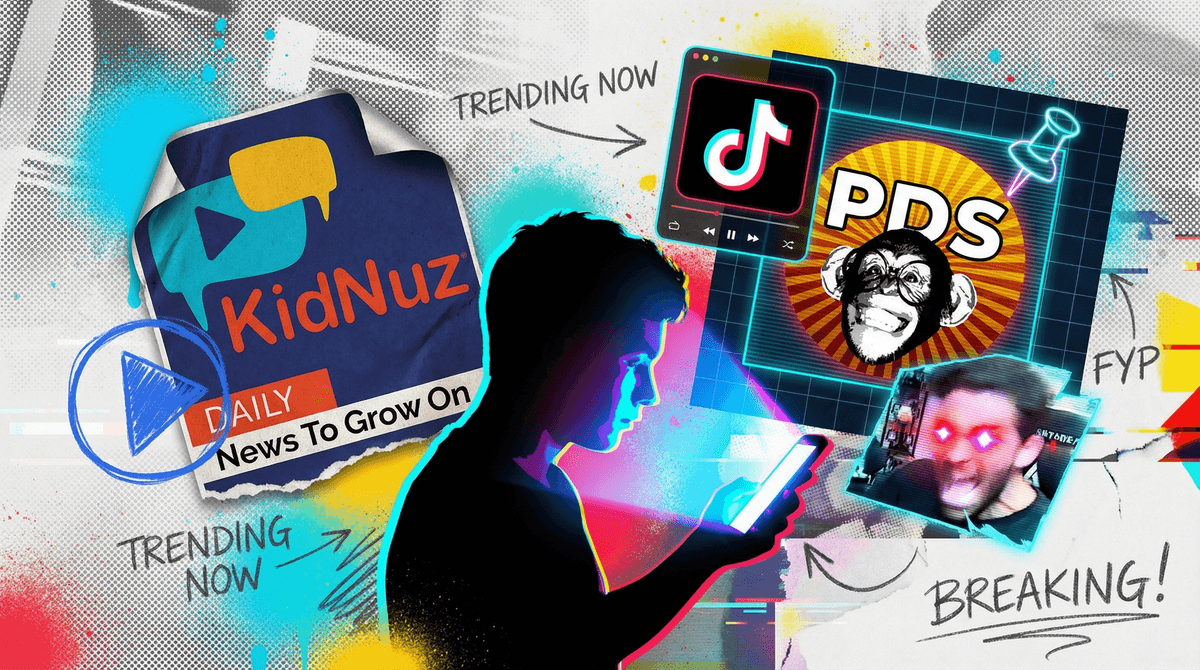
Here's the thing: your kid probably hasn't watched the evening news since... well, ever. They're not reading newspapers (obviously), and they're definitely not checking CNN.com before school. Instead, they're getting their information about world events from TikTok creators, YouTube commentary channels, Instagram infographics, and Discord servers.
This isn't necessarily because they're lazy or disengaged. It's because the news literally comes to them in the same feed where they watch skateboarding fails and Minecraft tutorials. A 15-year-old might learn about a Supreme Court decision from a 60-second TikTok, then immediately scroll to a video about someone's cat. This is their normal.
The most popular "news" sources for teens right now aren't traditional media outlets—they're creators like Hasan Piker (HasanAbi on Twitch/YouTube), Philip DeFranco, or niche TikTok accounts that break down current events with memes and trending audio. Some of this is genuinely informative. Some of it is... let's just say "creatively interpreted."
There's actually some logic here. Traditional news can feel distant, formal, and honestly kind of depressing when it's just a parade of disasters. Creators, on the other hand, feel like friends explaining things. They're relatable, they use humor, and they often admit when they don't know something or made a mistake.
But here's the catch: these creators aren't bound by journalistic standards. They don't have editors, fact-checkers, or ethical guidelines they're required to follow. They can share opinions as facts, cherry-pick information that supports their narrative, or simply get things wrong without consequence. And because the algorithm rewards engagement over accuracy, the most emotionally charged or controversial takes often get the most views.
Your kid isn't necessarily being manipulated—they're just consuming information in a format that feels natural to them. The problem is they might not have the media literacy skills to distinguish between "this creator is sharing verified information" and "this creator is sharing their hot take."
Algorithmic echo chambers: If your kid watches one video about a political topic, the algorithm will serve them 50 more from similar perspectives. They're not getting diverse viewpoints—they're getting confirmation of whatever they just watched.
Emotional manipulation: News on social platforms is optimized for engagement, which means it's often designed to make you angry, scared, or outraged. That's not healthy for developing brains that are already dealing with enough anxiety.
Missing context: A 60-second TikTok can't provide the nuance of a 1,500-word article. Complex issues get reduced to soundbites, and important context gets lost.
Misinformation spreads faster: By the time a false claim is debunked, it's already been shared thousands of times. Your kid might see the original lie but never see the correction.
Ages 8-12: At this age, kids aren't usually seeking out news content, but they might stumble across it. Focus on teaching them that not everything online is true and that they should ask a trusted adult when they see something confusing or scary. Introduce them to kid-focused news sources like Newsela or podcasts like KidNuz.
Ages 13-15: This is when they start actively consuming news content through social media. Have conversations about source credibility—who made this video? What's their expertise? Are they sharing facts or opinions? Encourage them to check multiple sources before believing something. Show them how to look up whether a news story is being reported by actual news organizations.
Ages 16+: Older teens can handle more sophisticated media literacy conversations. Talk about bias, framing, and how algorithms work. Help them understand that even "objective" news has perspective, and that diverse media consumption is important. Encourage them to follow a mix of sources and to read beyond headlines.
You don't need to ban TikTok or force your kid to watch PBS NewsHour (that's not happening). Instead, focus on building critical thinking skills.
Co-view sometimes: Ask your teen to show you where they get their news. Watch a few videos together and discuss them. "What do you think about this? How do you know if it's accurate? What might be missing from this story?"
Introduce better sources: Share articles from reputable outlets when big news happens. Not as a lecture, but as "hey, I was reading about this, what have you heard?" Some teens actually appreciate having access to more thorough information once they're interested in a topic.
Teach verification skills: Show them how to reverse image search, check dates on viral content, and look up whether other sources are reporting the same information. Learn more about teaching media literacy skills .
.
Model good habits: If you're doom-scrolling Twitter for news while complaining about misinformation, your kid will notice. Show them what healthy news consumption looks like.
Acknowledge their sources aren't all bad: Some creators genuinely do good journalism. Philip DeFranco has been covering news on YouTube for years with reasonable accuracy. Some TikTok creators are actual journalists using the platform to reach younger audiences. The goal isn't to dismiss all creator content—it's to teach discernment.
Your kids are getting their news from creators, and that's not changing anytime soon. The solution isn't to fight the format—it's to teach them how to be smart consumers of information regardless of where it comes from.
This means having ongoing conversations about media literacy, not one big "here's how news works" lecture. It means asking questions instead of giving answers. And it means accepting that sometimes they'll believe something false, learn it was wrong, and (hopefully) adjust their approach.
The goal isn't to make them news junkies who read three newspapers before breakfast. It's to help them develop the skills to navigate a world where information is abundant, sources are murky, and everyone with a ring light can position themselves as an expert.
- Ask your kid where they learned about a recent news event (don't judge the answer)
- Watch one of their news sources together and discuss it
- Introduce one high-quality news source appropriate for their age
- Have a conversation about how algorithms decide what content they see
- Set up family media literacy conversations as a regular thing, not a one-time talk
Remember: they're not getting their news from TikTok because they're stupid. They're doing it because that's where they already are, and the information comes to them in a format that makes sense for how they consume content. Our job is to help them get better at evaluating what they're seeing, not to shame them for where they're seeing it.