

TL;DR
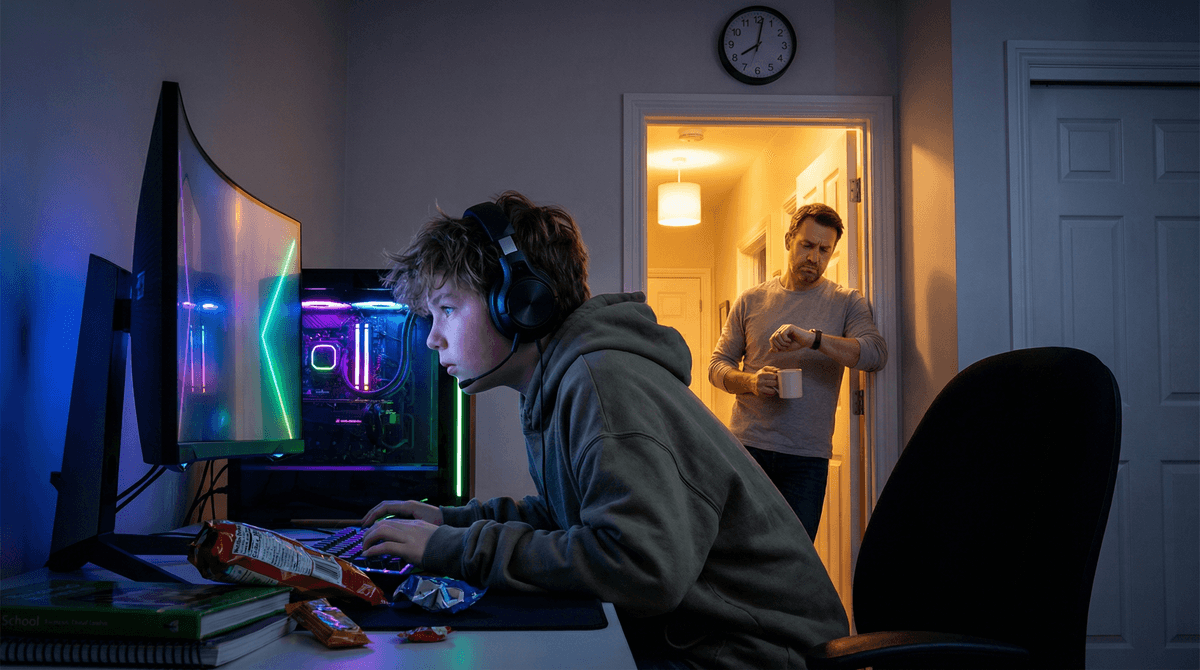
The "one more match" struggle isn't just your kid being defiant—modern games are literally designed to prevent pausing. Between leaver penalties (getting banned for quitting), ranked progression, and social pressure, walking away mid-game feels like a catastrophe to a middle schooler. To fix the drama, stop using "minutes" and start using "matches."
- Understand the "Un-pausable" Games: Fortnite, League of Legends, Valorant, and Rocket League.
- Try "Pause-Friendly" Alternatives: The Legend of Zelda: Tears of the Kingdom, Stardew Valley, and Animal Crossing: New Horizons.
- The Strategy: Use a "No New Match" rule 15 minutes before dinner instead of a hard cutoff.
Back in the day, we could hit "Start" on Super Mario and go eat our peas. Today, telling a kid to pause League of Legends is like telling a basketball player to stop mid-dribble and walk off the court while the game continues around them.
In the world of online multiplayer gaming, "pausing" literally doesn't exist. If your kid walks away, their character just stands there while the "sweaty" (over-competitive) players on the other team eliminate them. But it’s worse than just losing; most modern games now bake in punishments for leaving.
The Ban Timer (Leaver Buster)
Games like Valorant and Overwatch 2 have systems to detect "leavers." If a kid quits mid-match because you told them it’s time for bed, the game might ban them from playing for 10 minutes, an hour, or even days for repeat offenses. To a 12-year-old, a 24-hour ban is a social death sentence.
The Social FOMO
If they are playing Roblox with friends from school, leaving mid-session feels like hanging up the phone while someone is mid-sentence. They don't want to be the "Ohio" friend (the weird/cringe one) who lets the team down.
Learn more about why kids are obsessed with Roblox
It’s not just about the mechanics; it’s the psychology. Game developers use something called Variable Ratio Reinforcement. It’s the same logic used in slot machines.
Maybe the last match was a "skibidi" disaster where they lost immediately. They need "one more" to redeem themselves. Or maybe they’re on a winning streak and the dopamine is hitting just right—they want to "clutch" one more victory before logging off.
Common Match Lengths to Know:
- Rocket League: ~5-7 minutes. (Easy to manage).
- Fortnite (Battle Royale): Anywhere from 2 to 20 minutes.
- Brawl Stars: ~3 minutes. (Great for "quick" sessions).
- Valorant or League of Legends: 30 to 50 minutes. (The danger zone).
If the "one more match" drama is ruining your evenings, it might be time to steer them toward games that actually respect your family's schedule. These are high-quality titles that can be saved or paused at any second.
This is the gold standard of single-player gaming. It’s vast, creative, and—most importantly—you can put the Switch to sleep in the middle of a boss fight and pick it up tomorrow. No bans, no angry teammates. Ages 10+
A "cozy game" classic. While the game saves when the character goes to sleep at the end of an in-game day (about 15-20 minutes), the stakes are low, and there’s no social penalty for walking away. It’s great for teaching resource management without the adrenaline spike of a shooter. Ages 8+
Minecraft is a bit of a chameleon. If they are on a public server, it's un-pausable. But in a local "Single Player" world, they have total control. They can build their "Ohio" monuments in peace and quit the second you call them. Ages 7+
Check out our guide on the best cozy games for kids
To handle this without the drama, you need to speak the language.
Every online game has a Lobby (where they customize their character and wait for a game) and a Match (the actual gameplay).
The Golden Rule: You cannot ask them to quit during a Match, but you can absolutely forbid them from starting a new one from the Lobby.
How to Talk About It:
Instead of saying "You have 10 minutes," which is a meaningless unit of time in Fortnite, try this:
- The Check-In: "How much time is left in your current match?"
- The Boundary: "Okay, this is your last match of the night. When this game ends, the screen goes off, even if your friends want to play another."
- The Buffer: Give a 15-minute "No New Matches" warning. "It’s 5:45. Dinner is at 6:00. You can finish what you’re doing, but do not start a new match."
Elementary (Ages 6-10)
At this age, kids often don't even realize they're playing an "online" game. They might be on Roblox or Among Us. They need physical cues. A visual timer on the desk can help them see the "end" coming so they don't start a new round of "Hide and Seek" right when you're serving pasta.
Middle School (Ages 11-14)
This is peak FOMO age. They are playing Valorant or Call of Duty to stay relevant in the lunchroom conversation. At this age, the "Ban Timer" is a real concern. Negotiate the end-time based on match completion rather than clock time to avoid the "I'm going to get banned!" screams.
High School (Ages 15+)
They should be managing their own time by now, but the "brain rot" of endless scrolling between matches on TikTok is real. Encourage them to use the "Do Not Disturb" features on their consoles or PCs to avoid being sucked back in by "one more" invite from a friend.
The "just one more match" plea is often a reaction to a game design that punishes players for having a life outside the screen. It’s not necessarily "addiction"—it’s a conflict between software architecture and family dinner.
By shifting your language from minutes to matches, you remove the "unfairness" of the ban timer and put the responsibility back on the kid to manage their final round.
Next Steps
- Audit their games: Ask them which of their favorite games have "leaver penalties." (Hint: if it's a competitive shooter, it probably does).
- Set a "Last Call": Establish that "Last Call" for gaming is 20 minutes before the actual "Power Off" time.
- Explore alternatives: If the stress of online matches is too much, look into great single-player games that actually have a pause button.