

War dramas are films that explore the human experience during wartime—courage, sacrifice, moral complexity, loss, and resilience. When we talk about "family-friendly" war dramas, we're looking for movies that tell these important stories without gratuitous violence or trauma that overwhelms young viewers.
These aren't sanitized versions of war—good family war dramas don't shy away from the reality that war is devastating. But they frame these stories in ways that spark conversation rather than nightmares, and focus on human connection, bravery, and hope alongside the harder truths.
The challenge? War is inherently violent and traumatic. So finding the sweet spot between "meaningful historical education" and "your 10-year-old can't sleep for a week" requires some intentionality.
War dramas offer something unique: they show kids that ordinary people can do extraordinary things under impossible circumstances. They introduce historical events in human terms—not just dates and battles, but real people making hard choices.
The good ones teach:
- Empathy across cultures and conflicts
- The cost of freedom and democracy
- Moral courage in the face of injustice
- How regular people respond when everything is on the line
- That war is complex, not a simple good-vs-evil story
But here's the thing: these conversations only work if your kid is developmentally ready. A 7-year-old processes war stories very differently than a 13-year-old. One will have questions about whether the bad guys are real, the other will want to debate the ethics of dropping atomic bombs.
Ages 8-10: Entry Points
Start with stories focused on resilience and hope where war is the backdrop, not the main visual focus:
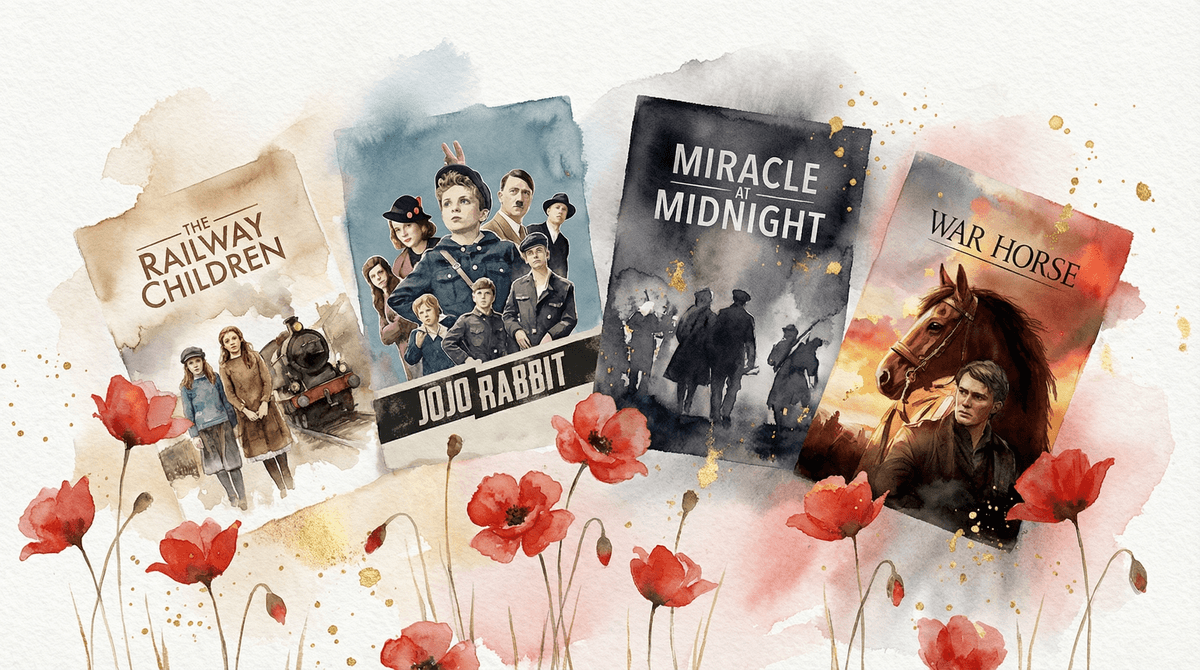
- The Railway Children (1970) - Technically Edwardian-era, but introduces the concept of war affecting families
- Miracle at Midnight - Danish resistance helping Jewish families escape
- War Horse - Spielberg's WWI film through the eyes of a horse and the people who love him (some intense battle scenes, preview first)
At this age, watch together and pause liberally. They'll have questions. They might need reassurance that this isn't happening right now, or that their family is safe.
Ages 11-13: Building Complexity
Now you can introduce more nuanced stories with limited but realistic violence:
- Jojo Rabbit - A satire about a Hitler Youth kid whose imaginary friend is a buffoonish Hitler. Sounds wild, but it's brilliant for discussing propaganda and how good people can be manipulated. (Some violence, strong language—definitely preview)
- Hidden Figures - Cold War era, focuses on the brilliant Black women mathematicians at NASA
- Dunkirk - Nolan's WWII evacuation film is intense but not gory. The tension is psychological more than graphic
- Hacksaw Ridge - About a conscientious objector who serves as a medic. Powerful story but intense battle violence—this is a hard PG-13/soft R, so know your kid
Ages 14+: The Full Picture
Teens can handle more graphic content and moral ambiguity:
- 1917 - WWI film shot to look like one continuous take. Immersive and intense
- Saving Private Ryan - The D-Day landing sequence is one of the most realistic depictions of combat ever filmed. It's brutal. It's also a masterpiece. Not before 15-16, honestly
- Schindler's List - Essential Holocaust education, but emotionally devastating. High school age minimum
- All Quiet on the Western Front (2022 Netflix version) - German perspective on WWI. Powerful anti-war message but very intense
Preview everything. Seriously. MPAA ratings are inconsistent, and what traumatizes one kid might be fine for another. A 20-minute preview while folding laundry is worth it.
Historical context matters. Don't just hit play. Spend 5 minutes before the movie explaining when/where this takes place and why this war happened. A kid who understands "this is about WWII, when the Nazis tried to take over Europe and kill Jewish people" will process the story completely differently than one going in cold.
Plan for the post-movie conversation. These films bring up big questions:
- "Would I be brave like that?"
- "Why didn't everyone just refuse to fight?"
- "Are all wars like this?"
- "Could this happen again?"
Don't have all the answers. It's okay to say "I don't know" or "That's a really hard question that people still debate."
Manage the violence. Some kids are visual processors who will replay traumatic scenes in their heads. Others are more affected by emotional content (a character's grief) than physical violence. You know your kid—trust your gut about what they can handle.
Consider current events. If there's active conflict in the news, war movies hit differently. A Ukrainian family watching war dramas in 2024 needs a different conversation than others. Be sensitive to what your kid is already processing.
Some acclaimed war films are just not appropriate for family viewing, no matter how mature your teen thinks they are:
- Platoon, Full Metal Jacket, Apocalypse Now - Vietnam War films with extreme violence, sexual content, and psychological horror
- Come and See - Soviet WWII film that's an absolute masterpiece and also one of the most disturbing films ever made
- The Hurt Locker, Zero Dark Thirty - Modern war films that are intense and include torture scenes
These are important films. They're also not family movie night material.
War dramas can be powerful teaching tools—but only if you're intentional about selection and follow-up. The goal isn't to shelter kids from the reality that war exists and is terrible. The goal is to introduce these truths in age-appropriate doses that build empathy and historical understanding without causing trauma.
Start younger than you think with gentler stories, build up gradually, and always—always—watch together the first time.
If your kid loves history, these films can spark a lifelong interest in understanding how the world works. If they're sensitive to violence, there's no shame in waiting a few more years or sticking with documentaries that discuss rather than depict.
Not sure if a specific war film is right for your family? Check out our guide to understanding movie ratings and content warnings or see if a specific title is appropriate .
.
Looking for other meaningful films that spark big conversations? Explore our historical dramas for families or movies that teach empathy.