

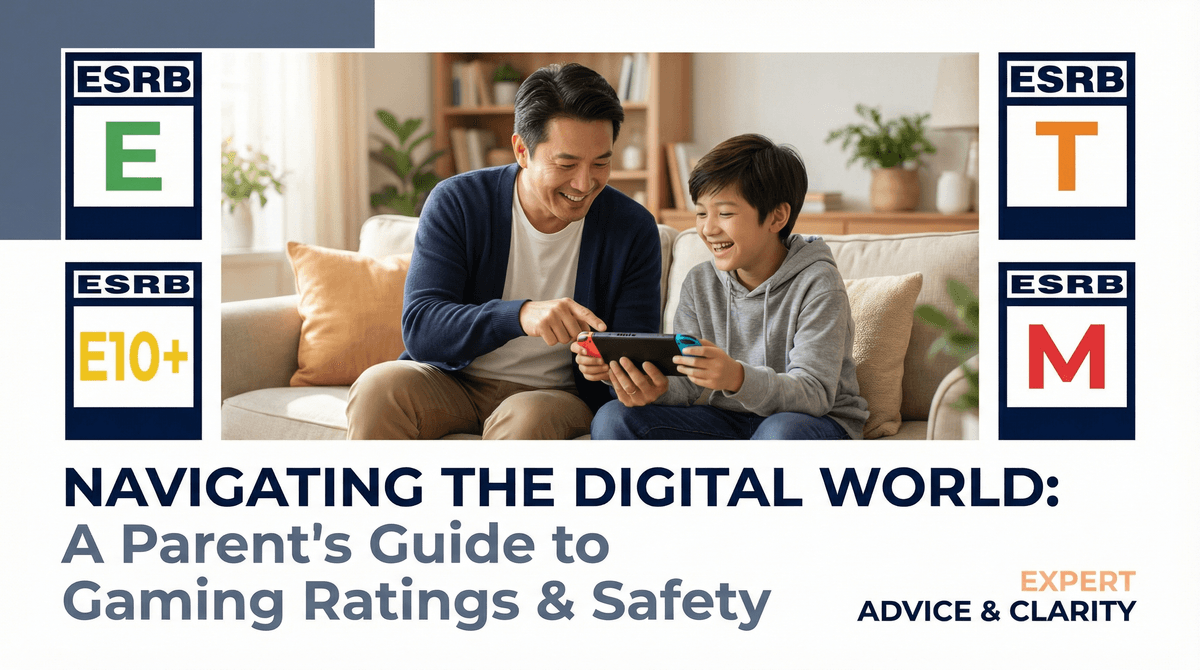
TL;DR
ESRB ratings (E, E10+, T, M) are a helpful baseline, but they aren't the Gospel. A "Teen" rating might be totally fine for your mature 11-year-old, while an "Everyone" rating might hide toxic chat rooms that would make a sailor blush. The secret sauce is looking at the Content Descriptors and Interactive Elements rather than just the letter on the box.
Quick Links for the "Should I Let Them?" Debate:
- Fortnite (Rated T) - The ultimate "bend the rules" candidate.
- Roblox (Rated E10+) - Rated E10+, but the "Users Interact" tag is the real story here.
- The Sims 4 (Rated T) - Great for creative kids, but watch out for the "WooHoo."
- Marvel Snap (Rated T) - Mostly rated T for in-game purchases; the content is very clean.
- Among Us (Rated E10+) - Suspenseful and social, but the "kill" animations are cartoonish.
The Entertainment Software Rating Board (ESRB) is the group that looks at a game and decides if it’s more "Disney Channel" or "HBO at 2 AM." They use a set of letters that we’ve all seen:
- E (Everyone): Content is generally suitable for all ages. Think Mario Kart 8 Deluxe.
- E10+ (Everyone 10+): May contain more cartoon violence or mild language. Think Minecraft.
- T (Teen): Content is generally suitable for ages 13 and up. May have violence, crude humor, or suggestive themes. Think Destiny 2.
- M (Mature 17+): Intense violence, blood and gore, sexual content, and/or strong language. Think Grand Theft Auto V.
Here is the "No-BS" reality: The ESRB doesn’t actually play the entire game from start to finish. They review a highlight reel of the "worst" content submitted by the developers. It’s a solid system, but it’s not a substitute for you actually knowing what your kid is doing.
We’ve all been there: Your 11-year-old is begging for Fortnite. You see the T for Teen rating and hesitate. But then you realize every other kid in the 5th-grade pickup line is talking about their "skibidi" skins and "Ohio" emotes.
If you stick strictly to the age labels, you might be blocking your child from the "digital playground" where their friends are socializing. Conversely, if you ignore the labels entirely, you might accidentally let them wander into a Call of Duty lobby where the language is... let's just say, not educational.
Learn more about the history of game ratings
Bending the rules isn't about being a "cool parent" who doesn't care; it’s about being an intentional parent who understands context. Here are three scenarios where "Teen" might actually be "Okay for my 10-year-old."
1. The "In-Game Purchases" Penalty
Many games receive a T or E10+ rating simply because they have "Users Interact" or "In-Game Purchases." For example, Marvel Snap is rated T, but the actual gameplay is just a strategic card game with superhero art. If you have your credit card locked down, the "Teen" rating is basically irrelevant.
2. Cartoon vs. Realistic Violence
The ESRB treats "violence" as a broad category. The Legend of Zelda: Tears of the Kingdom is rated E10+ for fantasy violence. You’re hitting monsters with swords, but they disappear in a puff of purple smoke. This is vastly different from the realistic, gritty combat in a game like The Last of Us Part II (Rated M). If your kid can handle a Marvel movie, they can probably handle most E10+ and many T-rated fantasy games.
3. Social Necessity
If your child’s entire friend group is playing Among Us or Rocket League, the social benefit of them being included often outweighs the "Mild Cartoon Violence" warning. Digital wellness is also about social wellness.
Check out our guide on how to decide if a game is right for your kid
Sometimes that M or T rating is there for a very, very good reason. Here is when you should probably hold the line:
1. Realistic Trauma and Horror
Some games are rated T or M because they deal with heavy psychological themes—suicide, intense loss, or jump-scares that will lead to a week of them sleeping in your bed. Even if there's no "blood," the emotional weight might be too much.
2. The "Users Interact" Wildcard
This is the most important tag on the back of the box. The ESRB explicitly states: "Online Interactions Not Rated by the ESRB." This means Roblox can be rated E10+, but the 19-year-old in the chat room is definitely not "E10+." If a game is heavily focused on unmoderated voice chat, that’s a hard "wait until they're older" for many families.
3. Gambling Mechanics
If a game is rated T for "Simulated Gambling" or has aggressive loot boxes (like Genshin Impact), you need to be careful. These games are designed by psychologists to trigger the same dopamine hits as a slot machine. If your kid has an impulsive personality, that T rating is a warning sign, not a suggestion.
Don't just look at the letter. Look at the small text underneath. This is where the real information lives.
- "Suggestive Themes": Usually means mild sexual innuendo or characters in revealing clothing. In The Sims 4, this covers the "WooHoo" (the game's version of sex, which happens under covers with fireworks).
- "Crude Humor": Think fart jokes or "potty humor." If you’re okay with Captain Underpants, you’re okay with this.
- "Mild Lyrics": A few "hells" or "damns" in the soundtrack.
- "Blood and Gore": This is the big one. "Blood" usually means red splashes. "Gore" means internal organs are making an appearance.
Ask our chatbot for a breakdown of specific content descriptors
Grades K-2 (Ages 5-8)
Stick to E. At this age, kids struggle to distinguish between fantasy and reality. Games like Animal Crossing: New Horizons or Bluey: The Videogame are perfect. They are low-stress and high-reward.
Grades 3-5 (Ages 8-11)
The E10+ sweet spot. This is when they start wanting "cool" games. Minecraft and Plants vs. Zombies are staples. This is also when the Roblox obsession usually starts. This is a great time to introduce the "20-minute rule": I watch you play for 20 minutes before I say yes.
Grades 6-8 (Ages 11-14)
The T transition. You’ll start seeing requests for Fortnite and Hogwarts Legacy. At this stage, you’re looking for maturity. Can they handle a loss without throwing the controller? Can they ignore a "toxic" player in chat? If yes, you can start bending those T rules.
High School (Ages 15+)
At this point, they are likely playing M rated games at their friends' houses anyway. The goal here is media literacy. Talk to them about why a game like Cyberpunk 2077 is rated M. Is it just for shock value, or is it telling a complex story?
When your kid asks for a game that is "above" their age rating, don't just say "The box says 13." That’s a conversation killer. Instead, try this:
- "Let’s look at why it’s rated T together." Pull up the ESRB site or the Screenwise guide for that game.
- "I’m worried about the 'Users Interact' part." Be honest. Tell them you trust them, but you don't trust the 40-year-old dude in the basement who might be in the same lobby.
- "Show me a YouTube video of the gameplay." Watching a "Let's Play" for five minutes will tell you more than any rating ever could. If the "violence" looks like a cartoon, you might feel better about it.
Check out our guide on how to talk to your kids about tech
The ESRB is a tool, not a babysitter. It’s there to give you a heads-up so you aren't blindsided by a severed head in what you thought was a "cute" game.
Bending the rules is a natural part of parenting as your child grows. The fact that you’re even reading this means you’re an intentional parent, which puts you miles ahead of the game. Trust your gut, watch the gameplay, and remember: it’s okay to say "not yet," and it’s also okay to say "sure, let's try it."
- Check the settings: If you decide to let them play a T-rated game, go into the settings and turn off voice chat and disable in-game purchases.
- Play with them: Seriously. Spend 30 minutes playing Fortnite with your kid. You’ll probably be terrible at it, they’ll laugh at you, and you’ll get a first-hand look at the content.
- Use Screenwise: Whenever a new game pops up on their radar, search for it here to get the real-world data on how many other parents in your community are saying "yes."
Ask our chatbot for a personalized game recommendation based on your kid's age