Destiny 2

Destiny 2

game

2023, Shooter, Adventure

WISE
58%

WISE Score

65%

IGDB

Bungie's loot-driven space shooter demands teamwork and strategy, but the always-online grind and microtransactions make it a mixed bag for teens.

Screenwise Verdict

Destiny 2 is a legitimately good game—Bungie knows how to make shooting feel satisfying, and the endgame raids are some of the best cooperative content in gaming. The world-building is rich, the buildcrafting is deep, and when you're in a fireteam that clicks, it's magic.

But it's also a live-service game designed to keep you logging in daily, with a real-money store, unmoderated chat, and a grind that can tip into compulsion. For a 13–15 year old with good impulse control and parents who enable platform-level safety settings (mute chat, restrict purchases, monitor who they're playing with), it can work. For younger kids or families who want a 'set it and forget it' experience, this is not that.

If you're going to let your teen play, play with them—at least for a while. You'll see firsthand whether they're handling the social dynamics and whether the game is scratching a healthy 'challenge and mastery' itch or becoming an obligation. And set clear boundaries on spending before the first 'Silver' purchase pops up.

Age Fit

Best for ages 13–17 (with parental oversight on chat and spending). Younger kids will struggle with the complexity and online environment; older teens and adults make up the core player base. If you're playing together as a family in a private fireteam, you can skew slightly younger (11–12), but solo play with strangers is not appropriate for preteens.

WISE Breakdown
Wholesome
62

Bungie's sci-fi shooter promotes genuine teamwork and cooperation—you literally can't tackle the harder content without communicating and coordinating with your fireteam. The tone is heroic space-opera rather than gritty or cynical, with Guardians defending humanity against alien threats. However, the always-online multiplayer environment means kids will encounter strangers, and chat can include profanity (ESRB specifically flags 'a-hole'). The game rewards grinding and daily check-ins, which can create compulsive play patterns. Pacing is mixed: story missions are coherent, but the endgame loop is designed to keep players returning indefinitely.

Imaginative
78

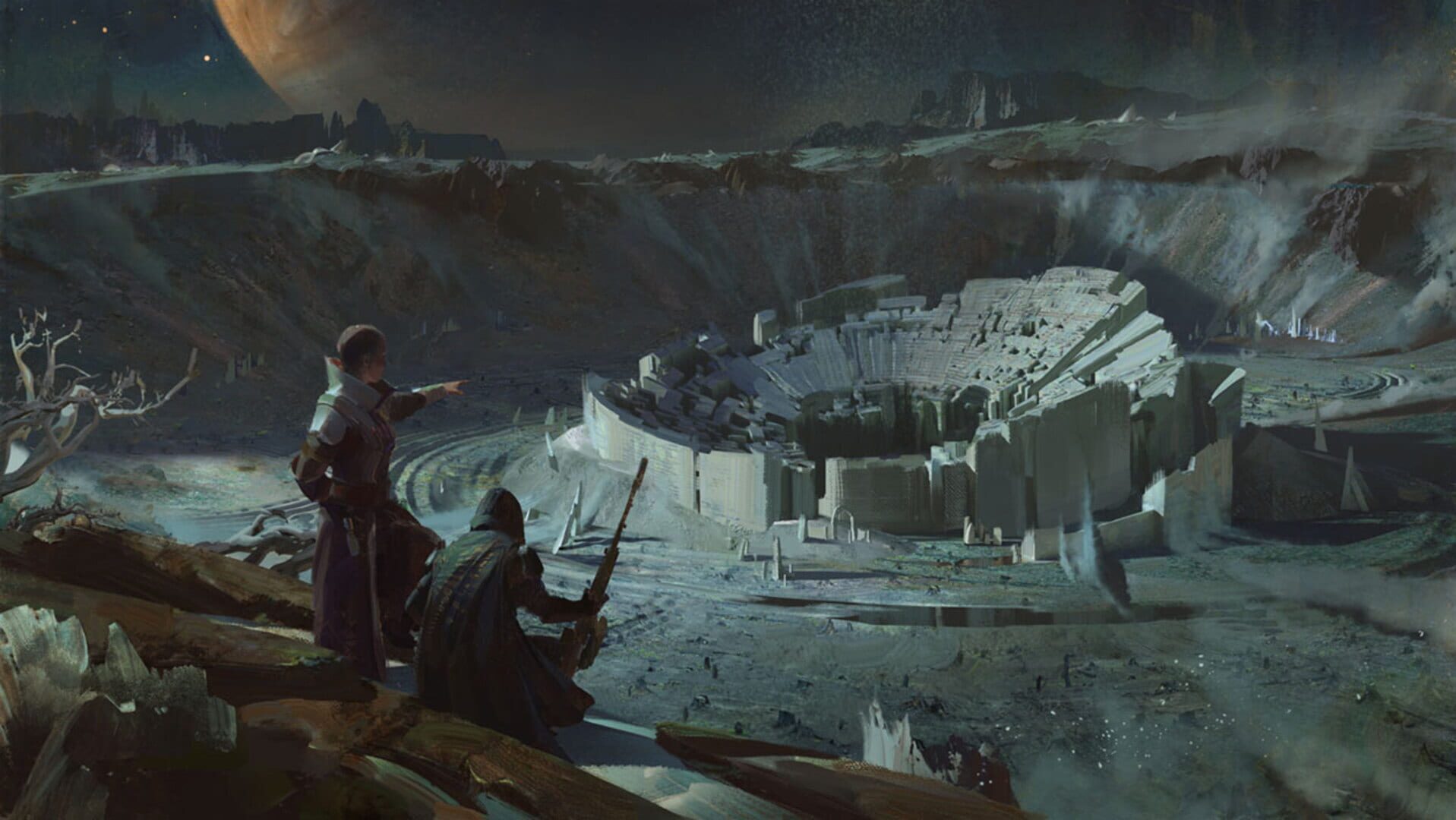
Destiny 2's world-building is legitimately impressive—Bungie crafted a sprawling sci-fi universe with distinct alien races, mysterious lore buried in item descriptions, and locations that range from neon-soaked Neomuna to haunted moon fortresses. The game invites exploration across planets and hidden areas, and the buildcrafting (mixing subclasses, exotic gear, and weapon synergies) lets players experiment with different playstyles. That said, it's more about mastering systems than true creative expression—you're not building worlds or making art, you're optimizing loadouts and executing raids.

Safe
48

This is where Destiny 2 stumbles for younger players. The game has an ESRB M rating (though Common Sense Media places it at 13+ and PEGI at 16), with realistic gunfire, explosions, blood streaks, and occasional profanity. More concerning: the always-online multiplayer exposes kids to unmoderated voice chat and text chat with strangers, and while platform-level parental controls exist (PlayStation Family Management, Xbox Family Settings), they're opt-in and not foolproof. The monetization model includes a real-money cosmetics store and seasonal battle passes that encourage repeated spending. The endgame is designed around daily/weekly rituals and FOMO (fear of missing out), which can be manipulative for younger players. Violence itself is stylized sci-fi combat rather than gore, but the combination of online strangers + microtransactions + compulsive loops keeps this below the 50 threshold.

Enriching
65

Destiny 2 teaches real skills: strategic thinking (raid mechanics require puzzle-solving and coordination), teamwork under pressure, and resource management. The game rewards patience and practice—you get better by learning enemy patterns and refining your approach. Playing with friends or family can be a genuine social experience, and the sci-fi setting introduces concepts like light-versus-darkness philosophy and the ethics of wielding power. However, much of the 'enrichment' is mechanical rather than narrative or emotional—you're learning to optimize DPS and time your supers, not necessarily wrestling with complex moral questions. Entertainment value is high for the target demographic (teens who love loot-driven shooters), but it's not offering deep personal growth.

Parent Info

Why It Might Be Great

  • Genuinely rewards teamwork—raids and dungeons require communication, coordination, and trust in your fireteam
  • Rich sci-fi world with planets to explore, hidden lore, and buildcrafting that lets you experiment with different combat styles
  • Strategic depth: endgame content teaches pattern recognition, resource management, and problem-solving under pressure
  • Can be a real social outlet when played with friends or family in a private fireteam
  • Heroic space-opera tone (you're defending humanity) rather than cynical or gritty

What to Watch For

  • Always-online multiplayer means your kid is playing with strangers—voice and text chat can include profanity and toxic behavior
  • Microtransactions for cosmetics and seasonal content; the game nudges players toward the real-money store
  • Designed around daily/weekly rituals and FOMO (limited-time events, seasonal gear)—can become compulsive
  • Realistic gunfire, explosions, and blood streaks; ESRB rates it M for Mature (17+), though many parents find 13+ reasonable with oversight
  • Endgame grind can eat hours—this is a 'hobby game' that expects regular commitment

Conversation Starters

  • "Who are you playing with online? Do you know them in real life, or are they strangers? What do you do if someone's being a jerk in chat?"
  • "What's your favorite subclass or exotic weapon combo? Walk me through why it works—I want to understand your strategy."
  • "The game has a store where you can buy cosmetics with real money. How do you decide what's worth spending on versus what you can earn by playing?"
  • "If you had to teach a new player how to do a raid, what would you say? What makes a good fireteam member?"
  • "The story is about Guardians defending humanity with Light and Darkness. Do you think using 'dark' powers to fight evil is okay, or does it change you?"

Ask Anything

Get a personalized guide on any topic

Related Guides