

The Ultimate List of Movies for 13-Year-Olds
TL;DR: Thirteen is peak movie age—old enough to handle complex themes, young enough to still enjoy pure fun. Here are the best films that hit that sweet spot between kid stuff and adult content, organized by what your teen is actually into right now.
Quick picks to start streaming tonight:
- Action/Adventure: Spider-Man: Into the Spider-Verse, The Maze Runner
- Comedy: The Grand Budapest Hotel, Booksmart
- Drama: The Perks of Being a Wallflower, Hidden Figures
- Sci-Fi/Fantasy: Everything Everywhere All at Once, Arrival
Screenwise Parents
See allThirteen-year-olds are in this fascinating in-between space. They're rolling their eyes at anything that feels "for kids" but they're not quite ready for full R-rated content (even if they insist they are). They want to be taken seriously, they're developing their own taste, and honestly? They're some of the best movie companions you'll have.
This is the age where film can actually do what it's supposed to do—spark real conversations, introduce new perspectives, and yeah, just be ridiculously entertaining without feeling like homework.
At this age, kids can handle:
- Complex narratives with multiple storylines and unreliable narrators
- Moral ambiguity where the "good guys" aren't perfect and villains have motivations
- Mature themes like identity, belonging, social justice, and mental health
- Some language and mild violence (think PG-13, which was literally designed for this age)
- Sophisticated humor beyond slapstick
What they DON'T need:
- Graphic sexual content or gratuitous violence
- Cynicism disguised as sophistication
- Movies that talk down to them or oversimplify
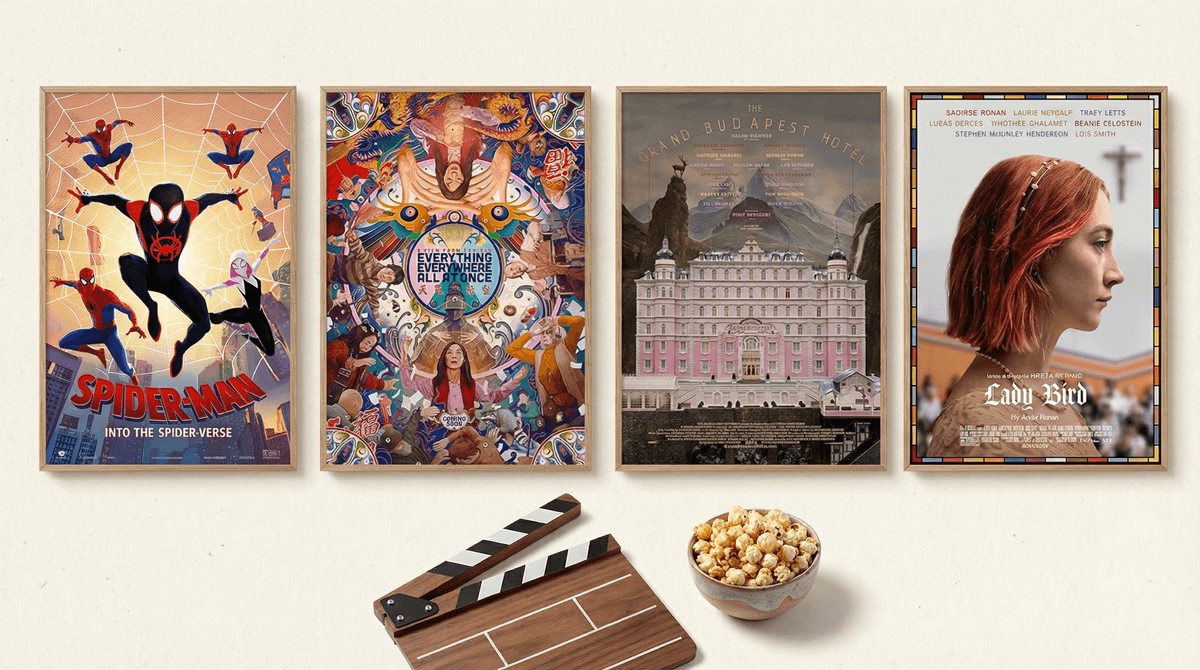
This isn't just a superhero movie—it's a masterclass in animation, storytelling, and what it means to step into your power. Miles Morales is dealing with new school anxiety, family expectations, and oh yeah, becoming Spider-Man. The visual style alone makes this worth watching, but the emotional core is what makes it stick.
Why it works: Perfectly captures that 13-year-old feeling of "I don't know if I'm ready for this" while showing that nobody ever really is.
Dystopian without being depressing, this adaptation of the popular book series delivers genuine suspense and mystery. Kids wake up in a maze with no memories and have to figure out both how to survive and who put them there.
Parent note: More intense than The Hunger Games in some ways, with some jump scares and creature violence, but nothing gratuitous.
Hear me out. Yes, it's R-rated, but it's one of those R-ratings that's more about intensity than content. It's essentially a two-hour chase scene with incredible practical effects and a surprisingly feminist message. If your 13-year-old is into action, this is film as pure kinetic energy.
Know before you go: Violence is stylized rather than gory, minimal language, no sexual content. But it IS intense start to finish.
Yes, it's a classic from 1987, but it holds up shockingly well. Sword fights, true love, revenge, giants, and some of the most quotable dialogue ever written. The framing device (grandfather reading to sick grandson) gives it a self-aware charm that keeps it from feeling dated.
Why 13-year-olds don't roll their eyes: The humor is genuinely witty, not corny. And the action sequences are legitimately good.
Wes Anderson's visual style is like candy for developing aesthetic sensibilities. This caper film about a hotel concierge and his protégé is funny, touching, and looks like every frame could be a painting. It's also a surprisingly good introduction to more artistic filmmaking without being pretentious.
Conversation starter: Talk about how the aspect ratio changes throughout the film to reflect different time periods. It's a great entry point into discussing filmmaking as craft.
Two overachieving best friends realize on the eve of graduation that they could have partied AND gotten good grades. What follows is a hilarious night of trying to make up for lost time. It's like Superbad but smarter and with girls at the center.
Real talk: This is R-rated for language and some sexual content/references, but it's the kind of R that reflects how teens actually talk and think. Use your judgment—some 13-year-olds are ready, others should wait a year or two.
A foster kid and his grumpy foster uncle become accidental fugitives in the New Zealand wilderness. It's funny, heartfelt, and genuinely original. From Taika Waititi (who made Thor: Ragnarok), so you know the humor is on point.
Why it resonates: The main character Ricky is dealing with rejection, finding family, and figuring out where he belongs—all peak 13-year-old concerns, just with more wilderness survival.
This adaptation of the beloved novel handles mental health, trauma, friendship, and first love with real sensitivity. Charlie is starting high school and gets taken under the wing of two seniors who show him what it means to participate in life.
Important: This deals with serious topics including sexual abuse (not shown but discussed), depression, and suicide. Watch it with your teen and be ready to talk. It's heavy but ultimately hopeful.
The true story of Black women mathematicians at NASA during the space race is inspiring without being cheesy. It's about brilliant people fighting to be recognized in a system designed to exclude them, and it's genuinely thrilling even when you know how it ends.
Why teens love it: It's a story about being underestimated and proving everyone wrong. Also, the math is actually cool.
Painfully awkward 14-year-old Duncan is dragged to his mom's boyfriend's beach house for the summer. He finds refuge working at a water park with a manager (Sam Rockwell) who sees him for who he is. It's a perfect coming-of-age story about finding your people.
Parent perspective: This captures that early teen experience of feeling invisible in your own family while simultaneously craving independence.
Bo Burnham's directorial debut is almost TOO accurate in its portrayal of middle school anxiety and social media pressure. Kayla is finishing eighth grade, making advice videos that nobody watches, and just trying to survive.
Warning: This might be too real. Some 13-year-olds will find it cathartic; others might find it stressful because it hits too close to home. The scene where Kayla watches her old YouTube videos and cringes at herself? That's every teen everywhere.
This multiverse-hopping, genre-bending film is about a Chinese-American woman who discovers she can access the skills and memories of her alternate selves. It's also about parent-child relationships, generational trauma, and finding meaning in chaos. It's weird in the best way.
Age note: R-rated for language and some crude humor, but the violence is mostly cartoonish. The themes are sophisticated—this works best for mature 13-year-olds who like weird, ambitious storytelling.
When aliens land on Earth, a linguist is recruited to figure out how to communicate with them. This is cerebral sci-fi that's more about language and time than explosions. The twist is genuinely mind-bending and will spark conversations about free will and choice.
Bonus: Great for kids interested in linguistics, science, or just smart sci-fi that treats its audience with respect.
In a world where making sound means death, a family tries to survive against creatures that hunt by hearing. This is essentially a silent film with jump scares, and it's incredibly effective. The family dynamics are the real heart of the story.
Scary factor: Genuinely tense and has some frightening moments, but not gory. Good for 13-year-olds who like horror but aren't ready for truly disturbing content.
An awkward, creative teen and her family accidentally become humanity's last hope during a robot apocalypse. It's hilarious, visually inventive, and has surprising emotional depth about parent-teen relationships and being "weird."
Why it hits different: Katie Mitchell IS your 13-year-old—making videos, feeling misunderstood by her dad, unsure about the future. Plus the animation style is innovative and energetic.
The sequel somehow tops the original with even more ambitious animation and a story about destiny, choice, and what it means to be a hero. Miles and Gwen's relationship adds real emotional stakes.
Visual feast: Every frame is art. This is the kind of movie that makes kids think about animation as a serious medium.
Still holds up 20 years later. A superhero family dealing with suburban ennui, identity crisis, and actual danger. It's funny for adults, exciting for kids, and has surprising depth about what happens when extraordinary people try to be ordinary.
Rewatch value: Your 13-year-old probably saw this as a kid, but watching it now they'll catch all the adult humor and themes they missed.
Stunning stop-motion animation tells the story of a young boy who must find his father's armor to defeat a vengeful spirit. It's about storytelling, memory, and family, wrapped in Japanese-inspired fantasy.
Underrated gem: Not as well-known as other animated films, but visually breathtaking and emotionally rich.
Five high school stereotypes spend Saturday detention together and discover they're more than their labels. Yes, it's from 1985 and some aspects are dated, but the core message about looking beyond surface judgments still resonates.
Watch together: This is better as a shared experience where you can talk about what's changed and what hasn't in teen social dynamics.
Four boys go on an adventure to find a dead body (sounds dark, but it's really about friendship). It's nostalgic, funny, and captures that end-of-childhood feeling perfectly. Based on a Stephen King novella but not scary.
Language warning: R-rated mostly for how 12-year-old boys actually talk. Some bullying violence but nothing graphic.
A high school senior navigates her last year before college while clashing with her equally strong-willed mother. Greta Gerwig's directorial debut is specific (Sacramento, Catholic school, 2002) but universally relatable about mother-daughter relationships and wanting to escape your hometown.
Perfect for: Kids starting to think about who they want to be versus who their parents want them to be.
The story of Martin Luther King Jr.'s campaign for voting rights is powerful without being preachy. It shows the strategy, sacrifice, and real people behind a movement that changed history.
Why it works for teens: Shows young people as crucial to the movement, not just adults. Makes history feel urgent and relevant.
Alan Turing's story of breaking Nazi codes during WWII while hiding his sexuality is thrilling and tragic. Benedict Cumberbatch is excellent, and the film handles complex themes of genius, persecution, and what society does to people who don't fit.
Discussion point: Great for talking about LGBTQ+ history, the cost of secrecy, and how society treats brilliant people who are "different."
This is heavy—the true story of Solomon Northup, a free Black man who was kidnapped and sold into slavery. It's brutal and necessary, but definitely for mature 13-year-olds who can handle intense content.
Parent guidance essential: Watch this together and be ready for difficult conversations. The violence is realistic and disturbing because slavery was disturbing. Don't use this as casual entertainment—this is education through film.
A modern murder mystery that's clever, funny, and keeps you guessing. When a wealthy crime novelist dies, detective Benoit Blanc investigates his dysfunctional family. The twist on the genre is brilliant.
Why teens love it: The protagonist is a Latina nurse who's the moral center while wealthy white people are terrible. Also, it's just really fun to try to solve.
A Hitler Youth boy discovers his mother is hiding a Jewish girl in their attic. It's a satire about the absurdity of hate, with Taika Waititi playing an imaginary Hitler as Jojo's bumbling friend. Sounds weird, and it is, but it's also touching and important.
Tonal complexity: Balances humor with real tragedy. The comedy makes the serious moments hit harder. For teens who can handle that tonal shift.
Pixar's love letter to Mexican culture and family follows Miguel's journey to the Land of the Dead. It's about music, memory, and what it means to be remembered. Bring tissues—the ending destroys everyone.
Cultural richness: If your family isn't Mexican, this is a beautiful window into Day of the Dead traditions. If you are, you'll appreciate the authentic representation.
The story of Facebook's creation is really about ambition, betrayal, and what success costs. Aaron Sorkin's dialogue is rapid-fire and brilliant. For teens growing up with social media, seeing its origin story is fascinating.
Relevant questions: What would you sacrifice for success? Is Mark Zuckerberg a genius or just ruthless? Both?
PG-13 is your friend at this age. The rating was literally created for 13-year-olds, though it's become pretty broad. Some PG-13 movies are basically PG (Spider-Man: Homecoming), while others push boundaries (The Dark Knight).
R-rated considerations: Some R-rated films on this list (Booksmart, Everything Everywhere All at Once) are here because they're R for language and mature themes, not graphic content. You know your kid—a mature 13-year-old who reads sophisticated books can probably handle these. A 13-year-old who still gets nightmares from Coraline? Maybe wait.
Check Common Sense Media for specific content warnings if you're unsure. Their parent and kid reviews are genuinely helpful for gauging whether your specific teen is ready.
Watch together when possible. Not in a hovering way, but because these movies are better as shared experiences. You'll catch references they miss, they'll explain jokes you don't get, and you'll have something to talk about afterward.
They're forming their taste right now. The movies your teen loves at 13 will influence what they watch for the rest of their life. Expose them to different genres, styles, and perspectives. If they only watch Marvel movies, they'll think that's all cinema can be.
It's okay if they don't like "important" movies. If you show them Citizen Kane and they're bored, that's fine. Film appreciation develops over time. Start with movies that are both good AND entertaining.
Let them show YOU movies. If your teen wants to watch Megamind for the 47th time, sometimes the right answer is "okay." Comfort rewatches are valid. And if they're into something you don't get, ask them why they love it. You'll learn a lot.
Use movies to talk about hard things. Film gives you a safe distance to discuss difficult topics. After The Perks of Being a Wallflower, you can talk about mental health. After Hidden Figures, you can talk about racism and sexism. The movie does the heavy lifting of introducing the topic.
Theater vs. streaming matters. If you can swing it, see some of these in theaters. Everything Everywhere All at Once on a phone is not the same experience as on a big screen. Plus, going to movies together becomes a thing you do—a ritual that survives into their high school and college years.
Thirteen-year-olds are at this perfect movie-watching age where they can appreciate sophisticated storytelling but still have genuine emotional reactions without the cynicism that sometimes comes later. They're developing their own taste, forming opinions about what makes a film "good," and honestly? They're fun to watch movies with because they notice things you miss.
The films on this list aren't just age-appropriate—they're good movies, period. They treat young viewers with respect, tackle meaningful themes, and deliver genuine entertainment. Some will become favorites they rewatch for years. Others might spark an interest in filmmaking, social justice, science, or storytelling.
Start with what they're already into. If they love Marvel movies, try Spider-Verse. If they're reading dystopian novels, queue up The Maze Runner. If they're getting into anime, Kubo and the Two Strings might be a good bridge.
Branch out gradually. Once they're hooked on a genre, introduce them to different styles within it. From The Grand Budapest Hotel to Jojo Rabbit to other Taika Waititi films. From Arrival to other cerebral sci-fi. You're building their film literacy.
Make it a thing. Friday night movies, rainy Sunday marathons, "you pick one, I pick one" alternating choices. The movies matter, but so does the ritual of watching together. These become the "remember when we watched..." stories you'll tell for years.
And when they inevitably want to watch something you think is too mature, don't just say no—explain why you're saying "not yet." That conversation about why you're waiting is often more valuable than the movie itself.
Need more specific recommendations based on your teen's interests? The Screenwise list maker can help you find the perfect next watch based on what they already love.