

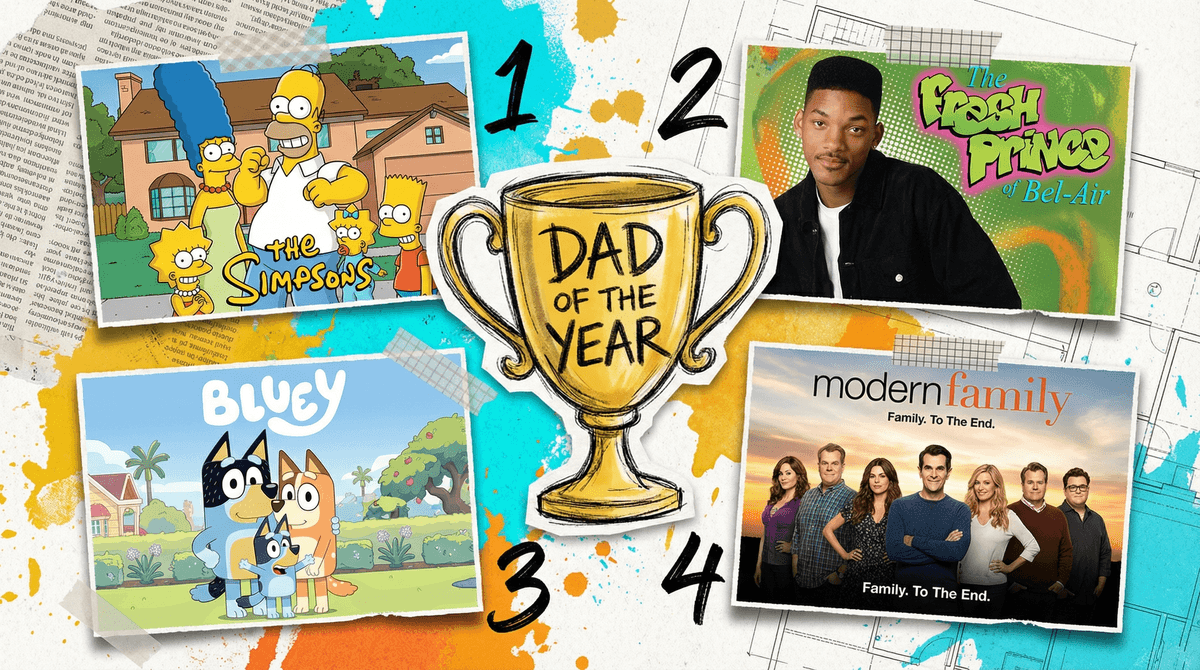
Look, we've all been there—your kid's watching TV and suddenly you're wondering if Homer Simpson is actually teaching them something about fatherhood, or if you should be concerned that they think choking your child is peak comedy. TV dads have been part of the cultural landscape forever, and whether we like it or not, they're shaping what our kids think about fathers, families, and what "normal" looks like at home.
So let's actually rank some of the most iconic TV dads and talk about what they're really modeling—the good, the bad, and the "please don't let my kid think this is okay."
Uncle Phil (The Fresh Prince of Bel-Air)
Philip Banks is honestly the gold standard. He's successful but not absent. He's strict but deeply loving. He has that iconic scene where he holds Will after Will's dad abandons him again, and if you can watch that without tearing up, you might be a robot.
What he models well: Emotional availability, high standards paired with unconditional love, showing up even when it's hard, admitting when he's wrong.
Ages: The show itself is great for ages 10+, and Uncle Phil's parenting style translates across all ages.
Bob Belcher (Bob's Burgers)
Bob is weird, anxious, and completely devoted to his kids in the most genuine way. He supports Tina's erotic friend fiction (sort of), Gene's sound effects obsession, and Louise's schemes—even when they make his life harder. He's not trying to be the cool dad or the perfect dad. He's just... there, making burgers and loving his weird family.
What he models well: Accepting your kids for who they are, partnership in marriage, working through stress without taking it out on family, finding joy in small things.
Ages: Bob's Burgers is generally fine for ages 10+, though some innuendo might go over younger kids' heads.
Bandit (Bluey)
If you haven't watched Bluey, first of all, you're missing out. Second, Bandit is the dad we all wish we could be—endlessly creative, fully present during playtime, willing to be the "bad guy" in games, but also setting real boundaries when needed. He gets tired, he gets frustrated, but he keeps showing up.
What he models well: Play as connection, being silly without being immature, co-parenting as a team, apologizing to your kids when you mess up.
Ages: Literally all ages. Bluey is a gift to humanity.
Phil Dunphy (Modern Family)
Phil is the fun dad, the "cool dad," the dad who wants to be his kids' friend. And look—he's genuinely loving and tries really hard. But he also models some stuff that's... not great. He's often the butt of the joke, he can be incompetent, and his need to be liked sometimes overrides actual parenting.
What he models well: Enthusiasm, optimism, unconditional love, being goofy with your kids.
What's concerning: The "dumb dad" trope, prioritizing being liked over being respected, sometimes undermining Claire's parenting.
Ages: Modern Family is generally fine for ages 12+.
Hal (Malcolm in the Middle)
Hal is chaos incarnate—he's impulsive, he gets obsessed with random hobbies, he's definitely got ADHD (undiagnosed), and he's absolutely in love with his wife. He's not a great role model for responsibility, but he is a great model for partnership and genuine affection.
What he models well: Marital partnership, showing affection, admitting limitations, finding joy in weird interests.
What's concerning: Lack of follow-through, sometimes childish behavior, occasional poor judgment.
Ages: Malcolm in the Middle is good for ages 10+.
Randy Marsh (South Park)
Okay, Randy is objectively a terrible father. But he's also a fascinating case study in what NOT to do—he's selfish, impulsive, prioritizes his own interests over his family, and models toxic masculinity in really obvious ways. If your teen is watching South Park (ages 16+, honestly), Randy is actually a great conversation starter about what makes someone a bad parent.
What he models well: Literally nothing. That's the point.
What's concerning: Everything. But at least it's so over-the-top that it's clearly satire.
Homer Simpson (The Simpsons)
Look, I love The Simpsons. But let's be real about Homer—he chokes his son, he's neglectful, he's selfish, he prioritizes beer and donuts over his family's wellbeing, and he's often cruel to Lisa. Yes, there are occasional touching moments where he comes through, but the baseline is... not good.
The show works as satire, and older kids (ages 12+) can understand that Homer is intentionally a caricature of bad parenting. But younger kids might just see "dad acts like this and it's funny."
What to talk about: Why is Homer's behavior funny in a cartoon but wouldn't be okay in real life? What would it actually feel like to have a parent who forgot about you or made fun of your interests?
Peter Griffin (Family Guy)
Peter is Homer turned up to 11—more violent, more selfish, more cruel. Family Guy is really for adults (despite being a cartoon), and Peter is not someone you want your kids modeling anything after. He's abusive to Meg, neglectful of Chris, and constantly prioritizes his own entertainment over his family.
Ages: Honestly, 17+. And even then, it's rough.
Here's the thing—your kids are going to encounter all kinds of TV dads, and that's actually okay. The question isn't "should I only let them watch shows with perfect father figures?" (good luck with that). The question is: Are you talking about what they're watching?
Some conversation starters:
- "What kind of dad is [character]? Would you want a dad like that?"
- "That was funny when [dad character] did that thing, but would it be funny in real life?"
- "How do you think [kid character] feels when their dad does that?"
- "What do you think makes someone a good parent?"
The "bad" TV dads can actually be more valuable for teaching moments than the good ones—because they make the contrast obvious.
The best TV dads are the ones who are present, emotionally available, willing to be silly without being immature, and who genuinely respect their kids as people. Uncle Phil, Bob Belcher, and Bandit are the holy trinity.
The worst TV dads are the ones who model selfishness, cruelty, and emotional unavailability as comedy. Homer and Peter are funny as satire, but they're teaching some genuinely concerning lessons if kids don't have the context to understand they're caricatures.
And most TV dads fall somewhere in the middle—imperfect, trying, sometimes getting it right and sometimes getting it wrong. Kind of like real parenting.
The key is watching together when you can, and talking about what you're seeing. Your kids are learning about family dynamics from TV whether you're involved or not—so you might as well be part of the conversation.
Want to dig deeper? Explore shows with positive father figures or talk about how to discuss TV families with your kids .
.