

TL;DR: Toca House is a "digital toy" that turns mundane household chores like vacuuming, doing dishes, and sorting mail into surprisingly addictive mini-games for the 3-to-5-year-old set. It’s a zero-stress, ad-free environment that actually encourages real-world helpfulness.
Quick Links:
- Best for: Ages 3-6
- Category: Educational / Roleplay
- Alternative for: Sago Mini World
- Companion Play: Toca Kitchen 2
If you’ve been in the parenting game for more than five minutes, you’ve probably heard of Toca Boca. They are the gold standard for "digital toys"—apps that don't have high scores, timers, or "Game Over" screens. Toca House is one of their absolute classics.
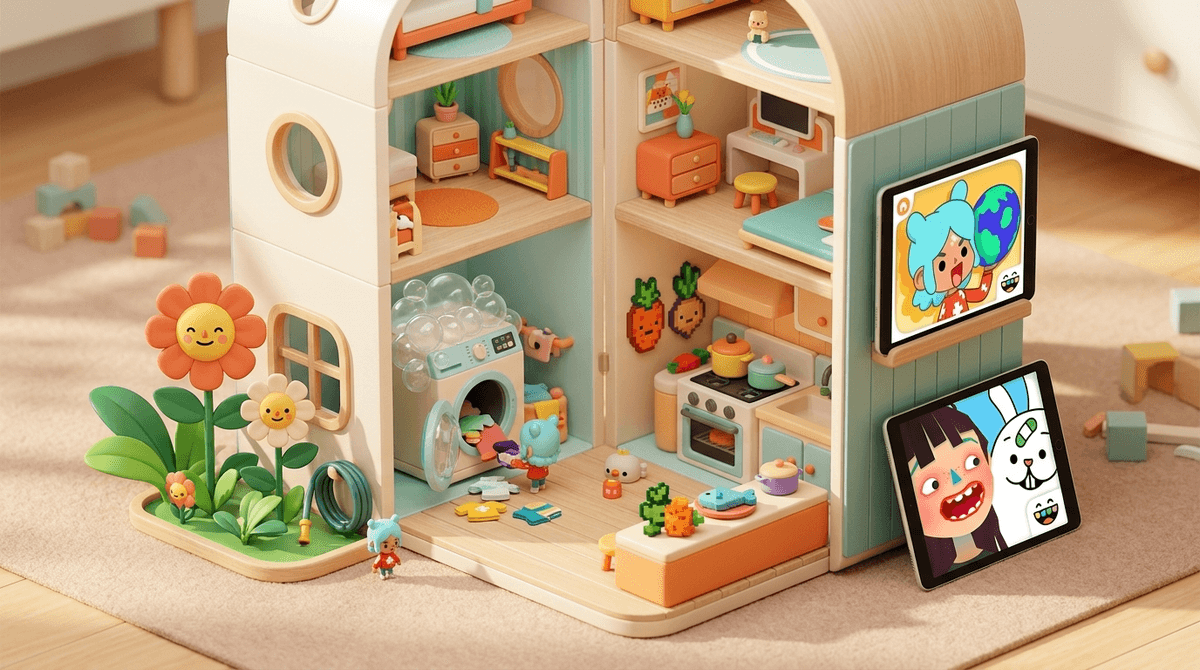
The premise is simple: there’s a house with five different characters who need help with 19 different chores. Your child moves through the house, helping the characters wash windows, mop floors, sort laundry, and even plant flowers in the garden. It sounds like a suburban nightmare to us, but to a preschooler, it’s a high-stakes adventure in "being a big kid."
Unlike the sprawling, often overwhelming universe of Toca Life World, Toca House is contained. It has a clear beginning and end (when the sun sets and the characters go to sleep), which is a godsend for parents trying to manage the "just five more minutes" screen time negotiations.
It’s a weird phenomenon, but kids are obsessed with the things we find tedious. While we’re trying to figure out how to automate the vacuuming, they’re fighting over who gets to hold the actual vacuum.
Toca House taps into that desire for autonomy and competence. In this app, they are the ones in charge of the dishwasher. They are the ones sorting the mail. It provides a sense of mastery that is hard to find when you’re still struggling to put your own shoes on the right feet.
The characters are quirky and reactive—they grunt, giggle, and make satisfied noises when a task is completed. There’s no "wrong" way to play, which builds confidence. If they want to put the mail in the wrong slots first, the app doesn't buzz or penalize them; it just waits for them to figure it out.
Learn more about why open-ended play is better for brain development
We talk a lot at Screenwise about "digital wellness," and for preschoolers, that usually means avoiding the "zombie stare." You know the one—where they’re watching a YouTube video of someone unboxing eggs and they look like they’ve been lobotomized.
Toca House is the opposite of that. It’s active engagement. Your child is constantly tapping, dragging, and making choices.
Community Data Note: Our surveys show that while 65% of parents with 4-year-olds allow some tablet time, nearly half of those parents worry that the content is "brain rot." Toca House consistently ranks as a "guilt-free" app among the Screenwise community because it mirrors real-life Montessori-style practical life skills.
If you’re looking to build a "starter pack" of apps for a new tablet, you’ll likely run into these other heavy hitters. Here’s how they stack up:
Sago Mini is the cousin to Toca Boca. While Toca House is more grounded in "real life," Sago Mini is more about whimsical exploration. If your kid likes dogs in spaceships, go Sago. If they like helping you in the kitchen, stick with Toca.
This is a phenomenal educational tool, but it’s definitely "school." Toca House is "play." We recommend a balance of both, but Toca is the better choice for winding down after a long day of being three.
A great free option, but it can be a bit overstimulating with all the different characters and loud music. Toca House feels more like a quiet afternoon in a playroom.
Ages 2-3: They might need you to sit with them for the first few rounds. The mechanics of "dragging and dropping" are a learned skill. It’s a great "lap-time" app where you can talk about what the characters are doing. ("Oh look, he’s washing the windows! Do we do that at our house?")
Ages 4-5: This is the sweet spot. They can navigate the whole house independently. This is a great time to introduce the concept of "one cycle"—playing until the characters go to sleep, then putting the tablet away.
Ages 6+: They might start to find it a bit too simple. This is when you might want to graduate them to Toca Kitchen 2 or Minecraft (Creative Mode).
Let’s be real: most "free" apps for kids are actually psychological traps designed to get them to click on ads or beg you for a $4.99 "Gem Pack."
Toca House (and most classic Toca Boca apps) is a paid app upfront (usually around $3.99). Pay the four dollars. It is worth every penny to know that your child isn't being targeted by data-tracking algorithms or seeing ads for "Age of Origins" while they're trying to mop a digital floor.
There are:
- No third-party ads.
- No in-app purchases.
- No social features. (Your kid isn't going to accidentally chat with a stranger in Toca House).
- No data collection.
The only "risk" is the "Toca News" button on the home screen which leads to other Toca apps in the App Store, but there is a parental gate (you have to hold a button or enter a birth year) to get through it.
See how to set up guided access to lock your kid into one app
Here is the pro-parent move: Use Toca House as a bridge to real-world responsibilities.
If they just spent 15 minutes virtually sorting laundry in the app, that is the perfect time to say, "The characters in the house finished their laundry! Now it’s our turn. Can you help me find all the socks?"
It sounds cheesy, but for a preschooler, the line between digital play and real-world "helping" is very thin. They want to do what they see.
Toca House is a rare bird in the app store: it’s respectful of a child’s intelligence, it’s aesthetically pleasing (no neon-colored screaming characters), and it has a natural "off-ramp" for screen time.
It’s not going to teach them algebra or how to code in Python, but it will teach them that helping out is a normal, even fun, part of life. In a world of "brain rot" content, that’s a massive win.
Next Steps
- Download Toca House and spend 10 minutes playing it yourself so you know the characters.
- Set a "One Day" rule. Let them play through one full "day" in the house (about 15-20 minutes) and then transition to a real-world activity.
- Check out Toca Lab: Elements if your kid starts asking questions about how things work—it’s the logical next step in the Toca ecosystem.