

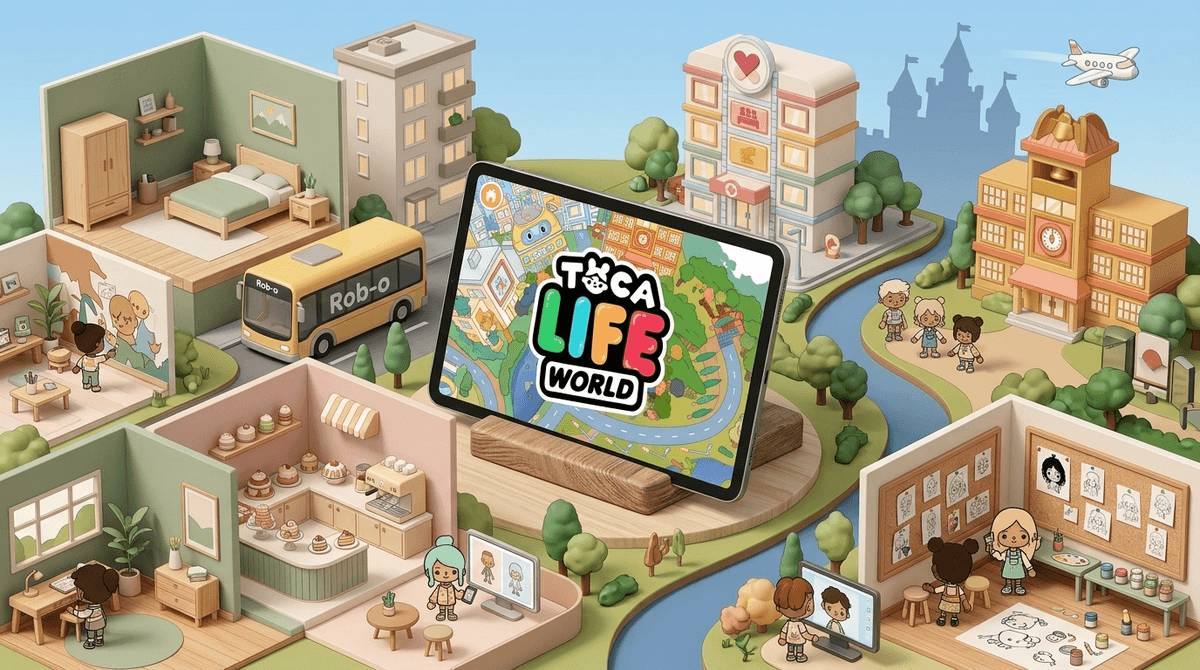
TL;DR: Toca Life World is the ultimate digital dollhouse—creative, open-ended, and blissfully free of strangers sliding into your kid’s DMs. It’s a "safe" sanctuary compared to the chaos of Roblox, but it comes with a catch: the "aesthetic" lifestyle your child wants is locked behind a relentless wall of in-app purchases. If you can manage the "Can I have $2.99 for the Hello Kitty pack?" requests, it’s one of the best creative tools on the market.
Top Recommendations for Creative Kids:
- For the younger ones (Ages 3-5): Sago Mini World
- For the "Aesthetic" decorators (Ages 6-12): Toca Life World
- For the builders (Ages 8+): Minecraft
- For the interior designers: Animal Crossing: New Horizons
If you’ve seen your kid hunched over an iPad, meticulously placing a tiny digital croissant onto a tiny digital plate, you’ve met Toca Life World.
Developed by the Swedish studio Toca Boca, this isn't a "game" in the traditional sense. There are no levels to beat, no bosses to fight, and no high scores. It is a massive, interconnected digital universe that combines all the previous "Toca Life" apps (City, Vacation, Office, Hospital) into one giant sandbox.
Think of it as the 2026 version of a physical dollhouse, but instead of losing the tiny plastic shoes in your shag carpet, they’re stored in a digital backpack. Kids can create characters, design homes, and film their own "movies" by moving characters around and recording their voices.
We need to talk about the word "aesthetic." In the world of Toca Boca, everything is curated. The color palettes are muted pastels, the furniture looks like it was ripped out of a high-end Scandinavian catalog, and the characters are diverse and "cool."
For kids, especially those in the 6-11 age range, Toca Life World is a form of self-expression. They aren't just playing; they are world-building. They create "OCs" (Original Characters), give them complicated backstories, and spend hours decorating their "Home Designer" houses to look like something out of an Architectural Digest feature.
It’s also a huge part of "Kid Culture" on social media. There is a massive community of "Toca Tubers" on YouTube and creators on TikTok who create dramatic soap operas using the app. If your kid is asking for a specific furniture pack, they likely saw it in a "Toca Story" online.
Here is the no-BS reality: Toca Life World is "free-to-play," but the free version is essentially a studio apartment in a world of mansions.
The app is designed to make the "Shop" button the most exciting place to be. Every Friday, there’s usually a "Free Gift" at the Post Office, which is a clever way to keep kids opening the app daily. But the real meat of the game—the designer houses, the neon cafes, the "Home Designer" packs—costs real money.
- Individual Locations: Usually $0.99 to $2.99.
- Furniture/House Packs: $2.99 to $9.99.
- The "Mega" Bundles: Can run up to $50+.
Is it a "scam"? No. The content is high-quality and once you buy it, you own it. There’s no monthly subscription (unlike Sago Mini World). But the psychological pull is real. Your kid will feel "poor" in the digital world if they only have the default furniture while their favorite YouTuber has the "Modern Mansion" and the "Boho Furniture Pack."

If you are worried about the "stranger danger" or toxic chat rooms found in Roblox or Fortnite, you can breathe a sigh of relief.
Toca Life World is a single-player experience. There is no multiplayer mode. There is no chat function. Your child is not interacting with anyone else inside the app.
The only "social" risk is external:
- YouTube/TikTok: Kids often go to these platforms to watch Toca stories. While the app itself is G-rated, some fan-made stories can get weirdly mature (think "cheating boyfriend" or "mean girl" drama).
- The Shop: As mentioned, the main "danger" is your credit card bill.
Ages 4-6
At this age, kids just like the "cause and effect" of the app. They like putting the character in the shower, turning on the faucet, and making them eat a strawberry.
- Parental Tip: Turn off in-app purchases in your device settings. At this age, they will accidentally buy the $10 "Hospital" pack while trying to click a shiny icon.
Ages 7-10
This is the "sweet spot" for Toca Boca. They are into the "Home Designer" aspect and "Roleplay."
- Parental Tip: Use Toca Boca as a lesson in digital budgeting. Give them a "digital allowance" or let them earn a furniture pack by doing chores. It teaches them that digital items have real-world value.
Ages 11+
Kids this age are often moving on to The Sims 4 or Roblox "Bloxburg," but many stay for the "aesthetic" editing.
- Parental Tip: If they are making Toca Boca videos for social media, talk to them about digital footprints and why they shouldn't show their face or share personal info in their "Toca stories."
If your kid has "beaten" Toca Boca (or you're tired of the price tags), consider these:
Think of this as Toca Boca for the preschool set. It’s gentler, simpler, and owned by the same parent company. It’s a subscription model, which some parents prefer over constant piecemeal purchases.
A very similar digital dollhouse experience, often a bit cheaper, though the "vibe" isn't quite as polished as Toca.
For the kid who loves the "lifestyle" and "collection" aspect of Toca but wants more of a story—and horses. Lots of horses.
If you have a Nintendo Switch, this is the gold standard for "aesthetic" decorating and world-building. It’s a one-time purchase (mostly) and offers a much deeper experience.
Parents often ask if Toca Boca is "brain rot." The short answer? No.
Unlike "Skibidi Toilet" videos or mindless "unboxing" content on YouTube Kids, Toca Life World requires active engagement. Your kid is making choices, organizing layouts, and narrating stories. It is essentially digital pretend play.
The "True Cost" isn't just the money—it's the time. Because there are no "levels," there is no natural stopping point. A kid can spend three hours "moving house" in the app and not realize any time has passed.
Check out our guide on setting healthy screen time boundaries
Toca Life World is a rare beast in the app store: a high-quality, safe, creative space that actually respects a child’s intelligence and sense of style.
It isn't teaching them entrepreneurship like a complex Roblox tycoon might, but it is fostering creativity, interior design skills, and digital storytelling. Just be prepared to have a very serious conversation about why they need the "SpongeBob SquarePants" furniture pack to complete their life's work.
Next Steps:
- Check your settings: Ensure "Ask to Buy" is toggled on in your Apple or Google family settings.
- Sit and play: Ask your kid to give you a "house tour." You’ll be surprised at the level of detail they’ve put into their digital world.
- Set a "Pack Limit": Decide ahead of time how many "packs" they can get per month so you aren't nickel-and-dimed to death.