

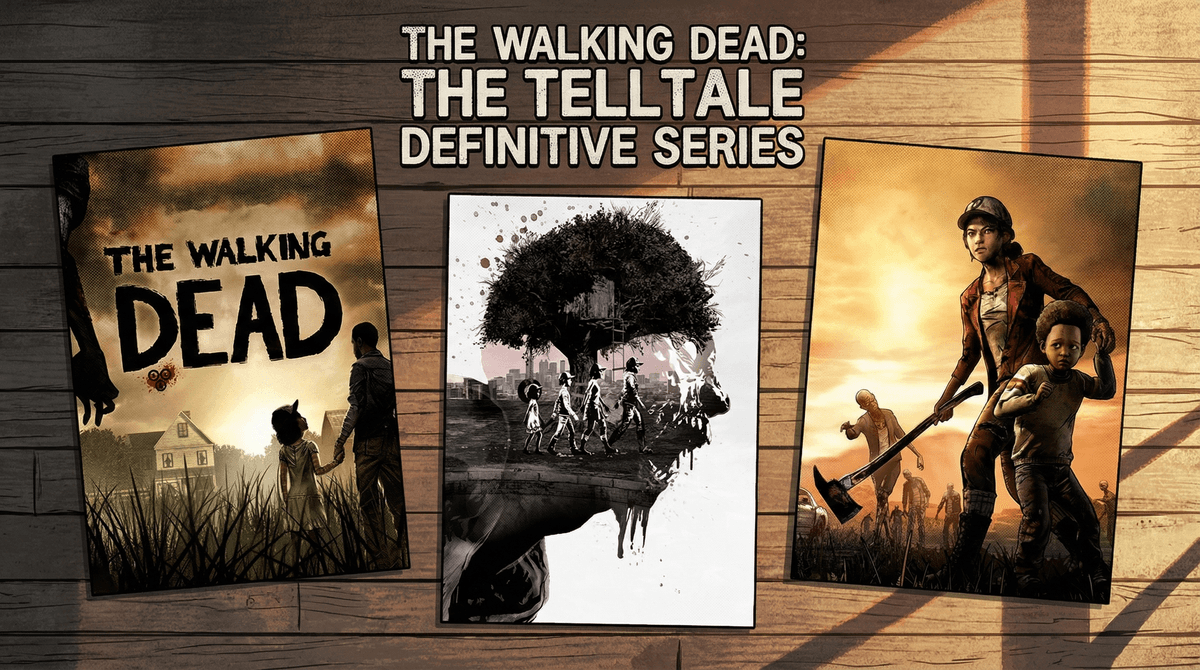
Let me be clear upfront: we're talking about the Telltale Games series here, not the TV show. The Walking Dead game is a narrative-driven, choice-based adventure that follows a young girl named Clementine through a zombie apocalypse across multiple seasons. It's basically an interactive story where your decisions shape the plot—think of it as a "choose your own adventure" book that happens to be rated M for Mature.
The series spans five seasons (though the quality varies—more on that later). Season 1 introduces 8-year-old Clementine and her protector Lee. By the final season, Clem is a teenager making life-or-death decisions on her own. The gameplay is mostly dialogue choices, quick-time events, and point-and-click exploration. It's not a shooter—you're not mowing down zombies. You're making impossible moral choices while trying to keep people alive.
And yeah, it's set in the same universe as the TV show, but the stories are separate. No Rick Grimes here.
The story is legitimately good. Season 1 won over 90 Game of the Year awards. People who don't even like video games got emotionally wrecked by this series. The writing treats players with respect—it doesn't talk down to you or offer easy answers.
Clementine is an incredible character. Watching her grow from a scared kid to a capable survivor across multiple seasons creates real emotional investment. She's resourceful, morally complex, and one of gaming's most beloved protagonists. For teens, especially girls, seeing a female lead who's tough without being a stereotype matters.
Your choices actually feel meaningful. Will you steal food to feed a starving child? Do you tell the truth when a lie might save lives? The game tracks your decisions and throws them back in your face later. It's the kind of moral complexity that teens are developmentally ready to grapple with.
It's a shared cultural experience. Even though the last season came out in 2019, this series has staying power. YouTube playthroughs, TikTok edits, fan art—Clementine's story keeps finding new audiences.
Okay, let's talk about why this game earned its M rating, because this is where you need to pay attention.
The violence is brutal. Not gratuitous, but brutal. People get bitten, shot, stabbed, and eaten. You'll see characters you care about die in graphic ways. There's a scene in Season 1 where a child zombie attacks someone. In Season 2, Clementine (now 11) stitches her own arm wound. These aren't background details—they're interactive moments where the player makes choices during traumatic events.
The language is what you'd expect from adults in an apocalypse. F-bombs, mostly used in context. It's not Tarantino-level, but it's there.
The themes are heavy. Suicide, child endangerment, starvation, cannibalism (yes, really), and the question of whether humanity is worth saving. Season 2 has a storyline involving a pregnant woman in dangerous circumstances. Season 3 touches on drug addiction. The final season includes a romantic relationship option for teenage Clementine.
The emotional intensity is the real rating factor. Your teen can probably handle the violence mechanically—it's not as graphic as many M-rated shooters. But watching characters you've bonded with for hours die because of your choices? That hits different. This game will make your kid cry. Maybe you too, honestly.
The ESRB says 17+. I think that's overly cautious for the right teen, but let's break it down:
Ages 15-17: This is the sweet spot. Teens in this range can engage with the moral complexity, handle the emotional weight, and process the violence in context. They're developmentally ready for "there are no good choices, only less bad ones" scenarios. If your teen watches The Walking Dead show or has read mature YA dystopian fiction, they can handle this.
Ages 13-14: Case by case. Some 13-year-olds are mature enough for this content, others aren't. Consider: Can they handle watching a beloved character die and not being able to save them? Do they understand that zombie fiction is really about human nature under pressure? Are they going to have nightmares?
The game is less about zombie horror and more about moral philosophy, which actually makes it more intense for some kids. Learn more about age-appropriate mature content .
.
Under 13: Nope. Not because they can't understand it, but because the cumulative trauma of watching a child character endure what Clementine endures is a lot. There are better entry points to narrative games for this age group.
This is a time commitment. Each season is 10-15 hours. If your teen starts this, they're potentially looking at 50+ hours across all seasons. That's not inherently bad—it's less time than binging a TV series—but it's worth knowing.
Season quality varies wildly. Season 1 is a masterpiece. Season 2 is solid. Season 3 (A New Frontier) is widely considered the weakest—Clementine isn't even the main character. The Final Season redeems the series. You don't have to play them all, honestly.
It's a great conversation starter. The game forces players to make choices in 30 seconds or less, but you can pause and discuss them together. "What would you do here?" "Why did you choose that?" This is one of those rare pieces of media that can spark genuine ethical discussions without feeling like a lecture.
The game is very replayable. Different choices lead to different outcomes (though the main plot beats stay the same). Some teens will play through multiple times to see what happens.
It's actually pretty affordable. The whole series goes on sale frequently for under $30 total. The Walking Dead: The Telltale Definitive Series includes everything.
Content warnings you should know about specifically: Season 1 has a scene involving a child zombie that's deeply disturbing. Season 2 has a dog attack scene that's rough if your family loves dogs. Season 3 has some torture scenes. The Final Season has a scene where a character's tongue is cut out (not shown graphically, but discussed).
If your teen is asking to play this, here's what I'd suggest:
Watch a playthrough of the first episode together. Seriously. YouTube has thousands of them. This gives you both a sense of the tone, content, and gameplay style. The first episode is often called one of the best pilots in gaming—if it doesn't grab you, the series isn't for you.
Talk about the "why." What draws them to this game? Is it the story? The zombie setting? Their friends playing it? Understanding the appeal helps you guide the conversation.
Set expectations about emotional content. Make sure they know this isn't a "fun" zombie game. It's emotionally heavy. Characters die. You can't save everyone. Some teens find that cathartic; others find it overwhelming.
Consider playing together. The choice-based format makes this perfect for co-op decision-making. You don't need gaming skills to participate—just a willingness to discuss moral dilemmas.
Check in after major plot points. The end of Season 1 hits hard. Like, "I need to lie on the floor and process my feelings" hard. Make sure they have space to decompress and talk about it if needed.
The Walking Dead game series is one of the best narrative experiences in gaming, full stop. It's also intense, emotionally draining, and definitely not for everyone.
This is appropriate for mature teens who:
- Can handle graphic violence in context
- Are ready for stories without happy endings
- Want to engage with complex moral questions
- Can separate fiction from reality
- Have the emotional bandwidth for heavy themes
This is NOT appropriate for kids who:
- Have nightmares easily
- Struggle with anxiety about death or loss
- Aren't ready for "no right answer" scenarios
- Need clear heroes and villains
The game doesn't glorify violence—it shows the cost of it. It doesn't make the apocalypse look cool—it makes it look exhausting and tragic. That's actually what makes it valuable for the right teen at the right time.
If your 15-year-old wants to play this, and you've vetted the content together, I'd say go for it. If your 12-year-old is asking? Maybe point them toward Life is Strange instead—similar choice-based gameplay, less trauma.
- Check out our guide to narrative adventure games for alternatives at different maturity levels
- Learn about other choice-based games if this format appeals to your teen
- Explore age-appropriate zombie content if that's the draw
And hey—if you do end up playing this with your teen, keep tissues nearby. You've been warned.