

The Hunger Games: A Parent's Guide to Violence, Themes, and Age-Appropriateness
TL;DR: The Hunger Games is violent, politically complex, and deeply uncomfortable—which is exactly why it resonates with teens. The books are generally appropriate for ages 12+, the movies for 13+, but your kid's maturity matters more than any rating. With a new book (Sunrise on the Reaping) dropping March 2025 and a film adaptation coming in 2026, now's the time to understand what makes this franchise both disturbing and important.
Quick Navigation:
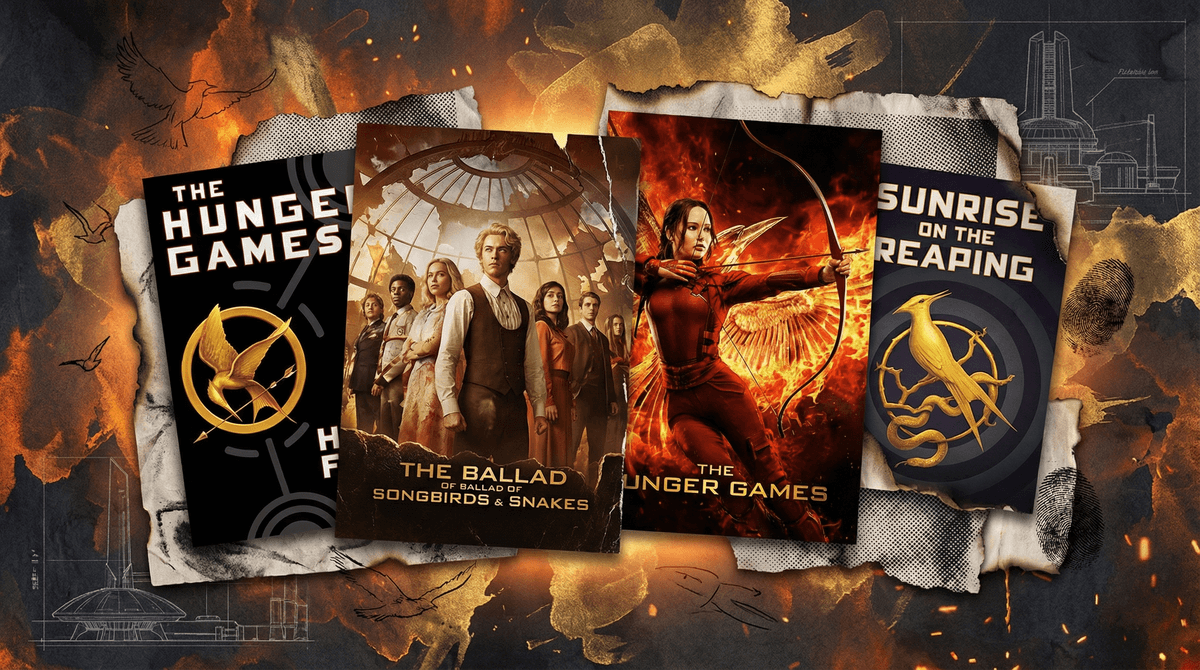
The Hunger Games is Suzanne Collins' dystopian trilogy (plus a prequel) set in Panem, a future North America divided into 12 districts ruled by the Capitol. Every year, the Capitol forces each district to send two children (ages 12-18) to fight to the death in a televised arena until only one survives. It's reality TV meets gladiatorial combat meets authoritarian control.
The original trilogy follows Katniss Everdeen, a 16-year-old who volunteers to save her younger sister and becomes the face of a rebellion. The prequel, The Ballad of Songbirds and Snakes, explores the origin story of the series' villain, President Snow, 64 years before Katniss's story.
The upcoming book, Sunrise on the Reaping (March 18, 2025), will focus on the 50th Hunger Games—the one where Haymitch Abernathy, Katniss's mentor, won. The film adaptation is set for November 20, 2026.
The Hunger Games hit like a cultural meteor in 2008 because it took young readers seriously. It doesn't talk down, doesn't soften the edges, and doesn't pretend that teens can't handle complex moral questions.
It's about power and who gets to wield it. Kids, especially tweens and teens, are acutely aware of their powerlessness in adult systems. The Hunger Games literalizes that feeling—children are literally sacrificed to maintain political control.
The violence has a point. This isn't gore for shock value. The brutality is the thesis statement: look at what systems of oppression do to people. Look at what we'll watch for entertainment. Look at how quickly we normalize horror.
Katniss is complicated. She's not a Chosen One with magical powers. She's a traumatized kid trying to survive who accidentally becomes a symbol. She makes mistakes, she's manipulated, she doesn't want to be a hero. That's refreshing.
The love triangle is actually the least interesting part. Despite the marketing, this isn't really about Team Peeta vs. Team Gale. It's about propaganda, PTSD, and how war damages everyone it touches.
This is where parents need to make informed decisions based on their individual kid. The violence in The Hunger Games is intense and disturbing, but it's presented differently in the books versus the movies.
In the books:
- Kids kill other kids with weapons (knives, arrows, swords, spears)
- Deaths from starvation, exposure, poisoning, and engineered "natural" disasters
- Torture, both physical and psychological
- Descriptions of injuries, blood, and suffering
- The violence is described but not gratuitous—Collins doesn't linger on gore
In the movies:
- The first film is PG-13 and uses shaky cam and quick cuts to obscure the worst violence
- Still shows children dying (though often off-screen or at a distance)
- Later films (Catching Fire, Mockingjay Parts 1 & 2) get progressively darker with war violence, bombings, and casualties
- The Ballad of Songbirds and Snakes movie (2023) shows more violence than the first film but is still PG-13
The real question isn't "is there violence?" but "can your kid contextualize it?" A mature 11-year-old who understands metaphor might handle it better than a sheltered 14-year-old who's never discussed authoritarianism or media manipulation.
War and PTSD
By the end of the series, nearly every character has severe trauma. Katniss has nightmares, panic attacks, and struggles to function. The books don't offer easy healing—they show that some damage is permanent.
Media Manipulation and Reality TV
The Games are broadcast entertainment. Tributes have stylists, do interviews, play to sponsors. Collins wrote this as commentary on our reality TV culture and desensitization to violence. If your kid watches MrBeast or competition shows, they'll recognize the parallels.
Class Warfare and Inequality
The Capitol lives in luxury while districts starve. The Games are punishment for a past rebellion. It's not subtle—Collins is writing about economic oppression, labor exploitation, and how the powerful maintain control through spectacle and fear.
The Costs of Revolution
The rebellion isn't portrayed as purely heroic. Good people die. Leaders make terrible choices. The new government isn't automatically better. It's sophisticated political commentary for a YA novel.
Consent and Autonomy
Katniss is constantly manipulated by adults using her for their agendas. Her body, image, and story are controlled by others. This resonates with teens who are navigating their own autonomy.
Books: Ages 12+ Most kids who are reading at this level and have shown interest in more mature themes can handle the books. The original trilogy is around 370-390 pages each—substantial but not overwhelming for middle school readers.
Earlier readers (ages 10-11): Some kids this age can handle it, especially if they're already reading darker fantasy like Percy Jackson's later books or Harry Potter books 4-7. But know your kid. If they're sensitive to violence or have nightmares easily, wait.
Movies: Ages 13+ The PG-13 rating is appropriate. The visual nature of film makes the violence more immediate than reading about it. The first movie is the most accessible; the later films get heavier.
The Ballad of Songbirds and Snakes: This prequel is arguably darker thematically because it's about the villain's origin story. It explores how people become complicit in evil systems. Ages 13+ for both book and movie.
This will spark conversations. Be ready to talk about:
- Government control and authoritarianism (you can explore how this connects to real history
 )
) - Media literacy and reality TV ethics
- Economic inequality
- Whether violence is ever justified in revolution
- PTSD and mental health
The romance is complicated. Katniss's relationships with Peeta and Gale are entangled with survival, manipulation, and trauma. It's not a typical YA love story—it's about how war damages relationships and how trauma affects intimacy.
It's political, and that's okay. Collins has been clear that the series is influenced by her father's service in Vietnam, ancient Roman history, and reality television. It has a point of view about power and violence. That's what makes it literature rather than just entertainment.
Your kid will probably read it anyway. The Hunger Games has been a middle school staple for over 15 years. If you're uncomfortable with it, have a conversation about why rather than just banning it—that's way more effective.
Reading together is powerful. If you're on the fence, read the first book alongside your kid. You'll be able to gauge their reactions and process it together.
Sunrise on the Reaping (March 18, 2025): This will focus on Haymitch's Games—the 50th anniversary "Quarter Quell" where twice the usual number of tributes competed (48 kids instead of 24). We know from the original trilogy that Haymitch won by outsmarting the arena's forcefield, and that he watched his family and girlfriend get killed as punishment for embarrassing the Capitol.
Expect this to be dark. Haymitch is an alcoholic in the original series because of his trauma. This book will show why.
The 2026 Film: If it follows the book's timeline, expect a November 2026 release. Given that The Ballad of Songbirds and Snakes movie was well-received, Lionsgate is clearly committed to expanding the franchise.
If you're looking for dystopian fiction with less violence:
- The Giver by Lois Lowry (ages 10+) - dystopia without graphic violence
- Divergent (ages 13+) - similar themes, slightly less brutal
- The Maze Runner (ages 12+) - survival focus, less political
If your kid loves The Hunger Games and wants more complex YA:
- Six of Crows by Leigh Bardugo (ages 14+) - morally gray characters, heist plot
- The Poppy War by R.F. Kuang (ages 16+) - war and trauma, more intense
- Scythe by Neal Shusterman (ages 13+) - death, ethics, power
Before they read/watch: "This story has kids fighting to the death. It's violent and disturbing on purpose—the author wants you to be upset by it. Are you ready to think about why a society would do this?"
During: "What do you think about how the Capitol controls the districts? Do you see any parallels to real life?"
"How does watching the Games on TV change how people think about violence?"
"Why do you think Katniss is struggling so much? What would you do in her situation?"
After: "The rebellion won, but was it worth it? Who paid the price?"
"How do you think media affects how we see violence today? Think about news, social media, entertainment."
"What did you think about how the story ended? Were you satisfied?"
The Hunger Games is violent, political, and emotionally heavy. It's also important, well-written, and treats young readers with respect. The violence isn't the point—it's the vehicle for exploring how power works, how media shapes reality, and what it costs to resist oppression.
Read/watch it with your kid if you're concerned. The conversations it sparks are valuable. The discomfort is intentional. And honestly, in a world where kids are already exposed to real violence through news and social media, a fictional story that asks them to think critically about violence and power isn't the worst thing they could engage with.
The new book and movie will bring The Hunger Games back into the cultural conversation. Whether your kid is discovering it for the first time or revisiting Panem as a fan, now's the time to engage with it thoughtfully rather than dismissively.
Ages 12+ for books, 13+ for movies, and your judgment matters most.
- Check out our full guide to The Hunger Games books for detailed content breakdowns
- Explore dystopian books for teens if your kid loves the genre
- Read about how to talk to kids about violence in media
- Get answers to specific questions about your family's situation
And if you're wondering whether to let your kid read Sunrise on the Reaping when it drops in March 2025, come back then—we'll have a full breakdown ready.