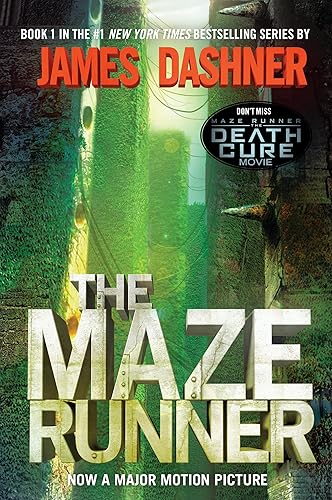
The Maze Runner

The Maze Runner

book

2010, Teen & Young Adult, Literature & Fiction

WISE
58%

WISE Score

4.5

Amazon

Teens trapped in a deadly maze with no memories—gripping, grim, and definitely not for the faint of heart.

Amazon4.5
Common Sense Media

Where to Read

Our reviews and ratings are 100% unbiased, but as an Amazon Associate, Screenwise earns an affiliate fee if you buy a book or game by clicking one of our links. We don't get any credit if you just Google it instead :)

Screenwise Verdict

The Maze Runner is a legitimate page-turner that gets kids reading, and for that alone it deserves credit. The premise is creative, the pacing is relentless, and it's genuinely hard to put down once you start.

But let's be clear: this is not a light read. Teens die. Adults manipulate and experiment on kids. The whole vibe is grim, paranoid, and heavy. Parent reviews are unanimous—this is for mature readers, full stop. If your kid is sensitive to violence or darkness, or if they're under 13, hold off.

That said, for the right reader—a mature middle schooler or high schooler who can handle intensity—this is a solid entry point into dystopian fiction. It raises real ethical questions about authority and survival, even if it doesn't always slow down enough to explore them deeply. Just make sure your kid knows what they're getting into, because the middle school reading level is misleading.

Age Fit

Best for ages 13 and up. Despite the middle school reading level, the violence, death, and psychological weight make this solidly high school territory. Mature 12-year-olds might handle it, but younger kids will likely be overwhelmed or scared.

WISE Breakdown
Wholesome
52

The book features teens trapped in a brutal survival scenario with death, violence, and psychological manipulation by adults. While it models some cooperation and problem-solving among the boys, the overall tone is dark and grim—kids are killed, memories wiped, and trust is constantly undermined. Parent reviews consistently note this is 'definitely for more mature readers' despite the middle school reading level. The emotional landscape is heavy: fear, paranoia, loss, and betrayal dominate.

Imaginative
78

The core concept—an ever-changing maze, memory loss, mysterious organization—is genuinely creative and hooks readers immediately. The world-building invites speculation and puzzle-solving. It's described as a fusion of Lord of the Flies and The Hunger Games, which signals originality in blending dystopian survival with mystery. The maze itself is a compelling imaginative space that changes nightly, keeping both characters and readers guessing.

Safe
48

This is where The Maze Runner stumbles for younger audiences. The book contains 'intense sequences of sci-fi violence,' teens being killed by both the maze and the adults running the experiment, disturbing imagery, and a pervasive sense of dread. Common Sense Media notes 'some are killed by the adults' and calls it 'grim stuff.' While there's no sexual content or gore for shock value, the violence and psychological horror are real. A younger kid picking this up expecting a fun adventure would be blindsided by the dark tone and death.

Enriching
66

The book raises interesting questions about authority, memory, identity, and survival ethics if readers pause to think about them. It's fast-paced and engaging, which gets reluctant readers hooked—a real plus. The problem-solving and teamwork elements offer some value. However, it's primarily plot-driven entertainment rather than deeply enriching. The 'horrific trials supposedly to help save humanity' setup invites ethical discussion, but the book doesn't always give space for reflection amid the action. Still, it's a page-turner that builds reading stamina.

Parent Info

Why It Might Be Great

  • Genuinely hooks reluctant readers—fast-paced, high-stakes mystery that's hard to put down
  • Creative world-building with an ever-changing maze and memory-wipe premise that invites speculation
  • Models problem-solving and teamwork under pressure, even if the circumstances are brutal
  • Raises real questions about authority, ethics, and what adults will do 'for the greater good'
  • Gateway to dystopian fiction for mature middle schoolers ready to level up from lighter fare

What to Watch For

  • Teens die—both from the maze and from the adults running the experiment. It's not gratuitous, but it's real and can be upsetting
  • Dark, grim tone throughout: fear, paranoia, betrayal, and psychological manipulation are constant
  • The reading level is middle school, but the emotional content is high school—don't let the Lexile fool you
  • Some kids will find the violence and hopelessness too much; gauge your reader's tolerance for intensity

Conversation Starters

  • "If you woke up with no memory, what's the first thing you'd want to figure out?"
  • "The adults say they're running these trials to save humanity—does that make it okay? When is it ever okay to hurt people for a 'greater good'?"
  • "Thomas has to decide who to trust when everyone's memories are gone. How do you figure out if someone's trustworthy?"
  • "Would you rather know the terrible truth about your situation, or live in ignorant safety? Why?"

Deep Dive

The mystery box that actually delivers

The 2010s were crowded with dystopian clones, but The Maze Runner survived the era because James Dashner understood one thing perfectly: teenagers love a good mystery box. This book doesn't waste time with world-building or political backstory in the first fifty pages. It drops Thomas into a metal elevator, wipes his memory, and throws him into a courtyard full of boys. You find out what’s going on at the exact same time he does, which is why this is one of the best teen book series to read if you have a kid who usually complains that books are too slow.

The pacing is breathless. Every chapter ends on a cliffhanger, and the central conceit of the Maze—a giant, shifting stone labyrinth filled with bio-mechanical monsters—is high-concept enough to keep even the most distracted reader hooked.

The slang and the "Griever" friction

One thing that either charms readers or drives them crazy is the "Glader" slang. Dashner invented a vocabulary of PG-rated insults like shuck-face, klunk, and slinthead. It’s a clever way to make the characters sound like gritty, hardened survivors without actually putting profanity on the page. Most kids find it immersive, but if your teen is sensitive to "cringe" writing, they might roll their eyes for the first few chapters until the plot takes over.

Beyond the language, the violence is more visceral than your average middle-grade novel. The Grievers—the monsters that haunt the maze—are genuinely nightmarish. They don't just bite; they sting, causing a process called "the Changing" that brings back painful memories in a way that looks like a violent seizure. It’s body horror lite. If your kid handled the arena in The Hunger Games, they’ll be fine, but this is a step up in terms of pure monster-movie dread.

How it stacks up to Panem

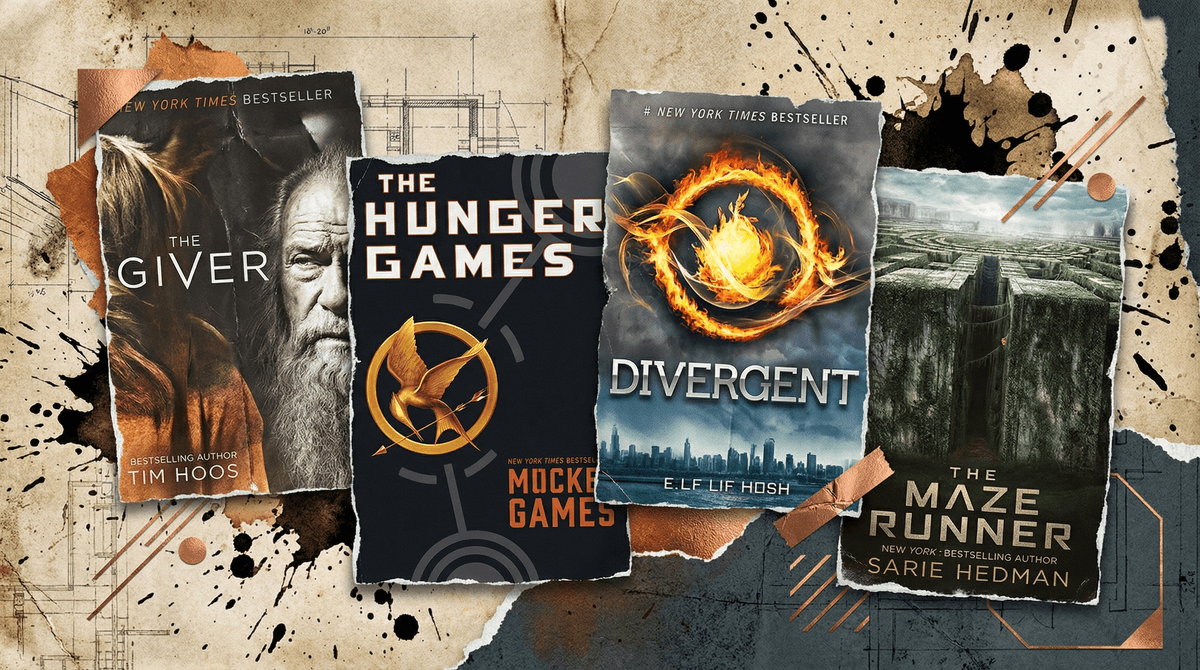
We often see this categorized alongside books like The Hunger Games, but the vibe is different. While Katniss is fighting a clear political enemy, Thomas and the Gladers are fighting a puzzle. The horror in The Maze Runner comes from the unknown. Why are they there? Who is "Wicked"? Is there even an exit?

This makes it a great bridge for kids who are moving out of the Percy Jackson phase but aren't quite ready for the heavy political philosophy of more "adult" sci-fi. It deals with the hunger games and dystopian fiction tropes—like the "chosen one" and the corrupt adult authority—but focuses more on the immediate survival and the mechanics of the maze itself.

The reluctant reader's best friend

If you are trying to get a middle schooler to put down a controller and pick up a book, this is a top-tier candidate. The sentences are short, the vocabulary is accessible, and the stakes are life-or-death from page one. It’s essentially a survival thriller masquerading as a sci-fi novel.

Just be prepared for the fact that this book is the ultimate "first hit is free" move. Once a kid finishes the first one, they are almost guaranteed to demand the rest of the trilogy immediately to find out what happened to the world outside the walls. It’s a binge-read in the truest sense.

Ask Anything

Get a personalized guide on any topic