

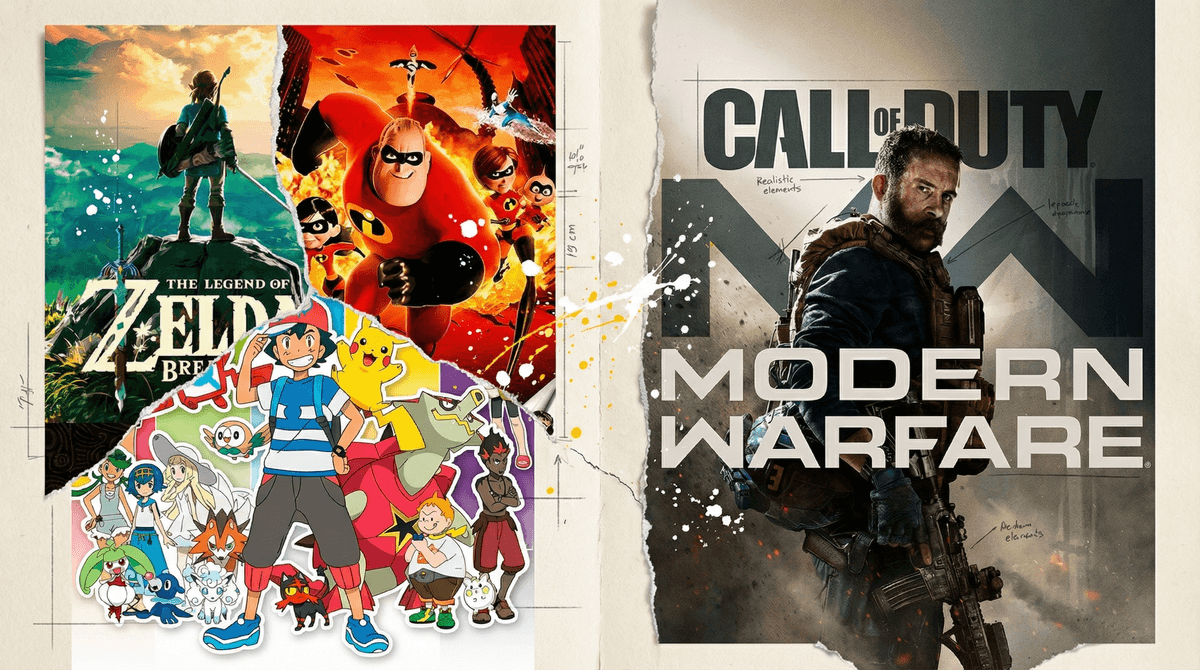
Fantasy violence is basically what it sounds like: combat and conflict in imaginary settings with magical elements, cartoon physics, or clearly fictional scenarios. Think Zelda sword fights, Pokémon battles, superhero showdowns, or the slapstick chaos in The Incredibles.
The key differentiator? Fantasy violence lacks realistic consequences. Characters bounce back after getting hit with a giant hammer, defeated enemies disappear in a puff of smoke, and there's rarely blood, gore, or lasting trauma depicted. It's violence that exists in a world with different rules than ours.
This is different from realistic violence—the kind you'd see in war movies, crime dramas, or games like Call of Duty—where the intent is to simulate real-world combat with human casualties, blood, and emotional weight.
Here's where it gets interesting: research shows that fantasy violence and realistic violence affect kids differently.
Studies from the American Academy of Pediatrics and child development researchers consistently show that exposure to realistic violence (especially when it's glorified or consequence-free) can increase aggressive thoughts and desensitize kids to real-world violence. But fantasy violence? The research is much more nuanced.
Fantasy violence in age-appropriate contexts can actually serve developmental purposes:
- Conflict resolution practice - Kids work through power dynamics and problem-solving
- Emotional regulation - Experiencing simulated danger in a safe environment
- Narrative understanding - Good vs. evil, consequences, heroism
That said—and this is important—not all fantasy violence is created equal, and not all kids respond the same way. A 6-year-old watching Avatar: The Last Airbender (where bending battles are clearly magical and characters rarely die) is having a very different experience than a 6-year-old playing Fortnite (where the entire point is eliminating other players with weapons).
Understanding how content gets rated helps you make better calls:
ESRB (video games):
- E (Everyone) - Mild fantasy violence, cartoon slapstick
- E10+ - More intense fantasy violence, mild cartoon violence
- T (Teen) - Fantasy violence with more intensity, possible blood
- M (Mature) - Intense violence, blood and gore, realistic depictions
MPAA (movies):
- G/PG - Mild fantasy violence, no realistic consequences
- PG-13 - More intense fantasy violence, some blood possible
- R - Realistic violence, gore, intense and sustained
The problem? These ratings are broad strokes. Spider-Man: Into the Spider-Verse is PG and has plenty of action violence. So does Frozen. But they're wildly different in tone and intensity.
Here's a realistic breakdown by developmental stage:
Ages 3-6: Stick to mild cartoon violence with clear good vs. evil and minimal intensity. Kids this age are still figuring out fantasy vs. reality.
- ✅ Bluey, Paw Patrol, Daniel Tiger
- ⚠️ Even "mild" stuff like PJ Masks can be too intense for sensitive kids
- ❌ Anything with weapons as the primary problem-solver
Ages 7-9: Can handle fantasy violence with clear context—superhero fights, magical battles, adventure conflict. Most kids this age understand it's pretend but still need reassurance about consequences.
- ✅ Pokémon, Mario Kart, How to Train Your Dragon
- ⚠️ Minecraft (yes, you fight monsters, but it's blocky and low-intensity)
- ❌ Realistic weapons, blood, or games where the main goal is player elimination
Ages 10-12: Most kids can handle more intense fantasy violence with strategic elements. They understand consequences and can separate fiction from reality more clearly.
- ✅ Zelda: Breath of the Wild, Percy Jackson, Avatar: The Last Airbender
- ⚠️ Fortnite (cartoon-ish but still elimination-focused—read more about whether Fortnite is appropriate)
- ❌ Realistic military shooters, horror violence, torture
Ages 13+: Teens can typically handle mature fantasy violence and even some realistic violence depending on context and individual maturity. The key is whether they can process themes critically.
- ✅ Spider-Man games, The Hunger Games, Hades
- ⚠️ M-rated games—really depends on the kid and the content
- ❌ Gratuitous gore for shock value, glorified realistic violence
Not all fantasy violence is fine just because it's "not realistic." Here's what to watch for:
🚩 Violence as the only solution - If every problem is solved by fighting, that's a limited worldview
🚩 Glorified cruelty - Laughing at pain, celebrating suffering, humiliating defeated enemies
🚩 Lack of consequences - Even fantasy violence should show that actions have weight
🚩 Objectification - Violence paired with sexualization or dehumanization
🚩 Your kid's behavior changes - Increased aggression, nightmares, or fear after exposure
The conversation matters more than the content sometimes. Here's how to engage:
Co-view or co-play when possible. You'll catch things ratings miss and can talk through moments in real-time.
Ask open questions:
- "Why do you think the hero chose to fight instead of talk?"
- "How do you think that character felt after getting hurt?"
- "What would happen if this was real life?"
Point out alternatives: "That was exciting! I wonder if there was another way they could have solved that problem?"
Acknowledge feelings: "That scene was pretty intense, huh? It's okay if it made you uncomfortable."
Set clear boundaries: "In our family, we don't play games where the goal is just to hurt other people. Let's find something else."
Fantasy violence isn't inherently bad—but it's not all the same either. A 7-year-old watching Kung Fu Panda is having a completely different experience than a 7-year-old playing Apex Legends.
The real question isn't "Is there violence?" but rather:
- Is it age-appropriate for my kid's developmental stage?
- Does it show consequences and context?
- Is violence the only tool for problem-solving?
- How is my kid responding to it?
You know your kid best. Some 8-year-olds are totally fine with Star Wars lightsaber duels. Others get nightmares from Scooby-Doo. Neither is wrong—they're just different kids.
✅ Check the actual content - Don't rely solely on ratings. Watch trailers, read parent reviews on Common Sense Media, or check our media pages for detailed breakdowns
✅ Start conversations early - Talk about what they're watching and playing before it becomes a battleground
✅ Balance their media diet - Make sure fantasy violence isn't the only thing they're consuming
✅ Trust your gut - If something feels off for your family, it probably is
Want to explore alternatives to violent games? We can help you find engaging options that don't rely on combat as the main mechanic.