

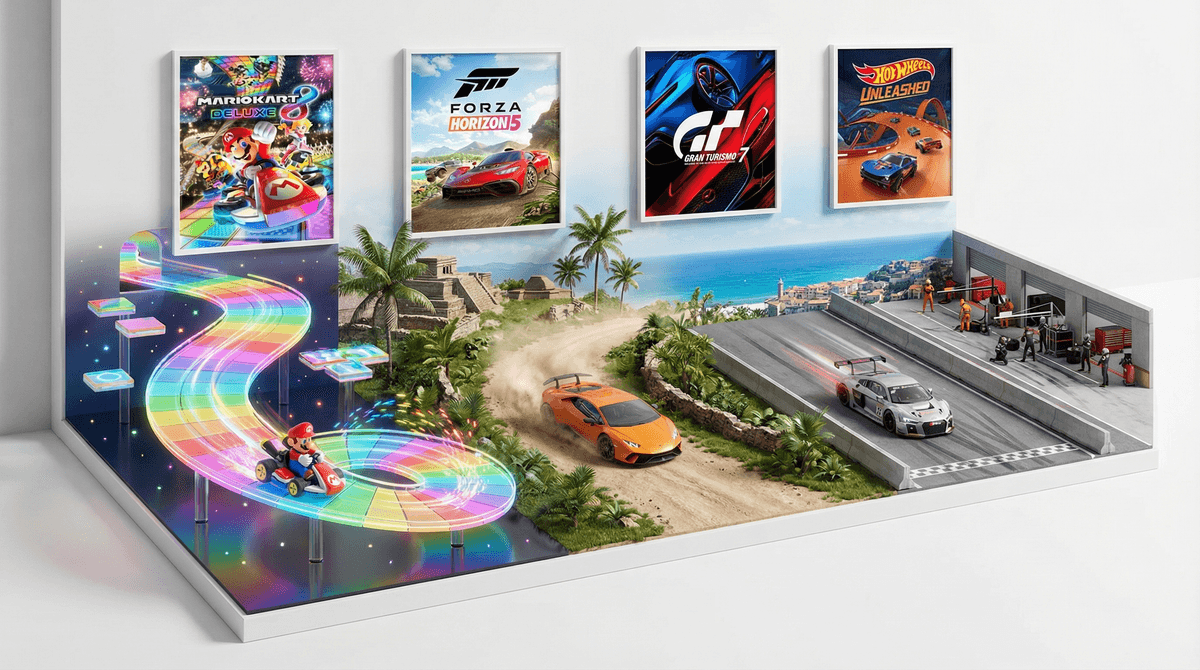
The Ultimate Guide to Car Racing Games for Kids
TL;DR: Racing games span from cartoon chaos to hardcore simulation, and picking the right one matters more than you think. Mario Kart (ages 5+) is the gold standard for younger kids, Forza Horizon (ages 10+) hits the sweet spot for tweens wanting real cars without the intensity, and Gran Turismo (ages 13+) is for teens ready for actual driving simulation. Skip Need for Speed until high school—the street racing glorification is real.
Racing games are one of the few genres where the skill ceiling is genuinely high but the entry point can be incredibly accessible. A 5-year-old can enjoy Mario Kart with auto-accelerate on, while a 15-year-old can spend hours fine-tuning gear ratios in Assetto Corsa.
But here's what most parents don't realize: the spectrum from arcade to simulation isn't just about realism—it's about what values and behaviors the game is actually teaching. Cartoon racers teach spatial awareness and quick decision-making. Simulation racers teach patience, precision, and the consequences of mistakes. Street racing games? They often teach that breaking the law looks cool and has no real consequences.
Racing games fall into three main categories, and understanding these will save you from buying the wrong game and dealing with either boredom or frustration:
Kart Racers (Ages 5+): Think Mario Kart, Crash Team Racing. Cartoon physics, power-ups, forgiving controls. The cars don't handle like real cars—they handle like go-karts in a fever dream. Perfect for younger kids.
Arcade Racers (Ages 8+): Think Hot Wheels Unleashed, Asphalt. Real-ish cars, simplified physics, lots of crashes and spectacle. Cars look real but don't require real driving skill. Great for kids who want "cool cars" without the learning curve.
Simulation Racers (Ages 10-13+): Think Forza, Gran Turismo. Realistic physics, real cars, actual racing rules. These games can genuinely teach driving concepts. Better for older kids with patience.
Ages 5-7: Mario Kart 8 Deluxe
This is the answer. Full stop. The auto-accelerate and steering assist features mean even kindergarteners can play without constant frustration. The game keeps them on track (literally) while they learn the basics. Plus, the whole family can play together, and the rubber-band AI means everyone has a shot at winning.
What makes it perfect for this age: No reading required, bright colors, familiar characters, and—crucially—losing doesn't feel devastating because a blue shell can take out the leader on the final lap. It teaches good sportsmanship through chaos.
Watch out for: The blue shell will cause tears. This is a feature, not a bug. It's teaching them about life's unfairness in a low-stakes environment.
Ages 6-10: Hot Wheels Unleashed
If your kid is obsessed with Hot Wheels cars (and let's be honest, what kid isn't at some point), this is the perfect digital extension. The tracks are bonkers—loops, jumps, going through giant kitchens and construction sites. The physics are forgiving but not completely divorced from reality.
What makes it work: It scratches the collecting itch (you unlock new cars), the track builder is genuinely creative, and the difficulty scales nicely. Kids can start on easy and gradually work up to actually needing skill.
The monetization talk: There's DLC for additional car packs. Set expectations early about what you're willing to buy. The base game has plenty of content, but they will ask for the Batman car pack.
Ages 8-12: Forza Horizon 5
This is where racing games get interesting. Forza Horizon sits in this magical middle ground—real cars, beautiful open world, but with enough assists that it's not punishing. Kids can turn on all the helpers and have an arcade experience, or gradually turn them off as they improve.
Why it's special: The game is set in a fictionalized Mexico with festivals and exploration. It's not just racing—it's driving around, finding hidden cars, completing challenges. The "rewind" feature lets kids undo mistakes, which is perfect for learning without frustration.
Parent bonus: The game has genuinely educational value. Kids learn car brands, types of racing, and basic physics concepts. One parent told me their 10-year-old could now identify car manufacturers by their grilles. Is this useful? Probably not. Is it adorable? Absolutely.
Content note: The game is rated E for Everyone, and deservedly so. No violence, no inappropriate content. The biggest concern is the time sink—this game is massive and can eat hours.
Ages 10-14: Gran Turismo 7
This is simulation territory. Gran Turismo is basically a driving school disguised as a video game. The career mode teaches racing lines, braking points, and car tuning. It's not for every kid—if they want instant gratification and explosions, they'll bounce off this hard.
Who this is for: The kid who watches car videos on YouTube, asks questions about how engines work, or has already mastered Forza Horizon. This is for the kid ready to learn actual skills.
The learning curve: It's real. They will lose. They will get frustrated. But if they stick with it, they'll develop patience and precision. I've heard from multiple parents whose teens credit Gran Turismo with making them better actual drivers when they got their permits.
Time investment: Career mode is long. Like, really long. If your kid has limited gaming time, this might not be the best choice because progress is slow.
Ages 8-12: Lego 2K Drive
The newest entry that deserves mention. It's Mario Kart meets Forza Horizon meets Lego. Open world, vehicle building, racing challenges. The Lego aesthetic makes everything feel friendly and creative.
The standout feature: You can build your own vehicles from Lego bricks. This adds a creative element that pure racing games don't have. Kids who love both racing and building will be in heaven.
The catch: The vehicle building can be overwhelming for younger kids. It's technically rated E for Everyone, but the complexity of the building system means it's really better for 8+.
Need for Speed Series (Wait Until 16+)
Look, these games are fun. But they glorify street racing, running from cops, and illegal modifications. The whole vibe is "rules are for losers." That's fine for older teens who can contextualize it, but for younger kids? You're basically teaching them that traffic laws are suggestions.
The real issue: It's not the violence (there's minimal). It's the values. The games reward reckless driving and evading police. If you wouldn't let them watch Fast & Furious, don't hand them Need for Speed.
Mobile Racing Games (Proceed with Extreme Caution)
Games like Asphalt or CSR Racing are free-to-play, which means they're pay-to-win. The monetization is aggressive. Your kid will hit a wall where they either wait 24 hours or spend real money to upgrade their car.
If you must: Turn off in-app purchases at the device level. Discuss the psychology of free-to-play games before they start. Set clear boundaries.
F1 Series (Ages 12+, But Only If They're Into It)
These are incredibly realistic Formula 1 simulations. If your kid is obsessed with F1 and watches the races, great. If not, they'll be bored within 10 minutes. The learning curve is steep, and the races are long. This is for the specific kid who already knows what DRS means.
Ages 5-7: Focus on Fun, Not Competition At this age, the goal is just to enjoy driving around and not throw the controller. Use all the assists. Play together. Make silly voices for the characters. Don't worry about winning or losing—worry about whether they're having fun.
Ages 8-10: Introduce Skill Development Now you can start talking about racing lines, when to brake, how to take corners. Forza Horizon with rewind enabled is perfect for this. They can experiment without punishment. Encourage them to gradually turn off assists as they improve.
Ages 11-13: Real Consequences, Real Learning This is when simulation games become appropriate. Let them experience what happens when they brake too late or take a corner too fast. Gran Turismo is genuinely educational here. Some parents have used it as a supplement to driver's ed.
Ages 14+: Context and Values Now you can introduce games like Need for Speed, but have the conversation about fantasy versus reality. They're old enough to understand that street racing in a game is different from street racing in real life, and that real street racing kills people.
Racing games teach real skills: Hand-eye coordination, spatial awareness, risk assessment, and—in simulation games—actual driving concepts. This isn't just mindless entertainment.
The social element is huge: Mario Kart is one of the best family gaming experiences available. Forza Horizon has online play that's generally positive. Racing games tend to have less toxic communities than shooters or competitive games.
Time limits still matter: These games are designed to trigger "just one more race" syndrome. A single race might be 3 minutes, but suddenly it's been an hour. Set clear boundaries.
Assists aren't cheating: If your kid is using all the driving assists, that's not "cheating"—it's learning. Let them use the tools the game provides. They'll naturally want to turn them off as they improve.
The car obsession is real: Be prepared for your kid to suddenly have opinions about whether BMW or Mercedes makes better cars. You've been warned.
Start with Mario Kart. It's the right answer for almost every family with kids under 10. When they're ready for something more grown-up, Forza Horizon 5 is the perfect next step—it grows with them as they improve.
Save the simulation games like Gran Turismo for kids who are genuinely interested in cars and racing, not just speed and crashes. And hold off on the street racing games until they're old enough to understand why running from cops is fun in a game but catastrophic in real life.
Racing games are one of the few genres where you can genuinely play together as a family, regardless of skill level. Take advantage of that. Some of the best gaming memories come from Mario Kart tournaments on rainy Saturdays.
Ready to dive deeper? Check out our guides on how to set up parental controls for racing games, alternatives to Mario Kart, or the best family multiplayer games.
Want to understand the monetization in racing games? Learn about how free-to-play racing games make money.
Curious about whether racing games actually teach driving skills? We can talk about that too.