

Look, the Nintendo Switch is basically the perfect gaming console for families. It's portable, it's got actual parental controls that work, and Nintendo has spent decades mastering the art of games that are genuinely fun for both kids and adults. But with literally thousands of games in the eShop, figuring out which ones are actually worth your money (and your kid's time) can feel overwhelming.
So let's cut through the noise. These are the games that kids across different age groups consistently love, that parents generally feel good about, and that actually deliver on the promise of quality gaming experiences. Not every game needs to be "educational" to be worthwhile—some of these are just really, really fun. And that's okay.
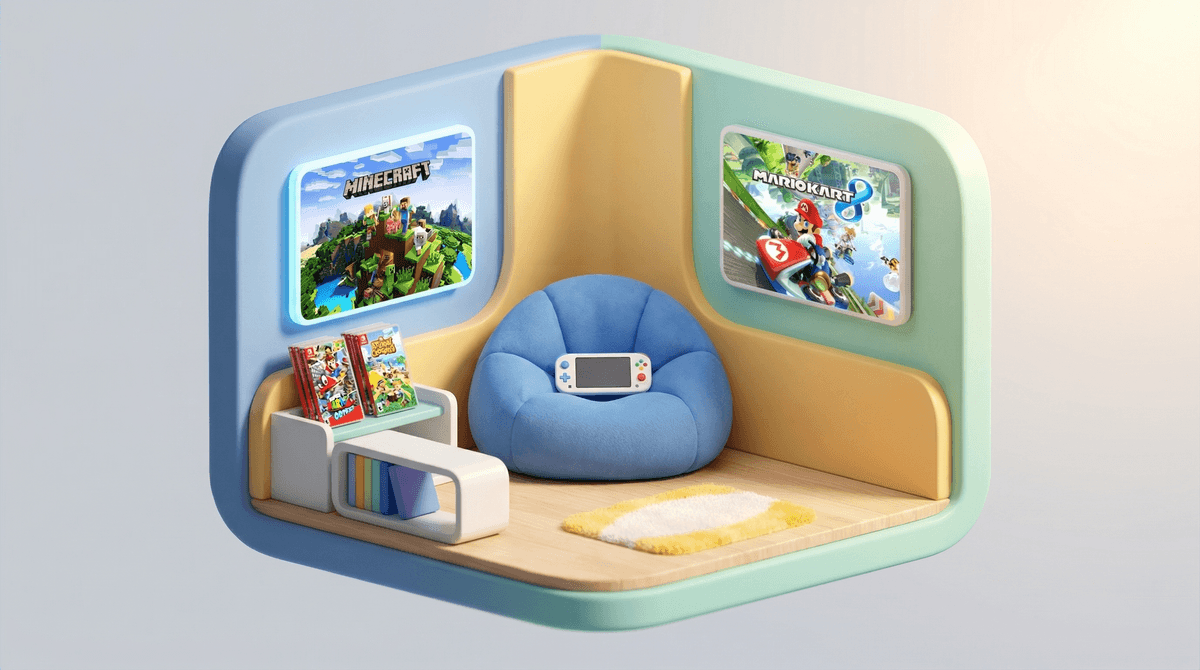
Mario Kart 8 Deluxe is basically mandatory. If you own a Switch and don't have Mario Kart, you're doing it wrong. Ages 4 and up can play with the steering assist features, and it scales beautifully so that a 6-year-old and a 40-year-old can race together without it feeling totally lopsided. The "baby mode" (auto-accelerate and steering assist) means even preschoolers can participate in family tournaments.
Minecraft on Switch is the same Minecraft your kid is probably already obsessed with, but now portable. Creative mode is genuinely creative, survival mode teaches resource management and planning, and the Switch version supports split-screen multiplayer. Yes, your kids can build together on the couch instead of yelling at each other through bedroom walls.
Super Mario Odyssey is a masterclass in game design. It's got the "assist mode" for younger kids (ages 6+) but enough challenge and depth that older kids and adults will find it engaging. The two-player co-op mode where one person controls Mario and the other controls Cappy is perfect for playing with a younger sibling or parent.
Animal Crossing: New Horizons is the cozy life-sim that became a cultural phenomenon during lockdown. Ages 6+ can play, though younger kids might need help with the reading. It's genuinely calming, encourages creativity and design thinking, and has zero violence. The real-time clock mechanic teaches patience (you can't rush everything), though be warned: some kids get really invested in their islands.
Super Mario Maker 2 lets kids design their own Mario levels. Ages 8+ will get the most out of it, and it's a surprisingly good introduction to game design concepts. The story mode has 100+ Nintendo-designed levels, so there's plenty to play even before they start creating.
The Legend of Zelda: Breath of the Wild is one of the best games ever made, full stop. It's rated E10+ and that's about right—younger kids might find some combat sequences scary, and it requires problem-solving skills and patience. But for kids 10 and up who are ready for a real adventure game, this is extraordinary. The sequel, Tears of the Kingdom, is equally brilliant but even more complex.
Luigi's Mansion 3 is perfect for kids (ages 7+) who want something slightly spooky but not actually scary. The co-op mode is excellent, and it's full of clever puzzles and humor.
Super Smash Bros. Ultimate is the fighting game that every kid seems to love. Ages 8+ is the sweet spot, though younger kids can button-mash their way through. Fair warning: this game can get intense in competitive households. Set some ground rules about sportsmanship before your kids discover that Kirby's down-B move.
Splatoon 3 is Nintendo's take on team-based shooters, except you're shooting ink instead of bullets. It's colorful, creative, and genuinely fun. Ages 8+ for the online multiplayer, though younger kids can enjoy the single-player mode. The online community is surprisingly wholesome by gaming standards.
Kirby and the Forgotten Land is an absolute gem for ages 5-10. It's adorable, forgiving, has excellent co-op, and is way more fun than it looks. Don't sleep on Kirby games—they're consistently great.
Pokémon Legends: Arceus or the newer Pokémon Scarlet and Violet are the current Pokémon games. If your kid is in the Pokémon phase (and they probably are or will be), these are solid choices. Ages 7+ can navigate them independently.
Stardew Valley is the farming/life-sim that somehow became one of the most beloved indie games ever. Ages 10+ will appreciate it most. It's chill, it's deep, and it teaches time management and planning. Some kids get absolutely absorbed in it for months.
The eShop is a minefield. There are thousands of shovelware games that look appealing in screenshots but are absolute garbage. Stick to games from known publishers or check reviews before buying. The "on sale" games are often on sale because they're not worth full price.
Physical vs. Digital: Physical cartridges can be shared, traded, and resold. Digital games are convenient but tied to your account forever. For games you know your kids will play repeatedly (Mario Kart, Smash Bros), digital makes sense. For games they might play once and move on, physical gives you options.
Nintendo Switch Online: The $20/year family subscription unlocks online multiplayer and gives you access to a library of classic NES and SNES games. It's worth it if your kids want to play online or if you have nostalgia for old-school Nintendo games.
Parental Controls: Nintendo's parental control app is actually good. You can set time limits, restrict content by rating, and see what your kids are playing. Learn how to set them up properly.
Ages 4-6: Mario Kart 8 with assists, Kirby games, Super Mario Odyssey assist mode, Pokémon: Let's Go
Ages 7-9: Animal Crossing, Luigi's Mansion 3, Super Mario Odyssey, Minecraft, Splatoon 3 (single-player), Mario games generally
Ages 10+: Breath of the Wild, Tears of the Kingdom, Splatoon 3 (online), Smash Bros Ultimate, Pokémon games, Stardew Valley, basically everything
The Switch has an embarrassment of riches when it comes to quality games for kids. Start with Mario Kart and Minecraft because they're universally loved and great for family play. Then branch out based on your kid's interests—adventure, creativity, competition, or cozy vibes.
The beautiful thing about Nintendo's first-party games is that they're consistently polished, age-appropriate, and actually fun. You're not going to find gambling mechanics, loot boxes, or toxic online communities in Mario games. They're just... good games.
And here's the thing: not every minute of screen time needs to be "productive." Sometimes a really well-designed game that brings joy and challenge and a sense of accomplishment is valuable in itself. The Switch's library delivers that in spades.
- Check your local library—many now loan out Switch games
- Look for sales during major Nintendo events (usually a few times per year)
- Consider starting with Nintendo Switch Online
 to try classic games before investing in new ones
 - Ask your kid's friends' parents what games get the most play—peer recommendations are usually solid
Want to dig deeper into specific games or compare alternatives? Explore our full gaming guides or check out how different games compare for your family's values.